Luke 7
God Lavayiyat Aṅ Puhuvasiwni · Tap a verse to see its cross-references.
Jesus Heals a Roman Officer’s Servant
1Noqw Jesus nuhtumi yuaataqe yúkut, Capernaum aqw’a. 2Noqw hakiy tsivót‐sikip sunat solāwamuy amumi moṅwit tumal’ayaat tūtuyhtiqe, pāpu pay mómoki. Noqw put moṅwíat put pas k̇ahk̇awna. 3Nihqe pam Jesus tumalayat navotqe, Jew‐sinmuy wukw’aymuyatuy put aqw ayata, okiw as pam aqwnen put tumal’ayayat qalaptsinaniqat puma put aw nānawaknaniqat ōviy’o. 4Noqw puma Jesus aw ö́kihqe, pahsat pay qa nātusitotaqe paṅqaqwa: Um put eṅem yanhte’, súanhtini. 5Pas pam itamuy Jew‐sinmuy hahlayhqe, itamuṅem tsotsvalkit yuku. 6Pahsat pu Jesus pumuy amumum aqw’a. Nihqe pam put kīyat aw hayiṅwnaqw, i’ hak solāwamoṅwi kwatsmuy put aw hōnaqe aw paṅqawu: Tutuyqawhqa, pay um qa pas pew ö’qalni; soon nu yan’ewakniqw um ikiy aw papkini. 7Paniqw ōviy nu soon yan’ewaynīk̇aṅw nāp ūminiqey antani. Pay um panis lavayhtiqw, pay itumal’aya qalaptuni. 8Pi pay nu sukwat amumi maqaptsi’k̇aṅw qatu; noqw solāwam inumi maqaptsi’yuṅwa. Noqw nu hihtawat aw Yupa kitaqw, pam ahpiyniṅwu; pu hihtawat aw Pew’i kitaqw, pam inuminiṅwu; pu ituwikiy aw Yanhtii kitaqw, pam panhtiṅwu. 9Noqw Jesus put navotqe, put aw k̇ātayta; nihqe namtökt, put aṅk hinnumyaqamuy amumi paṅqawu: Nu umumi pas paṅqawni: Pas nu qa haqam Israel‐sinmuy amuhpe yan qapēvewnit tuwa, pas qae. 10Noqw ima ayatiwyaqam ahoy kīve ökiqw, kurs pay tumal’aya tūtuyhqa pās qalaptu.
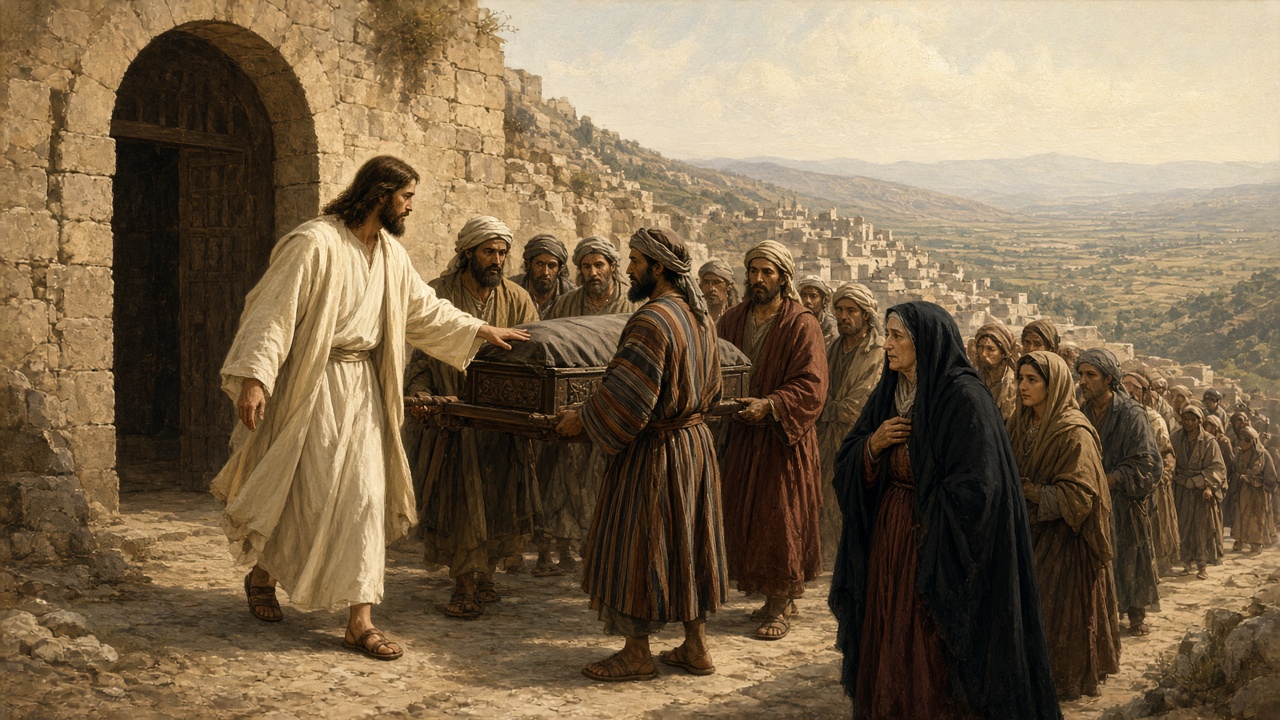
Jesus Raises a Widow’s Son
11Noqw qavoṅvaqw pam haqami kitsókit Nain yan mātsiwhqat aw’i; noqw wūhaknihqam put aw nánatuwnayaqam put ámumya, pu k̇aysiwhqam sínomu. 12Noqw pam kitsókit tuhpelayat aw hötsíwmi hayiṅwnaqw, pi hakim hakiy tāqat mokput tūamwisa, put yuat put‐sa tiyoti’ta; noqw pam koṅnalavu. Noqw sinom k̇aysiwhqam kīṅaqw wuhtit ámumya. 13Noqw Tutuyqawhqa put túwahqe put ōkwatuwhqe, aw paṅqawu: Qa pakmumuyaa. 14Pu pam mokput awnihqe, hihta akw taviwisqat aw toṅo; noqw put yawwisqam sun hoṅva. Noqw pam paṅqawu: Tiyo, nu hapi ūmi paṅqawni: Qatuptuu. 15Noqw i’ hak as mokpu qatuptuqe, pahsat yuaativa. Noqw Jesus put yuyat aw put mātavi. 16Noqw puma sohsoyam tsawinhinhtotiqe, God pas hihtatotaqe, paṅqaqwa: Pas hak pavan God lavay’ayaat itamumi pitsíwta; pu’ hapi piw God sinomuy pohta, kitota. 17Noqw yan pam hinhtiqa Judea‐tutskwat aṅ ahsupoq yuaatiwa, pu Galilee‐tutskwat aṅ ahsupoq pīwu.
The Messengers from John the Baptist
18Noqw John aw nánatuwnayaqam īit sohsok John āawnaya. 19Noqw John put aw nánatuwnaqamuy lȫqmuy nāmi wáṅwayhqe, amumi paṅqawu: Uma Jesus awnen aw paṅqawni: Ya um hak God lavay’ayaat pas pávannihqa hisat pítuniqa, hal sen pi itam hakiy sukw nuhtayyuṅwa? kítani. 20Noqw ōviy puma Jesus aw pítuhqe, John amumi hin tutaptaqat pan Jesus aw paṅqawu. 21Noqw piw suhpahsat pam k̇aysiwhqamuy tūtuyyaqamuy qalaptsinta, pu hīhihta akw qa kwaṅwáhinyuṅqamuyu; pu nukpanhihikwsimuy akw tuyqawiwyuṅqamuy powata; pu qa postalyaqamuy k̇aysiwhqamuy pōsiyamuy tālawna, 22Pahsat pu Jesus lavayhtiqe, John aw nánatuwnaqamuy amumi paṅqawu: Pay uma áhoynen, hihta aw yórikqey, pu navotqey John āawnani. Ima qapostalyaqam pōsiy tālawnaya; qayaktaqam nankwusa; tokoplelet tūtuyyaqam powaltoti; nanaqsöpt nanapta; so’pum ahoy tātayya; pu aṅ ókiwyaqam lomatuawit nanapta. 23Noqw inuhpe qa unaṅwmokqa hapi pas hahlayhpit epni. 24Noqw John tuaw’aymat ahpiyniqw, pahsat pu Jesus sinmuy amumi John yuaativaqe paṅqawu: Ya uma qayēsiwhpumi haqami hihta aw kuyvawisa, sen pi pāqavit hūk̇aṅwuy akw wayayataqat aw’i? 25Noqw ya uma hihta aw kuyvawisa, sen hakiy lomayuwsi’taqat aw’i? Meh, lolmat yuwsi’yuṅqam, qarurúmyesqam pi momṅwituy kīyamuy aṅ yēse. 26Noqw ya uma hihta aw kuyvawisa, sen hakiy God lavay’ayayat aw’i? Owi, noqw nu umumi paṅqawni: Pam hapi God lavay’ayayat epníhqe pas pávani. 27It hapi pey’taqe pan lalvaya: Meh, nu hapi upyeve ituaw’aya ayatani; noqw pam uhsavo uṅ háqe’niqat aṅ qenitani, yan’i. 28Pi nu umumi paṅqawni: Pas momoymuy amuhpiy tihtiwyaqamuy amuṅaqw John kūyit akw tūtuvoylalawhqa pas pávani. Qa hak God lavay’ayaat put epnihqe pas pávani. Noqw pay God moṅwtunatyayat ep pas susqahimunihqa put epnihqe pas pávani. 29Pi sohsoyam put aw tūqayyuṅqam, moṅwit eṅem sīvat ömalalwaqamuy amumum pay God‐sa súantaqat paṅqaqwa; nihqe John tuwiyat anwat kūyit akw tuvoylatoti. 30Noqw ima Pharisee‐sinom, tutavot aw tuvoti’yuṅqamuy amumum God tunatyayat qa kwusuyaqe, John ahpiy qa tuvoylatoti. 31Noqw Jesus paṅqawu: Ya sen nu pu’ qatsívaptsiwyuṅqamuy hihta enaṅ namimahtaknani? Ya puma hihta anyuṅwa? 32Puma tsātsakwmuy kihsonve yesqamuy amunyuṅwa. Puma nānami paṅqaqwa: Itam umuṅem lēlenyaqw, uma qa tīva; itam umuṅem tsaykitaqw, uma qa tsayku, kitota. 33Oviy pi John kūyit akw tūtuvoylalawhqa pítuhqe, pölavikit qa tūmoyta; piw ovavalat qa hīhiko; noqw uma paṅqaqwa: Pam nukpanhikwsit akw tuyqawiwta. 34Noqw nu’ Sinot Tiat pítuhqe tūmoyk̇aṅw, pu hīhikq, uma paṅqaqwa: Is uti hunuk̇a, wine pas qa öyṅwu, moṅwit eṅem sīvat ömalalwaqamuy, pu qaanhinwisqamuy kwatsiamu! kitota. 35Noqw pay pi suan unaṅwtalwuwni aniwniy ahpiy lolmat namtakni’taṅwu.
Jesus at the Home of Simon the Pharisee
36Noqw haqawa Pharisee‐sino Jesus tūtsama. Noqw pam put kīyat aw pákihqe, tunösvoñat aw qatuptu. 37Noqw meh, hak pep kitsókive wuhti qaanhinmaqa yaw Jesus Pharisee‐sinot kīyat ep tunösvoñat aw qátuhqat navota. Pahsat pu pam tataṅpit aṅ kwaṅwáhovaqtuqat wihkuyit kūyiwtaqat kwusiva. Pam tataṅpi hihta alabaster‐owat aṅqw yukiwta. 38Noqw wuhti okiw pakk̇aṅw, put kukveq wunuk̇aṅw, pahsat posvalay akw put kukyat pāhomhtivak̇aṅw hȫmiy akw put aṅ hönta, nit kukyat tsohtsonat, wihkuyit akw put lelwi. 39Noqw Pharisee‐sino put tūtsamqa put aw tātayhqe, unaṅwpeq paṅqawu: Pas k̇a as i’ tāqa God lavay’ayaatnen, i’ wuhti put aw tóṅokqa hákiynihqat, pu hin hak hintaqat soon qa navotni; pam pi qaanhinmaq’ö. 40Noqw Jesus lavayhtiqe, put tūtsamqat aw paṅqawu: Simon, nu as ūmi hiṅqawni. Noqw pam paṅqawu: Tūtutuqaynaqa, paṅqawuu. 41Noqw pam paṅqawu: Ura hak tāqa sīvat tūnasimokhuylawu. Noqw hakim lȫyöm put aw hihta pöiwta; suhk̇a put aw tsivót‐sikip sunat sīvat pöiwta; noqw suhk̇a pakwt sīvata. 42Noqw puma kurs hihta sisviniqw pam pumuy lȫqmuy amumi put pantaqat qe’wataqe paysoq ayo yuku. Taay, kurs nuy āawnaa, Ya uṅniqw pumuy amuṅaqw sen himuwa put pas pavan aw unaṅway’tani? 43Noqw Simon lavayhtiqe aw paṅqawu: Pas nuyniqw soon k̇a qa pam suswuhak ayo yúkuhqat pamwani. Noqw Jesus put aw panqawu: Um suan aw wūwa. 44Pu pam wuhtit aw namtökt, Simon aw paṅqawu: Ya um it wuhtit aw qa tayta? Nu uhkiy aw pakiqw, um ikukuy eṅem nuy qa kuyna; noqw i’ pi pas posvalay akw ikukuy pāhomht, hȫmiy akw aṅ hȫna. 45Um nuy qa tsohtsona, noqw i’ wuhti nuy pakiqw, qa sūs ikukuy tsohtsona. 46Um iqötöy wihkuyit akw qa lelwi; noqw i’ wuhti ikukuy wihkuyit kwaṅwáhovaqtuqat akw lelwi. 47Noqw ōviy nu ūmi paṅqawni: Put qaantsakpiat nihtiwtaqa put ahpiy ayo yukilti, kurs pam inumi pas unaṅway’taqw ōviy’o. Nīk̇aṅw hakiy aw qa wūhak qe’watiwk̇aṅw ayo yukiltiqw, pam pay qa pas God aw unaṅway’taṅwu. 48Pu pam wuhtit aw paṅqawu: Pay uhqaanhtipu uhpiy ayo yukiwa. 49Noqw ima put amum tunösvoñat aw yesqam pahsat unaṅwpeq paṅqaqwa: Ya i’ haknihqe, hikis hakiy qaanhtipuyat put ahpiy ayo yúkuniqey anta. 50Noqw pam wuhtit aw paṅqawu: Uhqapevewni uṅ ayo tavi. Um qa hin unaṅway’k̇aṅw nímani.
Did you know?
Faith, compassion, and a prophet's question
- Easton's Bible Dictionary (1897) describes Capernaum as a Galilean town not mentioned in the Old Testament, which became the city Jesus treated as his own after he was expelled from Nazareth and the scene of many episodes in his life. In this chapter he arrives there to find a centurion's highly valued servant near death, and Jewish elders plead that the officer loves their nation and has built their synagogue.Sources: Capernaum · the Bible text itself
- Easton's Bible Dictionary (1897) links the name Nain to a Hebrew word meaning green pastures or lovely, and identifies the town with the village of Nein on the northwestern slope of Jebel ed-Duhy, also called the hill Moreh or Little Hermon, about four miles from Tabor and twenty-five miles southwest of Capernaum, above the plain of Esdraelon. At the town gate Jesus met the funeral of a widow's only son, and awe spread through the crowd.Sources: Nain · the Bible text itself
- John the Baptist is described as the forerunner of the Lord and as a man of priestly descent: his father Zacharias was a priest of the course of Abia, and his mother Elisabeth was one of the daughters of Aaron. His mission is described as the subject of prophecy, and in this chapter Jesus tells the crowds that John is more than a prophet, the messenger sent ahead to prepare the way, while John's disciples ask whether Jesus is the one who was to come.Sources: John the Baptist · the Bible text itself
Notes written with AI assistance from open sources (Theographic Bible Metadata, CC BY-SA 4.0; Easton’s Bible Dictionary, public domain) and reviewed before publishing.
Places in this chapter
Only places identified with high confidence are shown (90% or more according to the scholarly sources compiled by OpenBible). Period map: DARE (Digital Atlas of the Roman Empire), CC BY 4.0; modern map: © OpenStreetMap contributors; places: OpenBible.info (CC BY 4.0).
Credits and license for this translation
God Lavayiyat Aṅ Puhuvasiwni
New Testament in Hopi (US:hop:Hopi)
copyright © 2012 Wycliffe Bible Translators, Inc.
Language: Hopi
Translation by: Wycliffe Bible Translators, Inc.
Hopi [hop], USA
Copyright Information
© 2012, Wycliffe Bible Translators, Inc. All rights reserved.
This translation text is made available to you under the
terms of the Creative Commons License: Attribution-Noncommercial-No Derivative Works.
( http://creativecommons.org/licenses/by-nc-nd/3.0/ )
In addition, you have permission to port the text to different file formats, as long as you
do not change any of the text or punctuation of the Bible.
You may share, copy, distribute, transmit, and extract portions
or quotations from this work, provided that you include the above copyright
information:
You must give Attribution to the work.
You do not sell this work for a profit.
You do not make any derivative works that change any of the actual words or punctuation of the Scriptures.
Permissions beyond the scope of this license may be
available if you contact
us with your request.
The New Testament
in Hopi
© 2012, Wycliffe Bible Translators, Inc. All rights reserved.
This translation is made available to you under the terms of the
Creative Commons Attribution-Noncommercial-No Derivatives license 4.0.
You may share and redistribute this Bible translation or extracts from it in any format, provided that:
You include the above copyright and source information.
You do not sell this work for a profit.
You do not change any of the words or punctuation of the Scriptures.
Pictures included with Scriptures and other documents on this site are licensed just for use with those Scriptures and documents.
For other uses, please contact the respective copyright owners.
2014-04-25
Source: http://ebible.org/hopNT/ · eBible.org