Psalms 125
Tuivang Holy Bible · Tap a verse to see its cross-references.
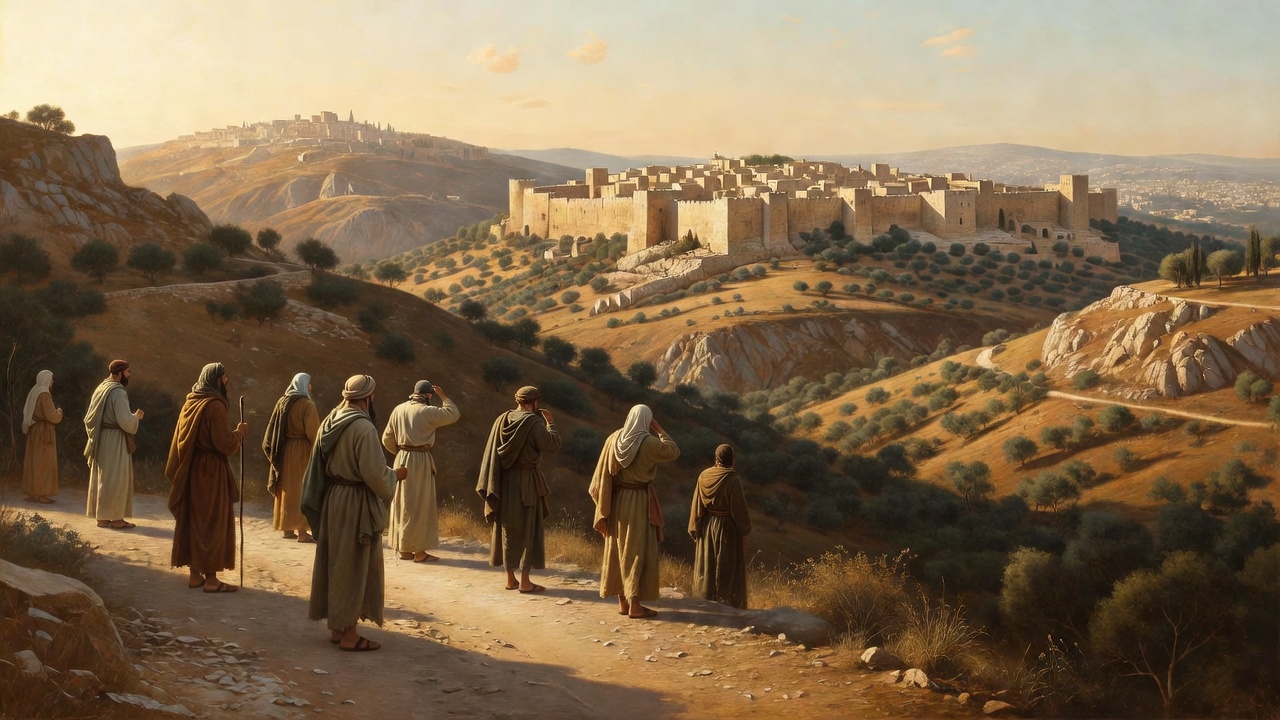
1Bawipa ak ypnaak thlangkhqi taw amak tyn qoe kumqui dyna ak cak Zion tlang ing myih hy. 2Tlang ing Jerusalem ak chung khoep amyihna, Bawipa ing tuh kawng kumqui dyna ak thlangkhqi ce chung sih khqi hy. 3Thlakche a boei sawnghqawl ing thlak dyngkhqi a qam khuiawh am awm loet thai ti kaw, cemyih mantaw thlak dyngkhqi ing ami kut ce ik-oeih che sainaak aham hawna hau kawm uh. 4Aw Bawipa, thlakchekhqi, kawlung ak dyng thlangkhqi venawh ak leek ik-oeih sai lah. 5Cehlai lap kawi awh ak pleng thlangkhqi cetaw amak leek ik-oeih ak saikhqi mi Bawipa ing hqek baat kaw. Israel ak khan awh ngaihqepnaak awm seh.
Did you know?
Unshakable Security in Jerusalem
- Psalm 125 is one of the Songs of Ascents, comparing those who trust in God to Mount Zion. Mount Zion was a naturally fortified hill in Jerusalem, surrounded by deep valleys on nearly all sides, making it a fitting symbol of permanence and stability.Sources: the Bible text itself · Mount Zion
- The psalmist draws on local geography by noting how mountains encircle Jerusalem. Built as a mountain fortress among neighboring heights, the city provided an evocative physical illustration of divine protection surrounding the community.Sources: the Bible text itself · Jerusalem
- The psalm concludes with a prayer for peace upon Israel, which resonates with the traditional interpretation of Jerusalem's Hebrew name as a foundation or possession of peace.Sources: the Bible text itself · Jerusalem
Notes written with AI assistance from open sources (Theographic Bible Metadata, CC BY-SA 4.0; Easton’s Bible Dictionary, public domain) and reviewed before publishing.
Places in this chapter
Only places identified with high confidence are shown (90% or more according to the scholarly sources compiled by OpenBible). Period map: DARE (Digital Atlas of the Roman Empire), CC BY 4.0; modern map: © OpenStreetMap contributors; places: OpenBible.info (CC BY 4.0).
Credits and license for this translation
Tuivang Holy Bible
The Holy Bible in the Tuivang dialect of the Matu Chin language of Myanmar (Burma)
Copyright © 2020 Batupei Christian Fellowtship
Language: Tuivang (Chin, Matu)
Dialect: Tuivang
Copyright applies only in Myanmar. Outside Myanmar, this work is in the Public Domain.
This translation is made available to you under the terms of the
Creative Commons Attribution Share-Alike license 4.0.
You have permission to share and redistribute this Bible translation in any format and to make reasonable revisions and adaptations of this translation, provided that:
You include the above copyright and source information.
If you make any changes to the text, you must indicate that you did so in a way that makes it clear that the original licensor is not necessarily endorsing your changes.
If you redistribute this text, you must distribute your contributions under the same license as the original.
Pictures included with Scriptures and other documents on this site are licensed just for use with those Scriptures and documents.
For other uses, please contact the respective copyright owners.
Note that in addition to the rules above, revising and adapting God's Word involves a great responsibility to be true to God's Word. See Revelation 22:18-19.
2026-07-26
Source: http://ebible.org/hltthb/ · eBible.org