Psalms 124
Tuivang Holy Bible · Tap a verse to see its cross-references.
1Bawipa mah ningnih benna ama awm mai mantaw – Israelkhqi ing kqawn seh – 2Bawipa mah ningnih benna ama awm mai mantaw, thlangkhqi ing ningnih ani tuk khqi awh, 3cekkhqi ing ningnih ak khan awh amik kaw a so awh; ningnih ce a hqing na nik daih khqi hawh kaw; 4tuibau ing ningnih ce ni sing malh kawmsaw, tuibak ce ningnih ak khan na tho hawh kaw, 5tuibau tha ak awm ing ningnih ce ni zawn khqi hawh kaw. 6Cekkhqi a ha ing ningnih am choek nawh, Bawipa venawh thangleeknaak awm seh. 7Pha a ham dawng ak dunkung ak dawng awhkawng a hlawng pha amyihna ningnih taw ni awm uhy; dawnkhqui ce boet nawh, ningnih ce ni loet uhy. 8Ningmih bawmnaak taw dek ingkaw khan ak saikung, Bawipang ming awh ni a awm.
Did you know?
Israel's Song of Deliverance
- The superscription of Psalm 124 identifies it as a Song of Ascents attributed to David. It functions as a communal hymn of thanksgiving, calling on Israel to declare together that they survived the assault of their enemies only because the Lord was on their side.Sources: the Bible text itself
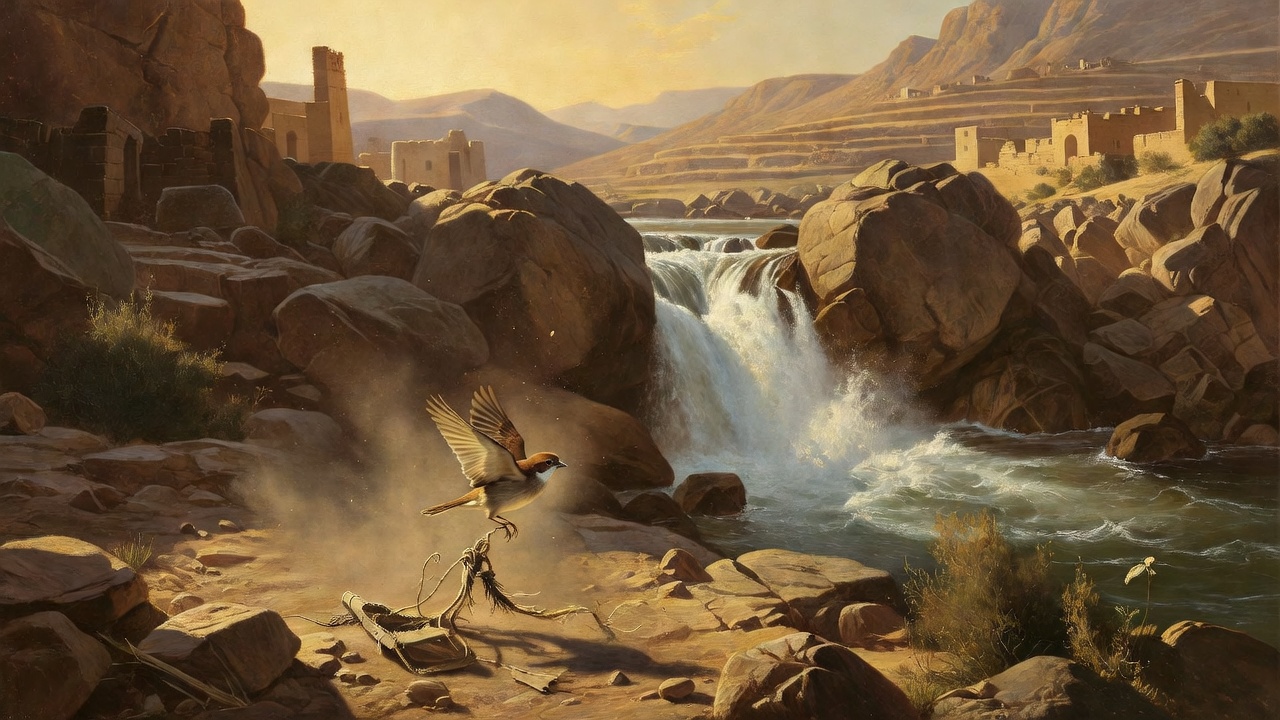
- The poem illustrates the peril faced by the community through dramatic natural metaphors, comparing their foes to beasts ready to swallow them alive or tear them with teeth, and to raging torrents and floods that threaten to sweep them away.Sources: the Bible text itself
- The psalm concludes its reflection on rescue with the image of a bird escaping from a broken fowler's snare, anchoring the nation's hope in the name of the Lord who made heaven and earth.Sources: the Bible text itself
Notes written with AI assistance from open sources (Theographic Bible Metadata, CC BY-SA 4.0; Easton’s Bible Dictionary, public domain) and reviewed before publishing.
Places in this chapter
- Jerusalem · 31.777, 35.234 · verse 1
Only places identified with high confidence are shown (90% or more according to the scholarly sources compiled by OpenBible). Period map: DARE (Digital Atlas of the Roman Empire), CC BY 4.0; modern map: © OpenStreetMap contributors; places: OpenBible.info (CC BY 4.0).
Credits and license for this translation
Tuivang Holy Bible
The Holy Bible in the Tuivang dialect of the Matu Chin language of Myanmar (Burma)
Copyright © 2020 Batupei Christian Fellowtship
Language: Tuivang (Chin, Matu)
Dialect: Tuivang
Copyright applies only in Myanmar. Outside Myanmar, this work is in the Public Domain.
This translation is made available to you under the terms of the
Creative Commons Attribution Share-Alike license 4.0.
You have permission to share and redistribute this Bible translation in any format and to make reasonable revisions and adaptations of this translation, provided that:
You include the above copyright and source information.
If you make any changes to the text, you must indicate that you did so in a way that makes it clear that the original licensor is not necessarily endorsing your changes.
If you redistribute this text, you must distribute your contributions under the same license as the original.
Pictures included with Scriptures and other documents on this site are licensed just for use with those Scriptures and documents.
For other uses, please contact the respective copyright owners.
Note that in addition to the rules above, revising and adapting God's Word involves a great responsibility to be true to God's Word. See Revelation 22:18-19.
2026-07-26
Source: http://ebible.org/hltthb/ · eBible.org