Psalms 100
Baibal Olcim · Tap a verse to see its cross-references.
Uem Uh lah
Uemonah ham Tingtoenglung
1Diklai boeih loh BOEIPA taengah yuhui uh lah.
2Amah mikhmuh ah omngaih laa neh, kohoenah neh halo lamtah, BOEIPA taengah thothueng lah.
3BOEIPA amah he Pathen tila ming uh lah. Amah loh mamih n'saii tih mamih khaw, amah pilnam neh a rhamtlim kah boiva la n'om uh.
4A vongka uemonah neh, a vongup te koehnah neh paan uh lah. A ming khaw a yoethen pai tila amah taengah uem uh lah.
5BOEIPA tah kumhal duela then tih, a sitlohnah neh uepomnah khaw, cadilcahma phoeikah cadilcahma duela cak.
Did you know?
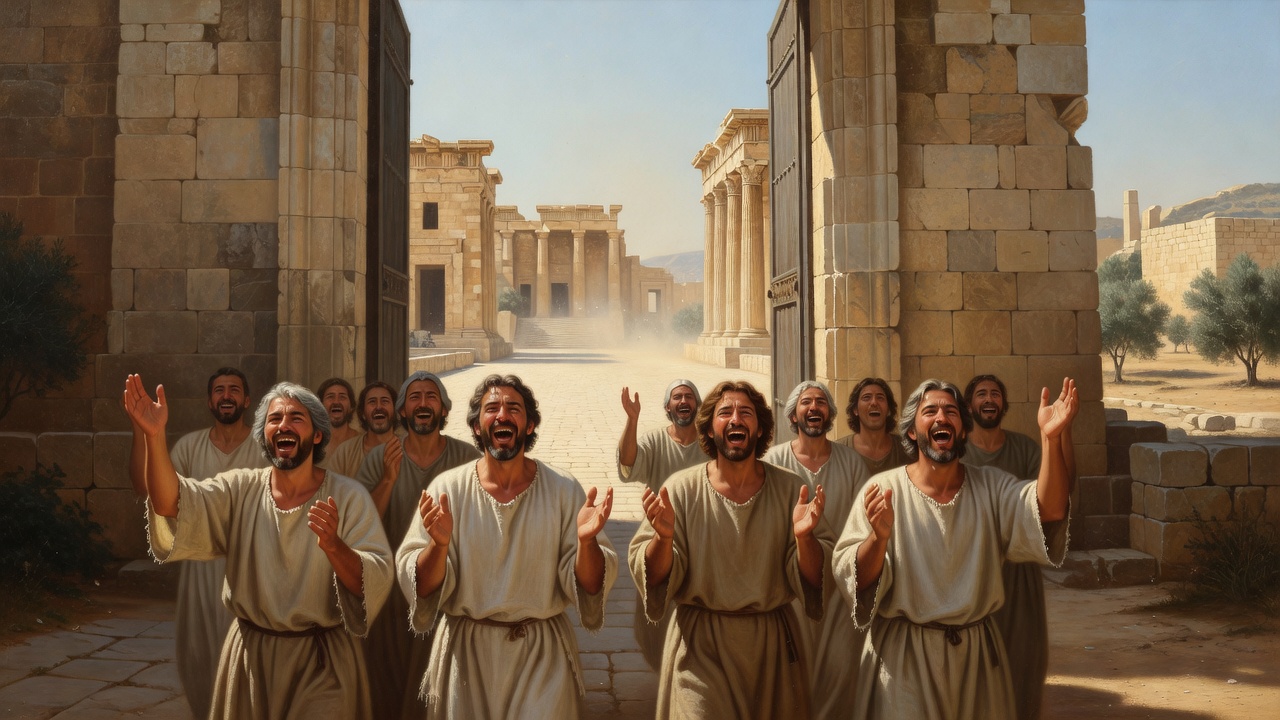
Psalm 100: A Song of Praise and Thanksgiving
- Psalm 100 is specifically designated as a psalm of thanksgiving, calling on not just Israel but all the earth to serve God with gladness and sing joyful songs.Sources: the Bible text itself
- The psalm uses sanctuary imagery, inviting worshippers to enter through the gates and into the courts with praise, acknowledging God as their Creator and themselves as the sheep of His pasture.Sources: the Bible text itself
- The basis for the psalm's celebration is rooted in God's essential character: His goodness, His enduring loving devotion, and His faithfulness across all generations.Sources: the Bible text itself
Notes written with AI assistance from open sources (Theographic Bible Metadata, CC BY-SA 4.0; Easton’s Bible Dictionary, public domain) and reviewed before publishing.
Credits and license for this translation
Baibal Olcim
The Holy Bible in the Matupi Chin language of Mynmar. Matupi Chin Standard Bible
Public Domain
Language: Matupi Chin (Chin, Matu)
Published in Mynmar, which is not a signatory to international copyright treaties. Copyright may apply locally in Mynmar, where this is released under a Creative Commons Attribution Share-Alike 4.0 license.
2026-09-21
Source: http://ebible.org/hltmcsb/ · eBible.org