Psalms 129
Baibal Olcim · Tap a verse to see its cross-references.
Hnaemtaek Rhoek Rhunnah
Tangtlaeng Laa
1Ka camoe lamloh kai mat n'daengdaeh he Israel loh thui laeh saeh.
2Ka camoe lamloh kai he mat n'daengdaeh uh dae kai he n'noeng moenih.
3Ka uen soah a thoe a thoe uh tih a hma sokah a hma te a yoe uh.
4Aka dueng BOEIPA loh halang rhoek kah rhuivaeh te a tlueh pah.
5Zion aka thiinah rhoek boeih tah yahpok uh saeh lamtah a hnuk la balkhong uh saeh.
6Imphu kah sulrham bangla om saeh. Te tah amah hmuen ah a rhae la a phuk.
7Te te a ah tih a ban neh a kulup akhaw a kutpha dongah a bae moenih.
8Te vaengah aka kongpa rhoek loh, “Nangmih soah BOEIPA kah yoethennah om saeh. BOEIPA ming neh nangmih te yoethen kan paek uh,” ti uh boel saeh.
Did you know?
Endurance in Affliction and the Fate of Zion’s Foes
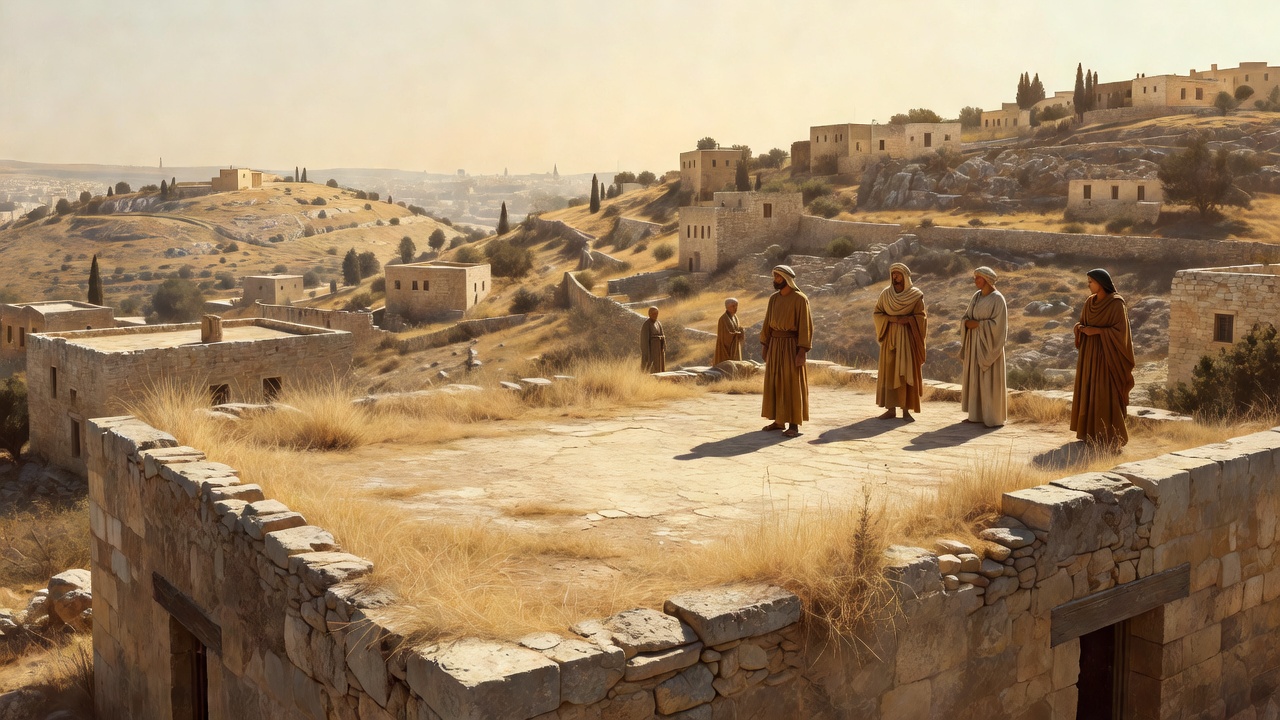
- The imagery of grass growing on rooftops reflects ancient construction, where flat roofs were often covered with packed earth. Seeds might sprout there after rains, but because the soil layer was shallow and exposed to the sun, the grass withered before it could mature or produce a harvest.Sources: the Bible text itself
- The phrase spoken by passersby in verse 8 mirrors the traditional agricultural greetings exchanged in ancient Israel, where travelers routinely blessed reapers and laborers working in the fields.Sources: the Bible text itself
- Zion was the prominent hill in Jerusalem where King David built his citadel, and in biblical poetry it often stands as a representation of God’s dwelling place and His people.Sources: the Bible text itself · Zion
Notes written with AI assistance from open sources (Theographic Bible Metadata, CC BY-SA 4.0; Easton’s Bible Dictionary, public domain) and reviewed before publishing.
Places in this chapter
Only places identified with high confidence are shown (90% or more according to the scholarly sources compiled by OpenBible). Period map: DARE (Digital Atlas of the Roman Empire), CC BY 4.0; modern map: © OpenStreetMap contributors; places: OpenBible.info (CC BY 4.0).
Credits and license for this translation
Baibal Olcim
The Holy Bible in the Matupi Chin language of Mynmar with Strong's numbers
Public Domain
Language: Matupi Chin (Chin, Matu)
Published in Mynmar, which is not a signatory to international copyright treaties. Copyright may apply locally in Mynmar.
2026-07-16
Source: http://ebible.org/hlt/ · eBible.org