Psalms 128
Baibal Olcim · Tap a verse to see its cross-references.
Pathen aka Rhih Ham Yoethen Cangtham
Tangtlaeng Laa
1BOEIPA aka rhih tih a longpuei ah aka pongpa boeih tah a yoethen.
2Na kut dongkah thatloh vanbangla na yoethen na caak van vetih na taengkah hnothen om ni.
3Na yuu khaw misur bangla na im a imthael ah thaihsu vetih na ca rhoek te olive thingnoe bangla na caboei kong ah om uh ni.
4Te dongah BOEIPA aka rhih hlang tah a yoethen pai he.
5Zion lamkah BOEIPA loh nang yoethen m'pae saeh lamtah na hingnah khohnin takuem ah Jerusalem kah a thennah te hmuh van.
6Na ca rhoek kah a ca rhoek khaw hmu van. Israel soah rhoepnah om saeh.
Did you know?
Blessings of Family and the Peace of Jerusalem
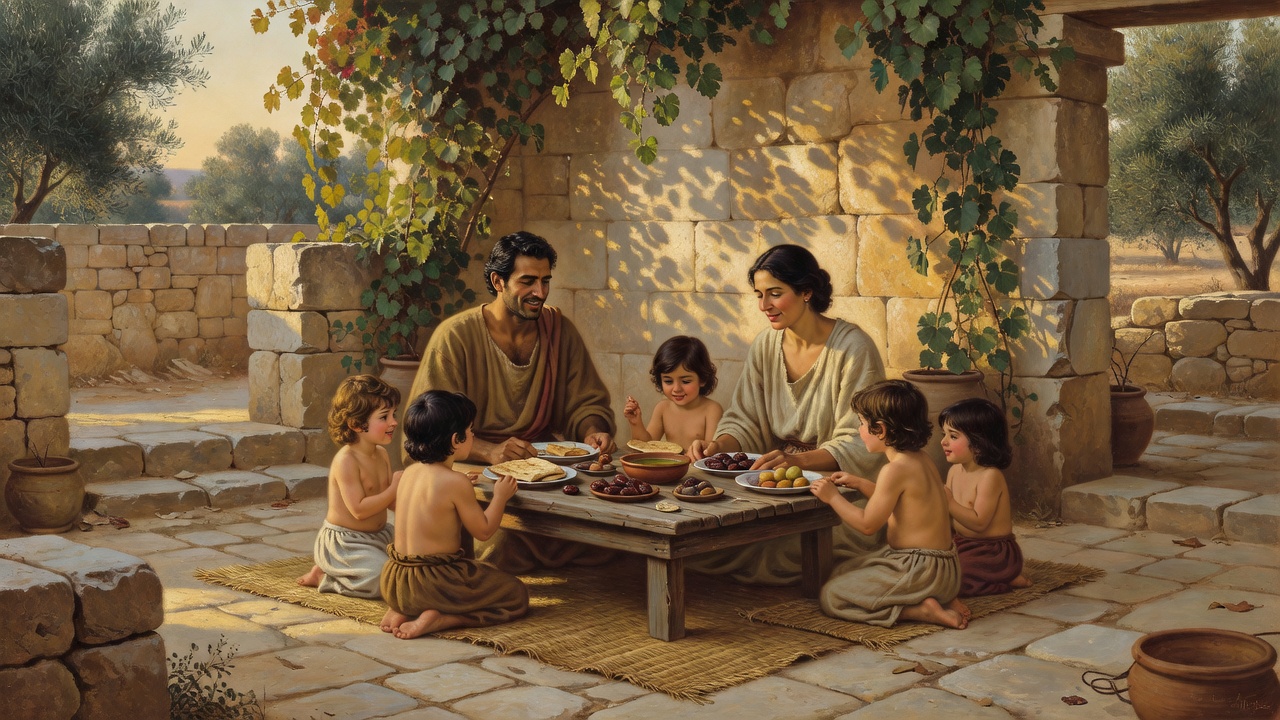
- Psalm 128 uses familiar agricultural metaphors to depict domestic abundance, comparing a wife to a fruitful grapevine and children gathered around the table to vigorous olive shoots.Sources: the Bible text itself
- The psalm is designated as a Song of Ascents, connecting the daily labor and domestic happiness of the individual with the collective welfare of Zion and Jerusalem.Sources: the Bible text itself · Zion
- The final blessing for peace upon Israel echoes the traditional meaning of Jerusalem itself, whose name signifies a possession or foundation of peace.Sources: the Bible text itself · Jerusalem
Notes written with AI assistance from open sources (Theographic Bible Metadata, CC BY-SA 4.0; Easton’s Bible Dictionary, public domain) and reviewed before publishing.
Places in this chapter
Only places identified with high confidence are shown (90% or more according to the scholarly sources compiled by OpenBible). Period map: DARE (Digital Atlas of the Roman Empire), CC BY 4.0; modern map: © OpenStreetMap contributors; places: OpenBible.info (CC BY 4.0).
Credits and license for this translation
Baibal Olcim
The Holy Bible in the Matupi Chin language of Mynmar with Strong's numbers
Public Domain
Language: Matupi Chin (Chin, Matu)
Published in Mynmar, which is not a signatory to international copyright treaties. Copyright may apply locally in Mynmar.
2026-07-16
Source: http://ebible.org/hlt/ · eBible.org