Habakkuk 3
Baibal Olcim · Tap a verse to see its cross-references.
Habakkuk a Pathum Thangthuinah
1Omdamlaa dongah tonghma Habakkuk kah thangthuinah.
2BOEIPA aw na olthang ka yaak tih kan hiin coeng. BOEIPA aw na khoboe te kum laklo ah hing sak. Te te kum laklo ah tueng sak. Ngaihmang vaengah haidam lamtah thoelh lah.
3Pathen tah Teman lamloh, aka Cim tah Paran tlang lamloh pai coeng. Selah. A mueithennah loh vaan a khuk tih amah koehnah he diklai ah bae.
4A aa he khosae bangla om. A kut lamkah a ki amah taengah om tih a sarhi dongkah thingthungnah la pahoi om.
5A hmai ah duektahaw cet tih a kho dongah hmaino a khuen.
6A pai vaengah diklai tuen, a hmuh vaengah namtom te cungpet. Suen kah tlang rhoek te taekyak uh tih khosuen som khaw tim. Te dongah khosuen kah lambong khaw amah la om coeng.
7Boethae khuikah Kushan dap rhoek te ka hmuh vaengah Midian kho kah himbaiyan rhoek tlai uh.
8BOEIPA aw tuiva taengah na sai nama? Khangnah dongah na marhang, na leng neh na ngol vaengah, na thintoek te tuiva taengla, na thinpom te tuipuei taengah na sah mai.
9Olhlo bangla na lii te a ah la na yueh tih olkhueh caitueng neh diklai tuiva na phih coeng. Selah.
10Na hmuh vaengah tlang rhoek kilkul uh tih cingtui tui loh a kawt. Tuidung loh a ol a paek tih a kut te a sang la a thueng.
11Na thaltang a thui vaengkah vangnah dongah khaw, na caai dongkah rhaek aa dongah khaw khomik neh hla tah a imhmuen ah pai.
12Kosi dongah diklai na luei sak tih thintoek dongah namtom na til.
13Na pilnam kah khangnah ham khaw, na koelh te khangnah ham khaw na cet coeng. Halang imkhui kah boeilu te na phop tih a khoengim te a rhawn duela na khoel pah. Selah.
14A pueng, a pueng kah lu tah a caitueng neh na toeh pah coeng. Amih tah a huephael ah mangdaeng a dolh uh bangla amamih kah kocuknah neh kai taekyak ham thikthuek uh.
15Na marhang neh tuitunli soah na cawt vaengah tui dongkah lainaeng muep yet.
Habakkuk kah Ngaikhueknah
16Ka yaak vaengah, ka bungko he ol dongah tlai tih, ka hmuilai khaw umya. Ka rhuh khuila keet kun tih, a dang duela ka tlai. Te dongah kaimih aka tloek pilnam soah aka pai ham, citcai hnin ni ka rhing.
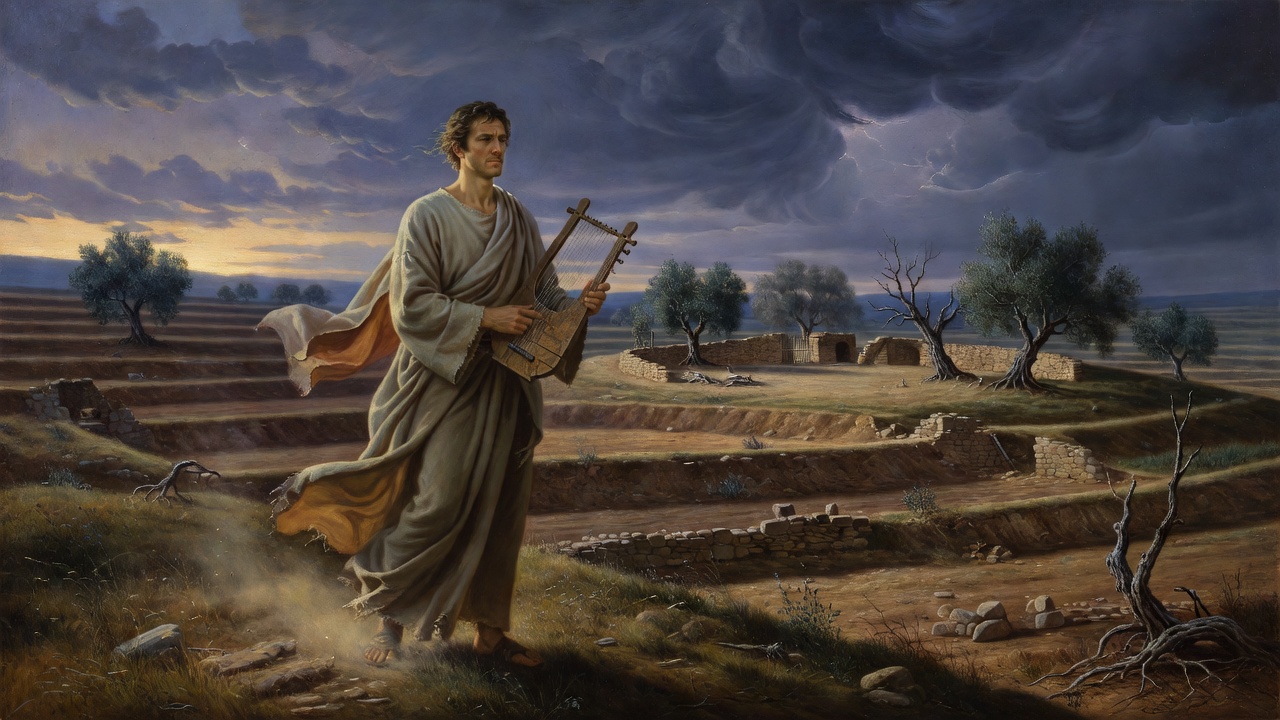
17Thaibu te cuen pawt tih misur dongah cangpai tal coeng. Olive muei loh n'namnah tih, lohmali loh caak khueh pawh. Vongtung lamkah boiva loh n'tuiphih tak tih, saelim ah saelhung khaw tal coeng.
18Tedae kai tah, BOEIPA rhangneh ka sundaep vetih, kamah daemnah Pathen rhangnen ni ka omngaih eh.
19Yahovah tah, ka Boeipa neh ka thadueng ni. Te dongah ka kho he, sayuk bangla a khueh tih, ka hmuensang ah kai n'cawt sak.
Rhotoeng neh aka tingtoeng ham.
Did you know?
Habakkuk's Prayer and Song of Faith
- The poem depicts God appearing from the southern wilderness, mentioning Teman in southern Idumea and Mount Paran on the desert boundary of the Promised Land. These geographic references echo ancient poetic descriptions of the Lord marching in majesty from the south.Sources: Teman · Mount Paran · the Bible text itself
- Cushan and Midian are portrayed trembling before the divine advance. The Midianites were nomadic Arabian tribes dwelling in tents across the desert regions and pasturelands of Sinai and northern Arabia.Sources: Cushan · Midian · the Bible text itself
- The chapter is structured as a liturgical psalm, complete with musical terms such as 'Shigionoth', 'Selah', and a closing dedication to the choirmaster for performance with stringed instruments.Sources: the Bible text itself
Notes written with AI assistance from open sources (Theographic Bible Metadata, CC BY-SA 4.0; Easton’s Bible Dictionary, public domain) and reviewed before publishing.
Places in this chapter
- Midian · 28.495, 35.012 · verse 7
Only places identified with high confidence are shown (90% or more according to the scholarly sources compiled by OpenBible). Period map: DARE (Digital Atlas of the Roman Empire), CC BY 4.0; modern map: © OpenStreetMap contributors; places: OpenBible.info (CC BY 4.0).
Credits and license for this translation
Baibal Olcim
The Holy Bible in the Matupi Chin language of Mynmar with Strong's numbers
Public Domain
Language: Matupi Chin (Chin, Matu)
Published in Mynmar, which is not a signatory to international copyright treaties. Copyright may apply locally in Mynmar.
2026-07-16
Source: http://ebible.org/hlt/ · eBible.org