Psalms 129
KAKAƗYARI NIUKIEYA XAPAYARI WIXARIKAKƗ · Tap a verse to see its cross-references.
Ku'uwamete wakwikari.
1Hikɨta 'ixaheritsixi mɨpaɨ meke'utiyuani:
—Yumɨiretɨ mepɨnetsi'uhiweritɨa temaikɨyaritsie paitɨtɨ,
2yumɨiretɨ mepɨnetsi'uhiweritɨa temaikɨyaritsie paitɨtɨ,
peru yemekɨ mepɨkanetsiha'iwawe.
3Newaritsie hararu mepukahatɨkɨ,
xuruku meputiwewi heukatetewame.
4Peru Yawé, heitseriemekɨ yamɨtikamie,
kaneniuxɨna 'axateyuruwamete menetsihɨakaku.
5Mekeha'iwarieni meke'utewiyatsitɨarieni
yunaitɨ kemɨ'ane Kerutsareme memaye'unie.
6Tupiriya kii heima mieme hepaɨ meke'ɨyɨni,
kataweriwetɨ mɨtiwauke,
7tixitekeme tixaɨtɨ pɨkati'axe
meta 'ihuruwame tixaɨtɨ pɨkati'axe.
8Wa'aurie memuyekɨka xewitɨ tɨma mɨpaɨ pɨkatiwarahɨaweni:
«Yawé xeme 'aixɨa kexeyurieka,
Yawé tepɨwawirie 'aixɨa mɨxeyuriekakɨ».
Did you know?
Endurance in Affliction and the Fate of Zion’s Foes
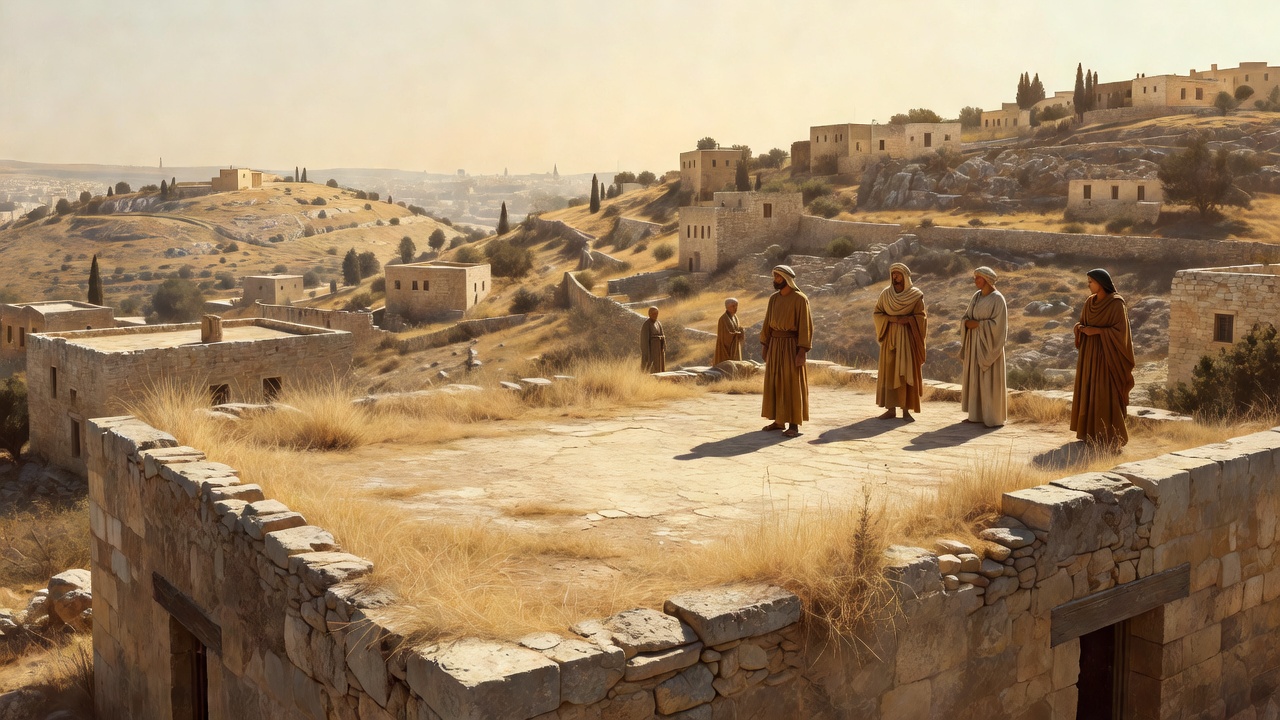
- The imagery of grass growing on rooftops reflects ancient construction, where flat roofs were often covered with packed earth. Seeds might sprout there after rains, but because the soil layer was shallow and exposed to the sun, the grass withered before it could mature or produce a harvest.Sources: the Bible text itself
- The phrase spoken by passersby in verse 8 mirrors the traditional agricultural greetings exchanged in ancient Israel, where travelers routinely blessed reapers and laborers working in the fields.Sources: the Bible text itself
- Zion was the prominent hill in Jerusalem where King David built his citadel, and in biblical poetry it often stands as a representation of God’s dwelling place and His people.Sources: the Bible text itself · Zion
Notes written with AI assistance from open sources (Theographic Bible Metadata, CC BY-SA 4.0; Easton’s Bible Dictionary, public domain) and reviewed before publishing.
Places in this chapter
Only places identified with high confidence are shown (90% or more according to the scholarly sources compiled by OpenBible). Period map: DARE (Digital Atlas of the Roman Empire), CC BY 4.0; modern map: © OpenStreetMap contributors; places: OpenBible.info (CC BY 4.0).
Credits and license for this translation
KAKAƗYARI NIUKIEYA XAPAYARI WIXARIKAKƗ
The Holy Bible in the in Huichol language of Mexico, 2020 edition
La Santa Biblia en lengua huichol de México, edición 2020
copyright © 2020 Wycliffe Bible Translators, Inc.
Language: Huichol
Translation by: Wycliffe Bible Translators, Inc.
Huichol [hch], Mexico
Copyright Information
© 1988-2020, Wycliffe Bible Translators, Inc.
This translation text is made available to you under the
terms of the Creative Commons License: Attribution-Noncommercial-No Derivative Works.
( http://creativecommons.org/licenses/by-nc-nd/3.0/ )
In addition, you have permission to port the text to different file formats, as long as you
do not change any of the text or punctuation of the Bible.
You may share, copy, distribute, transmit, and extract portions
or quotations from this work, provided that you include the above copyright
information:
You must give Attribution to the work.
You do not sell this work for a profit.
You do not make any derivative works that change any of the actual words or punctuation of the Scriptures.
Permissions beyond the scope of this license may be
available if you contact
us with your request.
The Holy Bible
in Huichol
© 1988-2020, Wycliffe Bible Translators, Inc.
This translation is made available to you under the terms of the
Creative Commons Attribution-Noncommercial-No Derivatives license 4.0.
You may share and redistribute this Bible translation or extracts from it in any format, provided that:
You include the above copyright and source information.
You do not sell this work for a profit.
You do not change any of the words or punctuation of the Scriptures.
Pictures included with Scriptures and other documents on this site are licensed just for use with those Scriptures and documents.
For other uses, please contact the respective copyright owners.
2025-09-03
Source: http://ebible.org/hch/ · eBible.org