Genesis 13
כתבי הקודש · Tap a verse to see its cross-references.
1וַיַּעַל֩ אַבְרָ֨ם מִמִּצְרַ֜יִם ה֠וּא וְאִשְׁתֹּ֧ו וְכָל־אֲשֶׁר־לֹ֛ו וְלֹ֥וט עִמֹּ֖ו הַנֶּֽגְבָּה׃ 2וְאַבְרָ֖ם כָּבֵ֣ד מְאֹ֑ד בַּמִּקְנֶ֕ה בַּכֶּ֖סֶף וּבַזָּהָֽב׃ 3וַיֵּ֙לֶךְ֙ לְמַסָּעָ֔יו מִנֶּ֖גֶב וְעַד־בֵּֽית־אֵ֑ל עַד־הַמָּקֹ֗ום אֲשֶׁר־הָ֨יָה שָׁ֤ם *אָהֳלֹה (אֽ͏ָהֳלֹו֙) בַּתְּחִלָּ֔ה בֵּ֥ין בֵּֽית־אֵ֖ל וּבֵ֥ין הָעָֽי׃ 4אֶל־מְקֹום֙ הַמִּזְבֵּ֔חַ אֲשֶׁר־עָ֥שָׂה שָׁ֖ם בָּרִאשֹׁנָ֑ה וַיִּקְרָ֥א שָׁ֛ם אַבְרָ֖ם בְּשֵׁ֥ם יְהוָֽה׃ 5וְגַם־לְלֹ֔וט הַהֹלֵ֖ךְ אֶת־אַבְרָ֑ם הָיָ֥ה צֹאן־וּבָקָ֖ר וְאֹהָלִֽים׃ 6וְלֹא־נָשָׂ֥א אֹתָ֛ם הָאָ֖רֶץ לָשֶׁ֣בֶת יַחְדָּ֑ו כִּֽי־הָיָ֤ה רְכוּשָׁם֙ רָ֔ב וְלֹ֥א יָֽכְל֖וּ לָשֶׁ֥בֶת יַחְדָּֽו׃ 7וֽ͏ַיְהִי־רִ֗יב בֵּ֚ין רֹעֵ֣י מִקְנֵֽה־אַבְרָ֔ם וּבֵ֖ין רֹעֵ֣י מִקְנֵה־לֹ֑וט וְהַֽכְּנַעֲנִי֙ וְהַפְּרִזִּ֔י אָ֖ז יֹשֵׁ֥ב בָּאָֽרֶץ׃ 8וַיֹּ֨אמֶר אַבְרָ֜ם אֶל־לֹ֗וט אַל־נָ֨א תְהִ֤י מְרִיבָה֙ בֵּינִ֣י וּבֵינֶ֔יךָ וּבֵ֥ין רֹעַ֖י וּבֵ֣ין רֹעֶ֑יךָ כִּֽי־אֲנָשִׁ֥ים אַחִ֖ים אֲנָֽחְנוּ׃ 9הֲלֹ֤א כָל־הָאָ֙רֶץ֙ לְפָנֶ֔יךָ הִפָּ֥רֶד נָ֖א מֵעָלָ֑י אִם־הַשְּׂמֹ֣אל וְאֵימִ֔נָה וְאִם־הַיָּמִ֖ין וְאַשְׂמְאִֽילָה׃ 10וַיִּשָּׂא־לֹ֣וט אֶת־עֵינָ֗יו וַיַּרְא֙ אֶת־כָּל־כִּכַּ֣ר הַיַּרְדֵּ֔ן כִּ֥י כֻלָּ֖הּ מַשְׁקֶ֑ה לִפְנֵ֣י ׀ שַׁחֵ֣ת יְהוָ֗ה אֶת־סְדֹם֙ וְאֶת־עֲמֹרָ֔ה כְּגַן־יְהוָה֙ כְּאֶ֣רֶץ מִצְרַ֔יִם בֹּאֲכָ֖ה צֹֽעַר׃ 11וַיִּבְחַר־לֹ֣ו לֹ֗וט אֵ֚ת כָּל־כִּכַּ֣ר הַיַּרְדֵּ֔ן וַיִּסַּ֥ע לֹ֖וט מִקֶּ֑דֶם וַיִּפָּ֣רְד֔וּ אִ֖ישׁ מֵעַ֥ל אָחִֽיו׃ 12אַבְרָ֖ם יָשַׁ֣ב בְּאֶֽרֶץ־כְּנָ֑עַן וְלֹ֗וט יָשַׁב֙ בְּעָרֵ֣י הַכִּכָּ֔ר וַיֶּאֱהַ֖ל עַד־סְדֹֽם׃ 13וְאַנְשֵׁ֣י סְדֹ֔ם רָעִ֖ים וְחַטָּאִ֑ים לַיהוָ֖ה מְאֹֽד׃ 14וֽ͏ַיהוָ֞ה אָמַ֣ר אֶל־אַבְרָ֗ם אַחֲרֵי֙ הִפָּֽרֶד־לֹ֣וט מֽ͏ֵעִמֹּ֔ו שָׂ֣א נָ֤א עֵינֶ֙יךָ֙ וּרְאֵ֔ה מִן־הַמָּקֹ֖ום אֲשֶׁר־אַתָּ֣ה שָׁ֑ם צָפֹ֥נָה וָנֶ֖גְבָּה וָקֵ֥דְמָה וָיָֽמָּה׃ 15כִּ֧י אֶת־כָּל־הָאָ֛רֶץ אֲשֶׁר־אַתָּ֥ה רֹאֶ֖ה לְךָ֣ אֶתְּנֶ֑נָּה וּֽלְזַרְעֲךָ֖ עַד־עֹולָֽם׃ 16וְשַׂמְתִּ֥י אֶֽת־זַרְעֲךָ֖ כַּעֲפַ֣ר הָאָ֑רֶץ אֲשֶׁ֣ר ׀ אִם־יוּכַ֣ל אִ֗ישׁ לִמְנֹות֙ אֶת־עֲפַ֣ר הָאָ֔רֶץ גַּֽם־זַרְעֲךָ֖ יִמָּנֶֽה׃ 17ק֚וּם הִתְהַלֵּ֣ךְ בָּאָ֔רֶץ לְאָרְכָּ֖הּ וּלְרָחְבָּ֑הּ כִּ֥י לְךָ֖ אֶתְּנֶֽנָּה׃ 18וַיֶּאֱהַ֣ל אַבְרָ֗ם וַיָּבֹ֛א וַיֵּ֛שֶׁב בְּאֵלֹנֵ֥י מַמְרֵ֖א אֲשֶׁ֣ר בְּחֶבְרֹ֑ון וַיִּֽבֶן־שָׁ֥ם מִזְבֵּ֖חַ לֽ͏ַיהוָֽה׃ פ
Did you know?
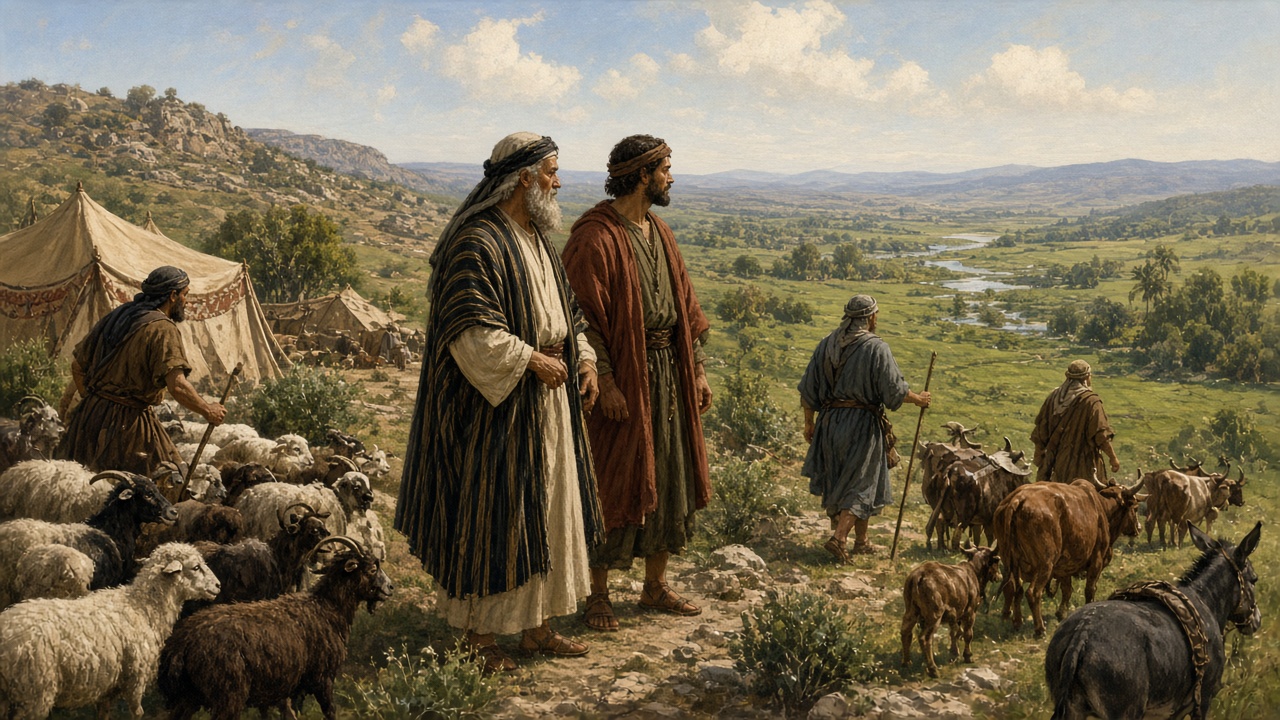
Abram and Lot Separate
- Abram came up from Egypt into the Negev, the arid district south of Palestine through which the caravan route ran from central Palestine to Egypt, and traveled from place to place toward Bethel.Sources: Negeb · the Bible text itself
- He returned to the place between Bethel and Ai where his tent had stood and where he had built an altar, and there he called on the name of the LORD. Easton's Bible Dictionary (1897) describes Bethel, about ten miles north of Jerusalem, as originally the royal Canaanite city of Luz, and holds that the name Bethel was first given to a nearby sanctuary rather than to the city itself until the tribe of Ephraim conquered it. Ai was one of the royal Canaanite cities and lay to the east of Bethel.Sources: Bethel (of Palestine) · Ai · the Bible text itself
- Lot looked out and saw the plain of the Jordan, well watered all the way to Zoar like the garden of the LORD and like the land of Egypt. Easton's Bible Dictionary (1897) calls this the first historical notice of the Jordan, in the account of Abraham and Lot's separation, and places Sodom, toward which Lot pitched his tent, in the vale of Siddim. The chapter notes that the LORD had not yet destroyed Sodom and Gomorrah, a destruction the dictionary attributes to fire from heaven because of the city's wickedness.Sources: Plain of Jordan · Sodom · the Bible text itself
Notes written with AI assistance from open sources (Theographic Bible Metadata, CC BY-SA 4.0; Easton’s Bible Dictionary, public domain) and reviewed before publishing.
Places in this chapter
- Egypt · 30.129, 31.308 · verses 1, 10
- Negeb · 31.245, 34.841 · verses 1, 3
- Jordan Valley · 32.317, 35.570 · verses 10, 11, 12
- Canaan · 32.767, 35.333 · verse 12
- Hebron · Today: Tel Rumeida · 31.525, 35.102 · verse 18
Only places identified with high confidence are shown (90% or more according to the scholarly sources compiled by OpenBible). Period map: DARE (Digital Atlas of the Roman Empire), CC BY 4.0; modern map: © OpenStreetMap contributors; places: OpenBible.info (CC BY 4.0).
Credits and license for this translation
כתבי הקודש
The Old Testament in ancient Hebrew, following the Masoretic Text
Public Domain
Language: עברית (Hebrew)
Dialect: Biblical/Ancient
2013-12-11
Source: http://ebible.org/hbo/ · eBible.org