Psalms 87
Baibala Hemolele · Tap a verse to see its cross-references.
1A IA no kona mau kumu ma na mauna hoano.
2Ua oi aku ka makemake o Iehova i na pukapa o Ziona, Mamua o na wahi noho ai a pau o ka Iakoba.
3Ua oleloia mai na mea nani nou, E ke kulanakauhale o ke Akua Sila.
4I ka poe ike mai ia'u, e kamailio aku au no Rahaba, a me Babulona: Aia o Pilisetia, a me Turo, a me Aitiopa, Oia ka i hanauia malaila.
5E oleloia mai no hoi no Ziona, Ua hanauia kela kanaka keia kanaka maloko ona; A na ka Mea kiekie e hookumu paa ia wahi.
6Ia Iehova e kakau ai i na kanaka, E hoike mai no oia, Ua hanauia oia nei malaila. Sila.
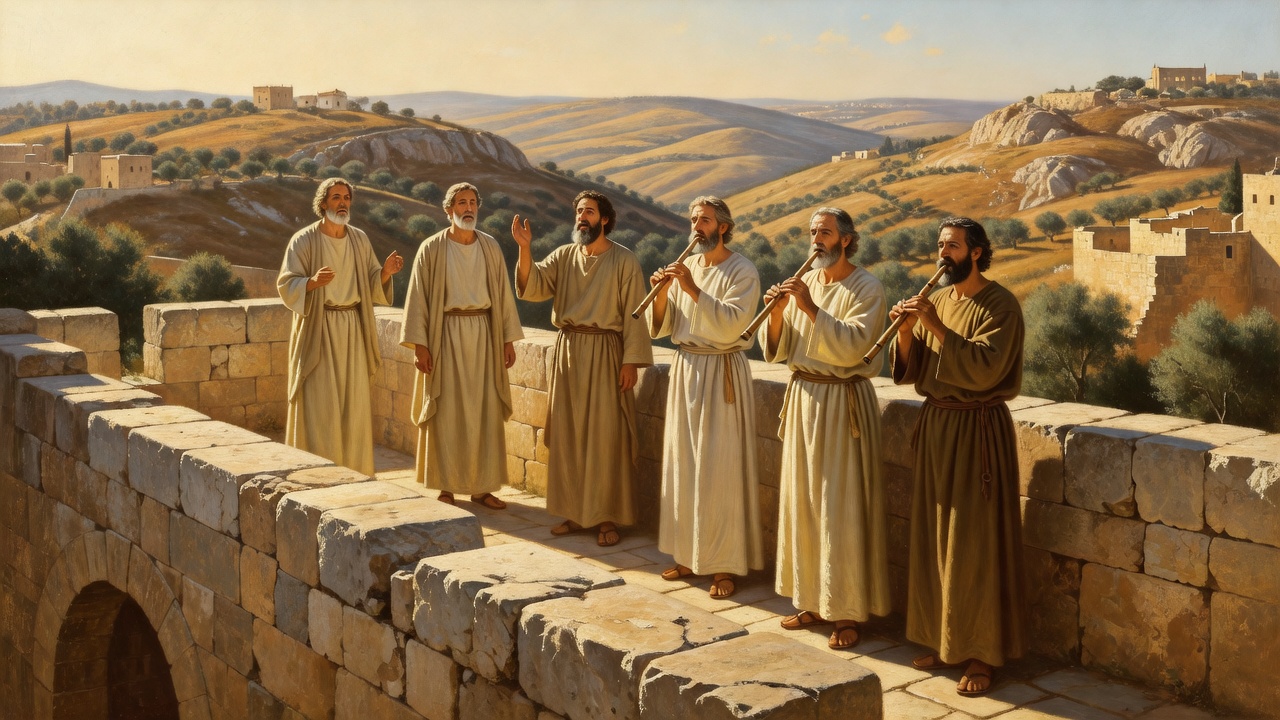
7O ka poe mele, a me ka poe hookiokio, Aia la iloko ou, kou mau punawai a pau.
Did you know?
Zion and the Nations
- In Psalm 87, foreign and historically rival regions—including Babylon, Philistia, Tyre, and Cush—are depicted as being registered as native citizens born in Zion, the city of God.Sources: the Bible text itself · Zion · Tyre · Babylon
- The name 'Rahab' in verse 4 is a poetic Hebrew term meaning insolence or pride, used in biblical poetry as a symbolic designation for Egypt.Sources: Rahab · the Bible text itself
- The psalm is attributed to the 'sons of Korah,' a Levitical group that provided musical leadership in Jerusalem centuries after their ancestor Korah led a rebellion in the wilderness.Sources: Korah (Levite) · the Bible text itself
Notes written with AI assistance from open sources (Theographic Bible Metadata, CC BY-SA 4.0; Easton’s Bible Dictionary, public domain) and reviewed before publishing.
Places in this chapter
- Zion · Today: Jerusalem · 31.777, 35.234 · verses 2, 5
- Babylon · 32.543, 44.422 · verse 4
- Cush · Today: Cush 1 · 16.935, 33.751 · verse 4
- Egypt · 30.129, 31.308 · verse 4
- Jerusalem · 31.777, 35.234 · verses 4, 6, 7
- Philistia · 31.664, 34.546 · verse 4
- Tyre · 33.271, 35.196 · verse 4
Only places identified with high confidence are shown (90% or more according to the scholarly sources compiled by OpenBible). Period map: DARE (Digital Atlas of the Roman Empire), CC BY 4.0; modern map: © OpenStreetMap contributors; places: OpenBible.info (CC BY 4.0).
Credits and license for this translation
Baibala Hemolele
The Holy Bible in the Hawaiian language of the United States, 1868 revision
Public Domain
Language: 'Olelo Hawai'i (Hawaiian)
Translation by: na na misionari i pai
2015-11-10
Source: http://ebible.org/haw1868/ · eBible.org