Proverbs 30
Bib Sen An · Tap a verse to see its cross-references.
1Pawòl a Agur, fis a Jaké a, pwofèt la:
nonm nan pale Ithiel,
a Ithiel ak Ucal:
2“Anverite, mwen pi bèt pase tout moun
e mwen pa gen konprann a yon nonm.
3Mwen pa t aprann sajès,
ni mwen pa gen konesans a Sila Ki Sen an.
4Kilès ki te monte nan syèl la e te desann?
Kilès ki te ranmase van nan ponyèt li?
Kilès ki te vlope dlo nan vètman li?
Kilès ki te etabli tout pwent tè yo?
Ki non li e ki non fis Li a?
Asireman, ou konnen!
5“Tout pawòl Bondye pase a leprèv;
Li se yon boukliye pou sila ki kache nan Li yo.
6Pa ogmante sou pawòl Li yo,
oswa Li va repwoche ou
e ou va fè prèv ke se yon mantè ou ye.
7“De bagay m te mande ou yo;
pa refize m yo avan m mouri:
8Fè desepsyon ak manti rete lwen mwen.
Pa ban m richès ni povrete.
Nouri mwen ak manje ki se pòsyon pa m nan,
9pou m pa vin plen e refize rekonèt Ou
pou di: ‘Se kilès ki SENYÈ a?’
oswa, pou m ta manke, vin vòlè
e fè yon gwo wont sou non Bondye mwen an.
10“Pa pale mal yon esklav a mèt li,
sinon li va modi ou, e ou va twouve koupab.
11Gen yon kalite moun ki modi papa li
e refize beni manman l.
12Gen yon kalite ki san tach nan pwòp zye li;
sepandan, yo poko lave pou sòti salte a.
13Gen yon kalite—O, jan zye li leve wo,
e pòpyè zye li leve ak awogans.
14Gen yon kalite moun ak dan tankou nepe
ak machwè tankou kouto,
ki prèt pou devore aflije sou fas tè yo,
e fè moun malere yo disparèt pami moun.
15“Sansi a gen de fi: ‘Ban mwen’ ak ‘Ban m’.
“Gen twa bagay ki pa janm satisfè, menm kat ki refize di: ‘Se kont’:
16Sejou Lanmò a, vant fanm esteril la,
latè a ki pa janm jwenn dlo ase,
ak dife ki pa janm di: ‘Se kont’.
17“Pou zye moun ki moke yon papa e ki giyonnen yon manman,
kòbo nan vale a va vin rache l,
e jenn èg yo va manje li.
18“Gen twa bagay ki twò bèl pou mwen,
kat ke m pa konprann:
19Vòl a yon èg nan syèl la,
pa sèpan an sou wòch,
chemen gwo bato a nan mitan lanmè,
ak manèv a yon jennonm ak yon fi.
20“Men konsa chemen a fanm adiltè a:
Li manje, li siye bouch li e li pale klè: ‘Mwen pa t fè mal’.
21“Anba twa bagay, latè tranble,
e anba kat, li pa ka kenbe:
22Anba yon esklav lè li vin wa,
ak yon moun fou lè l vin satisfè ak manje,
23anba yon fanm neglije lè l jwenn mari,
ak yon sèvant lè l pran plas mètrès kay la.
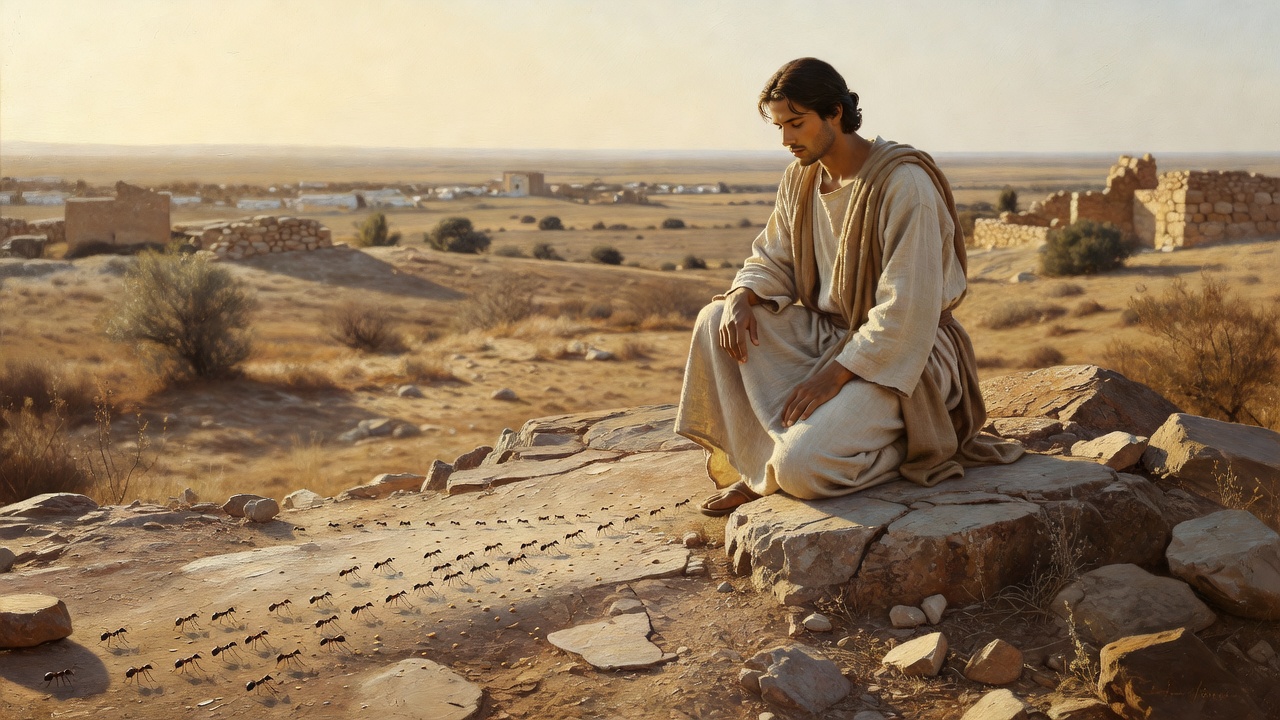
24“Kat bagay ki tou piti sou latè, men yo plen sajès:
25Foumi se pa yon pèp ki fò;
men yo prepare manje yo nan gran sezon.
26Chat mawon se pa yon pèp pwisan;
men yo fè kay yo nan wòch.
27Krikèt volan yo pa gen wa;
men yo parèt byen alinye.
28Zandolit ke ou kab kenbe nan men ou;
sepandan, li antre nan palè a wa a.
29“Gen twa bagay ki mache parèt bèl,
menm kat ki bèl lè yo mache:
30Lyon ki pwisan pami bèt yo,
e ki pa fè bak devan okenn bèt;
31Jan kòk mache a,
menm ak mal kabrit,
o yon wa lè lame parèt avè l.
32“Si ou te fè foli nan leve tèt ou byen wo,
oswa si ou te fè konplo pou mal,
mete men ou sou bouch ou.
33Paske lèt k ap laboure vin fè bè,
ak peze nen pote san;
se konsa laboure kòlè pwodwi konfli.”
Did you know?
The Sayings of Agur
- Proverbs 30 is attributed to Agur son of Jakeh, who addressed his sayings to Ithiel and Ucal. Beyond what is recorded in this chapter, nothing further is known about Agur or his father.Sources: Agur · Jakeh · Ucal · the Bible text itself
- The chapter frequently uses a graded numerical pattern ('three things... four that...') to group observations about nature and human behavior. Agur applies this structure to marvels of creation, social disruptions, stately walkers, and four small creatures that display remarkable wisdom: ants, rock badgers, locusts, and lizards.Sources: the Bible text itself
- Agur makes a specific two-part request, asking to be granted neither poverty nor riches, but only his daily portion of food. He explains that having too much might lead someone to disown the Lord, while falling into poverty might tempt a person to steal.Sources: the Bible text itself
Notes written with AI assistance from open sources (Theographic Bible Metadata, CC BY-SA 4.0; Easton’s Bible Dictionary, public domain) and reviewed before publishing.
Credits and license for this translation
Bib Sen An
The Holy Bible in Haitian Creole, 2023 update
copyright © 2017-2023 Ron Smith
Language: Kreyòl Ayisyen (Haitian)
Translation by: Ron Smith
Contributor: Felix Nixon
This translation is made available to you under the terms of the
Creative Commons Attribution Share-Alike license 4.0.
You have permission to share and redistribute this Bible translation in any format and to make reasonable revisions and adaptations of this translation, provided that:
You include the above copyright and source information.
If you make any changes to the text, you must indicate that you did so in a way that makes it clear that the original licensor is not necessarily endorsing your changes.
If you redistribute this text, you must distribute your contributions under the same license as the original.
Pictures included with Scriptures and other documents on this site are licensed just for use with those Scriptures and documents.
For other uses, please contact the respective copyright owners.
Note that in addition to the rules above, revising and adapting God's Word involves a great responsibility to be true to God's Word. See Revelation 22:18-19.
2026-06-11
Source: http://ebible.org/hatbsa/ · eBible.org