Nehemiah 10
Bib Sen An · Tap a verse to see its cross-references.
1Alò, sou dokiman sele a te gen non a: Néhémie, gouvènè a, fis a Hacalia a ak Sédécias, 2Seraja, Azaria, Jérémie, 3Paschhur, Amaria, Malkija, 4Hattusch, Schebania, Mallue, 5Harim, Merémoth, Abdias, 6Daniel, Guinnethon, Baruc, 7Meschullam, Abija, Mijamin, 8Maazia, Bilgaï, Schemaeja. Sila yo se te prèt yo. 9Epi Levit yo: Josué, fis a Azania a, Binnuï, nan fis a Hénadad yo, Kadmiel, 10anplis frè pa yo, Schebania, Hodija, Kelitha, Pelaja, Hanan, 11Michée, Rehob, Haschabia, 12Zaccur, Schérébia, Schebania, 13Hodija, Bani, Beninu. 14Chèf a pèp yo: Pareosch, Pachath-Moab, Élam, Zatthu, Bani, 15Bunni, Azgad, Bébaï, 16Adonija, Bigvaï, Adin, 17Ather, Ézéchias, Azzur, 18Hodija, Haschum, Betsaï 19Hariph, Anathoth, Nébaï, 20Magpiash, Meschullam, Hézir, 21Meschézabeel, Tsadok, Jaddua, 22Pelathia, Hanan, Anaja, 23Hosée, Hanania, Haschub, 24Hallochesch, Pilcha, Schobek, 25Rehum, Haschabna, Maaséja, 26Achija, Hanan, Anan, 27Malluc, Harim, Baana.
28Alò, tout lòt moun nan pèp la, prèt yo, Levit yo, gadyen pòtay yo, chantè yo, sèvitè tanp yo ak tout sila ki te separe yo menm soti nan pèp peyi yo pou lalwa Bondye pa yo, madanm pa yo, fis yo ak fi yo, tout sila ki te gen konesans avèk bon konprann yo, 29t ap reyini ansanm avèk moun fanmi yo, chèf pa yo e t ap pran sou yo menm, sou nivo madichon, yon sèman, pou mache nan lalwa Bondye, ki te bay pa Moïse la, Sèvitè Bondye a, e pou kenbe ak obeyi tout kòmandman a Bondye yo, SENYÈ nou an, avèk òdonans Li yo avèk règleman Li yo; 30epi pou nou pa bay fi nou yo a pèp peyi a, ni pran fi pa yo pou fis nou yo. 31Epi selon pèp peyi a ki konn vini avèk machandiz avèk manje pou vann nan Saba a, nou p ap achte nan men yo nan Saba a ni nan okenn jou sen. Anplis, nou va lese rekòlt yo nan setyèm ane a, ansanm avèk koleksyon a tout dèt.
32Ankò, nou plase pwòp tèt nou anba obligasyon pou fè kontribisyon yon tyè sik chak ane pou sèvis lakay Bondye nou an: 33pou pen konsakre, ofrann sereyal ki pa janm fini, ofrann brile ki pa janm fini, Saba yo, nouvèl lin, pou lè chwazi yo, pou bagay sen yo e pou ofrann peche pou fè ekspiyasyon pou peche Israël yo ak tout travay lakay Bondye nou an. 34Menm jan an, nou te tire osò pou founi depo bwa pou prèt yo, Levit yo ak pèp la pou yo ta kab mennen li lakay Bondye a, selon lakay zansèt papa nou yo, nan lè ki te etabli nan ane a, pou brile sou lotèl SENYÈ a, Bondye nou an, jan sa ekri nan lalwa a; 35epi pou yo ta kab pote premye fwi tè yo avèk premye fwi a tout fwi a tout pyebwa yo, lakay SENYÈ a chak ane, 36epi pote lakay Bondye nou an, premye ne a fis nou yo ak bèf nou yo e premye ne nan bann mouton avèk twoupo nou yo, jan sa ekri nan lalwa a, pou prèt ki ap sèvi lakay Bondye nou an. 37E ke nou va, osi, pote premye nan pat farin nou yo, kontribisyon nou yo, fwi a tout pyebwa, diven nèf avèk lwil pou prèt yo nan chanm lakay Bondye nou an ak dim tè nou pou Levit yo; paske se Levit yo ki resevwa dim nan tout vil andeyò yo. 38Prèt la, fis a Aaron an, va avèk Levit yo lè Levit yo resevwa dim yo, e Levit yo va pote yon dizyèm nan dim pa yo vè lakay Bondye nou an, pou l antre nan chanm depo yo. 39Paske, fis Israël yo avèk fis Lévi yo va pote don sereyal la, diven nèf la ak lwil la nan chanm yo. La se zouti a sanktyè yo, prèt k ap fè sèvis yo, gadyen pòtay yo, ak chantè yo. Konsa, nou p ap neglije lakay Bondye nou an.
Did you know?
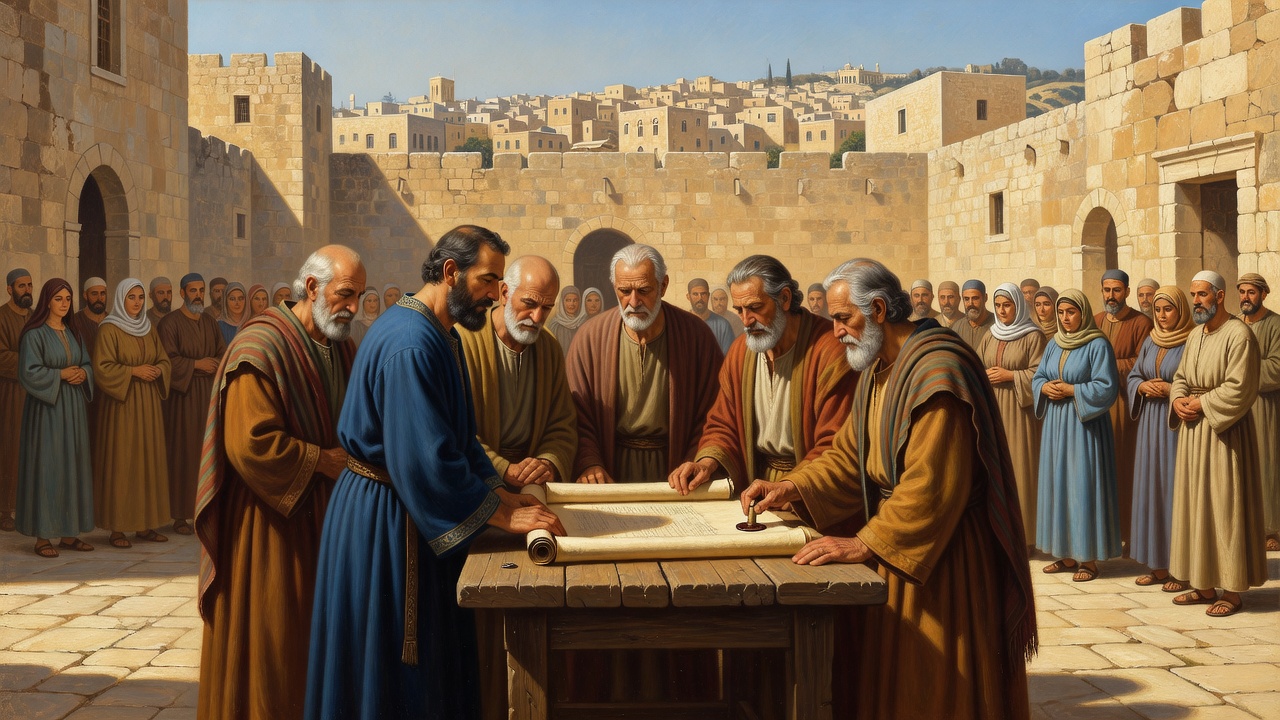
Sealing the Covenant
- Nehemiah the governor, alongside priests, Levites, and community leaders, affixed their seals to a written agreement pledging obedience to the Law of Moses. The broader population, including all men, women, and children capable of understanding, ratified the commitment with a solemn oath.Sources: the Bible text itself · Nehemiah
- The community specifically committed to observing the Sabbath by refusing to buy goods or grain from neighboring peoples on holy days. They also agreed to let the land lie fallow and cancel debts every seventh year, in addition to avoiding intermarriage with surrounding peoples.Sources: the Bible text itself
- To ensure the temple services were maintained, the people imposed an annual levy of a third of a shekel on themselves and cast lots to supply firewood for the altar. They also committed to bringing tithes and the firstfruits of their crops, livestock, and dough to support the priests and Levites.Sources: the Bible text itself
Notes written with AI assistance from open sources (Theographic Bible Metadata, CC BY-SA 4.0; Easton’s Bible Dictionary, public domain) and reviewed before publishing.
Credits and license for this translation
Bib Sen An
The Holy Bible in Haitian Creole, 2023 update
copyright © 2017-2023 Ron Smith
Language: Kreyòl Ayisyen (Haitian)
Translation by: Ron Smith
Contributor: Felix Nixon
This translation is made available to you under the terms of the
Creative Commons Attribution Share-Alike license 4.0.
You have permission to share and redistribute this Bible translation in any format and to make reasonable revisions and adaptations of this translation, provided that:
You include the above copyright and source information.
If you make any changes to the text, you must indicate that you did so in a way that makes it clear that the original licensor is not necessarily endorsing your changes.
If you redistribute this text, you must distribute your contributions under the same license as the original.
Pictures included with Scriptures and other documents on this site are licensed just for use with those Scriptures and documents.
For other uses, please contact the respective copyright owners.
Note that in addition to the rules above, revising and adapting God's Word involves a great responsibility to be true to God's Word. See Revelation 22:18-19.
2026-06-11
Source: http://ebible.org/hatbsa/ · eBible.org