Matthew 5
Bib Sen An · Tap a verse to see its cross-references.
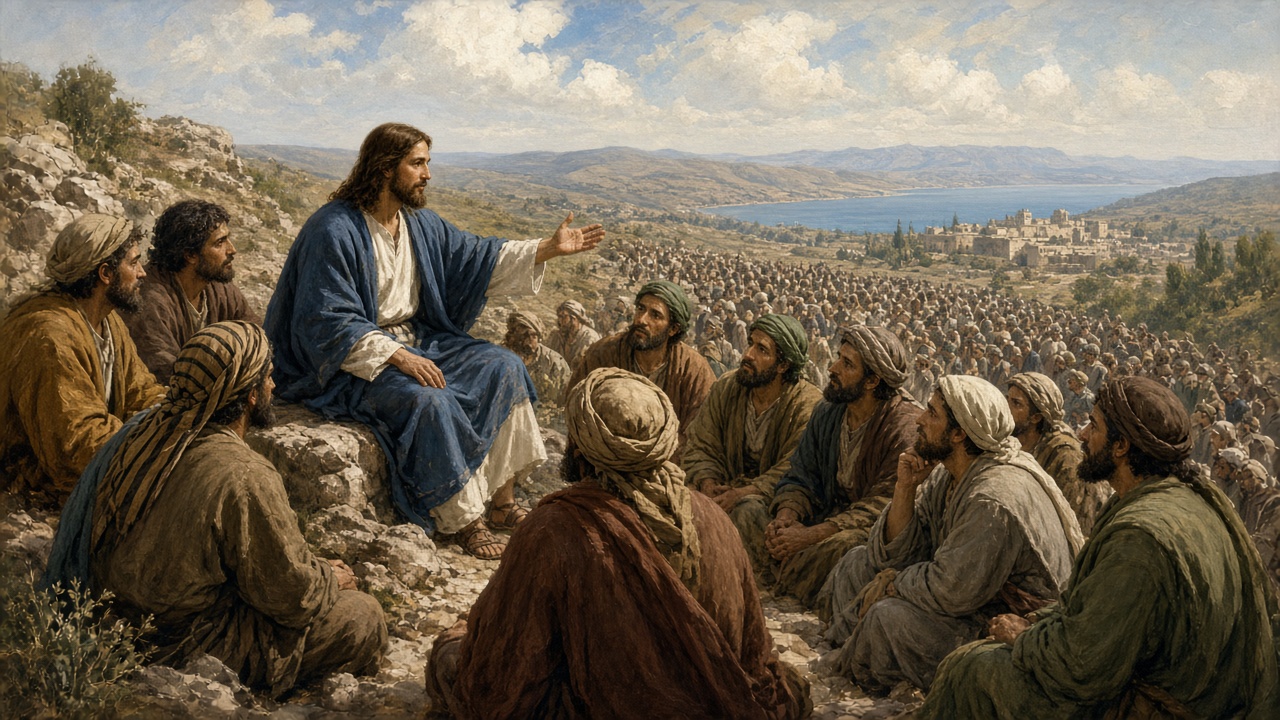
1Lè Jésus te wè foul la, Li te monte sou mòn nan. Lè Li fin chita, disip Li yo te vin kote L. 2Li te louvri bouch Li e te kòmanse enstwi yo konsa:
3“Beni se sila yo ki malere an espri;
paske wayòm syèl la se pou yo.
4Beni se sila yo ki soufri doulè akoz gwo pèt;
yo va konsole.
5Beni se sila yo ki enb;
yo va resevwa tout latè kòm eritaj.
6Beni se sila yo ki grangou avèk swaf pou ladwati;
yo va satisfè.
7Beni se sila yo ki bay mizerikòd;
yo va resevwa mizerikòd.
8Beni se sila yo ki gen kè pwòp nèt;
yo va wè Bondye.
9Beni se sila yo ki fè lapè;
yo va rele yo fis Bondye.
10Beni se sila yo ki te pèsekite pou ladwati;
wayòm syèl la se pou yo.
11“Beni se nou menm lè moun ensilte nou, pèsekite nou e pale san verite tout kalite mal kont nou pou koz a Non Mwen. 12Rejwi e fè kè nou kontan. Rekonpans nou nan syèl la gran; paske se konsa yo te pèsekite pwofèt ki te avan nou yo.
13“Nou se sèl latè; men si sèl la pèdi gou li, kijan pou l fè l rekouvri gou sèl ankò? Li p ap bon ankò sof pou voye jete e pile anba pye moun.
14“Nou se limyè lemonn; yon vil ki plase sou tèt yon mòn pa kapab kache. 15Ni moun p ap limen yon lanp pou mete li anba yon panyen; men sou yon tab kote li va bay limyè pou tout sila yo ki nan kay la. 16Kite limyè nou an klere devan tout moun pou yo kapab wè bon zèv nou, e bay glwa a Papa nou ki nan syèl la.
17“Pa panse ke Mwen te vini pou aboli Lalwa ak pwofèt yo. Mwen pa te vini pou aboli, men pou akonpli. 18Paske vrèman Mwen di nou jiskaske syèl la avèk tè a disparèt, ni yon ti lèt, ni yon ti mak p ap disparèt nan Lalwa a, jiskaske tout bagay fin acheve. 19Pou sa, nenpòt moun ki anile menm youn ki pi piti nan kòmandman sa yo, e bay enstriksyon a lòt pou fè sa, l ap rele pi piti nan wayòm syèl la. Men sila ki kenbe yo e enstwi lòt pou fè yo tou, li va rele pi gran nan wayòm syèl la. 20Paske m ap di nou ke si ladwati nou pa depase sila a skrib avèk Farizyen yo, nou p ap janm antre nan wayòm syèl la. 21Nou konn tande ke tout ansyen yo te di: ‘Nou pa pou touye moun’ e ‘Nenpòt moun ki touye moun ap rann kont devan tribinal’. 22Men Mwen di nou ke nenpòt moun ki fache avèk frè li, ap koupab devan tribinal. Epi nenpòt moun ki di: ‘Raka’ (pou ryen) ap koupab devan tribinal pi wo a, epi sila ki di: ‘enbesil’ ap koupab pou l antre nan lanfè.
23“Pou sa, lè ou ap prezante ofrann ou sou lotèl la, e pandan ou la, ou sonje ke frè ou a gen yon bagay kont ou, 24kite ofrann ou an la devan lotèl la e ale fè wout ou. Premyeman, rekonsilye avèk frè ou, e apre vin prezante ofrann ou an.
25“Fè zanmi depi nan wout avèk lènmi k ap mennen ou tribinal la, pou li pa livre ou devan jij la, e jij la va livre ou bay otorite pou jete ou nan prizon. 26Anverite Mwen di nou, nou p ap soti la jiskaske nou peye dènye santim nan.”
27“Nou konn tande ke yo te di: ‘Nou pa pou fè adiltè’; 28men Mwen di nou ke nenpòt moun ki gade yon fanm avèk lanvi pou li, gen tan fè adiltè avèk li deja nan kè l.
29“Konsa, si zye dwat ou fè ou tonbe, rache li e jete li lwen ou. Paske li pi bon pou pèdi yon manm nan kò ou, pase pou kite tout kò ou jete nan lanfè. 30Si men dwat ou fè ou tonbe, koupe li e jete li lwen ou. Paske li pi bon pou yon pati nan kò ou ta pèdi olye pou tout kò ou ta ale nan lanfè.”
31“Epi yo te konn di: ‘Nenpòt moun ki voye madanm li ale; kite li bay li yon sètifika divòs pou voye l ale.’ 32Men Mwen di nou ke nenpòt moun ki voye madanm li ale, sof pou enfidelite, fè l komèt adiltè, e nenpòt moun ki marye avèk yon fanm divòse fè adiltè.
33“Ankò, nou konn tande yo te di a lansyen yo: ‘Nou pa pou fè fo sèman, men nou gen pou akonpli tout sa ke nou sèmante a Bondye’. 34Men Mwen di nou: Pa sèmante menm, ni pa syèl la, paske se twòn Bondye li ye; 35ni pa tè a, paske se kote Li mete pye Li, ni pa Jérusalem, paske se Gran Vil a Gran Wa a. 36Ni nou pa pou sèmante sou tèt nou paske nou pa kapab fè menm yon grenn cheve vin blan, ni nwa. 37Men kite pawòl nou sèlman ‘wi’ pou ‘wi’ e ‘non’ pou ‘non’. Nenpòt bagay ki depase sa yo soti nan mèt mechanste a.
38“Nou konn tande ke yo konn di: ‘Zye pou zye e dan pou dan’; 39men Mwen di nou: Pa reziste a sila ki mechan an, men si nenpòt moun frape nou bò figi dwat nou, vire bay li lòt la tou. 40Si nenpòt moun vle fè pwosè kont nou pou l pran chemiz nou, bay li palto a tou. 41Nenpòt moun ki fòse nou pou mache yon kilomèt avèk li, fè de kilomèt. 42Bay a sila ki mande nou an, e pa vire do bay sila ki vle prete nan men nou an.
43“Nou konn tande ke yo di: ‘Renmen vwazen nou, e rayi lènmi nou.’ 44Men Mwen di nou: Renmen lènmi nou yo e priye pou sila ki pèsekite nou yo, 45pou nou kapab fis a Papa nou ki nan syèl la. Paske Li fè solèy Li leve sou mechan yo, ak bon yo, e voye lapli sou sila ki dwat yo, ak sila ki pa dwat yo.
46“Paske si nou renmen sila ki renmen nou yo, ki rekonpans nou ka resevwa? Èske kolektè kontribisyon yo pa fè menm bagay la tou? 47Epi si nou salye frè nou yo sèlman, kisa nou fè plis ke lòt moun yo? Èske payen yo pa fè menm bagay la tou?
48Pou sa, nou dwe pafè menm jan ke Papa nou ki nan syèl la pafè.”
Did you know?
The Sermon on the Mount
- When Jesus saw the crowds, he went up on the mountain, sat down, and began to teach his disciples. That discourse is known as the Sermon on the Mount. A chronological note places its start in AD 28 and gives it a duration of one day.Sources: the Bible text itself · Sermon on the Mount
- Teaching about oaths, Jesus says not to swear by Jerusalem, for it is the city of the great King. In the original the name is a dual form meaning possession of peace, or foundation of peace. That form probably refers to the two mountains on which the city was built, Zion and Moriah, or, as some suppose, to the upper and the lower city; it was also called the city of God and the holy city.Sources: the Bible text itself · Jerusalem
Notes written with AI assistance from open sources (Theographic Bible Metadata, CC BY-SA 4.0; Easton’s Bible Dictionary, public domain) and reviewed before publishing.
Places in this chapter
- Jerusalem · 31.777, 35.234 · verse 35
Only places identified with high confidence are shown (90% or more according to the scholarly sources compiled by OpenBible). Period map: DARE (Digital Atlas of the Roman Empire), CC BY 4.0; modern map: © OpenStreetMap contributors; places: OpenBible.info (CC BY 4.0).
Credits and license for this translation
Bib Sen An
The Holy Bible in Haitian Creole, 2023 update
copyright © 2017-2023 Ron Smith
Language: Kreyòl Ayisyen (Haitian)
Translation by: Ron Smith
Contributor: Felix Nixon
This translation is made available to you under the terms of the
Creative Commons Attribution Share-Alike license 4.0.
You have permission to share and redistribute this Bible translation in any format and to make reasonable revisions and adaptations of this translation, provided that:
You include the above copyright and source information.
If you make any changes to the text, you must indicate that you did so in a way that makes it clear that the original licensor is not necessarily endorsing your changes.
If you redistribute this text, you must distribute your contributions under the same license as the original.
Pictures included with Scriptures and other documents on this site are licensed just for use with those Scriptures and documents.
For other uses, please contact the respective copyright owners.
Note that in addition to the rules above, revising and adapting God's Word involves a great responsibility to be true to God's Word. See Revelation 22:18-19.
2026-06-11
Source: http://ebible.org/hatbsa/ · eBible.org