Malachi 4
Bib Sen An · Tap a verse to see its cross-references.
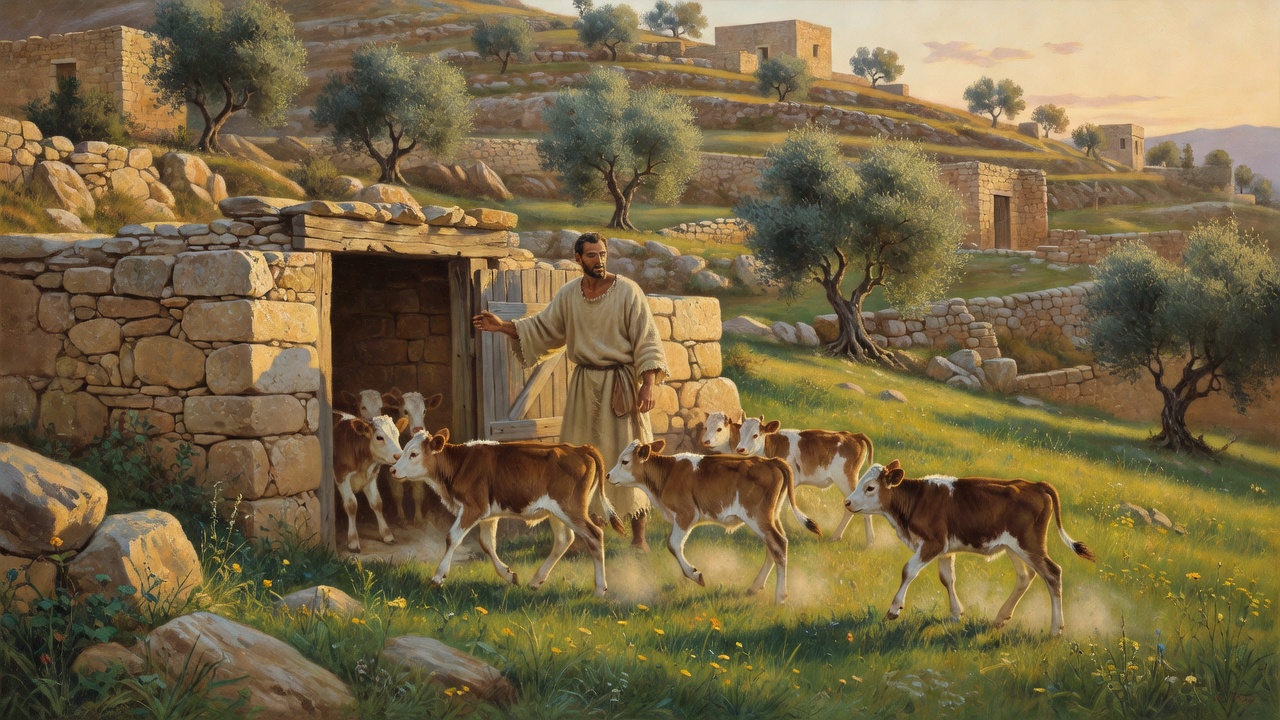
1“Paske gade byen, jou a ap vini, byen cho tankou yon founo, lè tout moun ògeye yo ak tout malfektè yo va vin tounen pay vannen. Jou k ap vini an va fin boule yo nèt,” pale SENYÈ Dèzame yo: “jiskaske li pa kite pou yo ni rasin ni branch. 2Men pou nou menm ki gen lakrent non Mwen an, solèy ladwati a va vin leve ak gerizon nan zèl li. Konsa, nou va sòti deyò pou sote toupatou tankou ti bèf ki fenk sòti nan pak yo. 3Nou va foule mechan an anba pye nou, paske yo va tankou sann anba pla pye nou nan jou ke Mwen fè a,” pale SENYÈ dèzame yo.
4“Sonje lalwa a sèvitè Mwen an, Moïse, règleman ak òdonans ke M te kòmande li nan Horeb pou tout Israël yo.
5“Gade byen, Mwen ap voye bannou Élie, pwofèt la, avan gwo jou tèrib a SENYÈ a vin rive a. 6Li va tounen kè a papa yo vè pitit yo, e kè a pitit yo vè papa yo, pou m pa vin frape peyi a avèk yon malediksyon.”
Did you know?
The Day of the Lord and the Promise of Elijah
- Malachi calls on Israel to remember the law given to Moses at Mount Horeb. Horeb is a biblical name for the mountainous range where Mount Sinai stands, the site where the Israelites encamped and received divine statutes and ordinances.Sources: the Bible text itself · Horeb · Moses
- The passage concludes with the promise that Elijah the prophet will be sent before the great Day of the Lord to reconcile parents and children. In the biblical narrative, Elijah was a prophet from Tishbe who delivered messages during the reign of King Ahab.Sources: the Bible text itself · Elijah
- Malachi uses vivid agricultural imagery to describe the coming judgment and restoration, contrasting evildoers reduced to dry stubble in a fire with the faithful, who are pictured leaping with joy like calves let out of a stall.Sources: the Bible text itself
Notes written with AI assistance from open sources (Theographic Bible Metadata, CC BY-SA 4.0; Easton’s Bible Dictionary, public domain) and reviewed before publishing.
Places in this chapter
- Mount Horeb · Today: Jebel Musa · 28.540, 33.973 · verse 4
Only places identified with high confidence are shown (90% or more according to the scholarly sources compiled by OpenBible). Period map: DARE (Digital Atlas of the Roman Empire), CC BY 4.0; modern map: © OpenStreetMap contributors; places: OpenBible.info (CC BY 4.0).
Credits and license for this translation
Bib Sen An
The Holy Bible in Haitian Creole, 2023 update
copyright © 2017-2023 Ron Smith
Language: Kreyòl Ayisyen (Haitian)
Translation by: Ron Smith
Contributor: Felix Nixon
This translation is made available to you under the terms of the
Creative Commons Attribution Share-Alike license 4.0.
You have permission to share and redistribute this Bible translation in any format and to make reasonable revisions and adaptations of this translation, provided that:
You include the above copyright and source information.
If you make any changes to the text, you must indicate that you did so in a way that makes it clear that the original licensor is not necessarily endorsing your changes.
If you redistribute this text, you must distribute your contributions under the same license as the original.
Pictures included with Scriptures and other documents on this site are licensed just for use with those Scriptures and documents.
For other uses, please contact the respective copyright owners.
Note that in addition to the rules above, revising and adapting God's Word involves a great responsibility to be true to God's Word. See Revelation 22:18-19.
2026-06-11
Source: http://ebible.org/hatbsa/ · eBible.org