Luke 22
Bib Sen An · Tap a verse to see its cross-references.
1Alò, fèt Pen San Ledven an ki rele Pak Jwif la, t ap pwoche. 2Konsa, Chèf prèt avèk skrib yo t ap chache kijan yo ta kapab mete L a lanmò; paske yo te pè pèp la.
3Konsa, Satan te antre nan Judas ki te rele Iscariot, ki te konte pami douz yo. 4Li te sòti, e te diskite avèk chèf prèt avèk ofisye yo sou jan li ta kapab trayi Li a yo menm. 5Yo te kontan, e te vin dakò pou bay li lajan. 6Donk, li te antann li avèk yo, e te kòmanse chache yon bon okazyon pou livre Li bay yo kote pa t gen foul moun.
7Alò, te rive premye jou Pen San Ledven an pandan lè yo te oblije fè sakrifis jenn mouton an. 8Li te voye Pierre avèk Jean e te di: “Ale prepare Pak la pou nou pou nou kab manje li.”
9Yo te mande li: “Ki kote Ou vle nou prepare l?”
10Li te di yo: “Gade, lè nou antre nan vil la, yon mesye k ap pote yon vaz dlo va vin rankontre nou. Swiv li pou antre nan kay kote li antre a.” 11Nou va di a mèt kay la: “Mèt la di nou, ‘Kote chanm vizitè a kote Mwen kapab manje Pak la avèk disip Mwen yo?’ 12Epi li va montre nou yon gwo chanm anlè, byen founi. Prepare li la.”
13Yo te pati e te twouve tout bagay jan li te di yo a. Yo te prepare Pak la.
14Lè lè a te rive, Li te repoze a tab, e apòt yo te avè L. 15Li te di yo: “Mwen te seryezman anvi manje Pak sa a avèk nou avan Mwen soufri; 16paske Mwen di nou, Mwen p ap janm manje li ankò, jiskaske li vin akonpli nan wayòm Bondye a.” 17Lè l te fin pran yon tas, e te beni li, Li te di: “Pran sa a, e pataje li pami nou menm. 18Paske Mwen di nou, Mwen p ap bwè fwi rezen an depi kounye a jiskaske wayòm Bondye a vini.”
19Lè L te fin pran yon pen e te beni li, Li te kase l. Li te bay yo e te di: “Sa se kò M ki bay pou nou menm. Fè sa nan memwa a Mwen menm.” 20Menm jan an, Li te pran tas la lè yo te fin manje e te di: “Tas sa se akò nèf de san Mwen an ki vide nèt pou nou. 21Men gade, men a sila ki trayi Mwen an; li la avè M sou tab la. 22Paske anverite, Fis a Lòm nan va ale jan sa te deja detèmine a. Men malè a moun ki trayi Li a!”
23Konsa, yo te kòmanse diskite pami yo kilès nan yo ke li ta kapab ye pou ta fè bagay sa a.
24Te leve osi yon diskisyon pami yo sou kilès nan yo ki te konsidere kòm pi gran. 25Men Li te di yo: “Wa a payen yo domine yo, e sila ki gen otorite sou yo, yo rele ‘byenfetè’. 26Men se pa konsa pou nou menm, men fòk sila a ki pi gran pami nou an vin tankou pi piti a, e direktè a tankou sèvitè a. 27Paske, kilès ki pi gran an, sila a ki repoze a tab la, oubyen sila k ap sèvi a? Se pa sila ki repoze a tab la? Men Mwen menm, mwen pami nou kòm sila k ap sèvi a.
28Nou menm se sila yo ki te kanpe avè M nan tout eprèv Mwen yo. 29Epi menm jan an ke Papa M ban Mwen yon wayòm, Mwen bannou li, 30pou nou kapab manje e bwè sou tab Mwen nan wayòm Mwen an. Konsa, nou va chita sou douz twòn yo pou jije douz tribi Israël yo.
31Simon, Simon, veye byen. Satan mande pèmisyon pou vannen ou tankou ble. 32Men Mwen te priye pou ou, pou lafwa ou pa pèdi; e pou ou, nan lè ke ou retounen ankò, kab bay frè ou yo fòs.”
33Men li te di Li: “Senyè, avèk Ou, mwen prepare pou m ale ni nan prizon, ni a lanmò!”
34Li te reponn: “Mwen di ou, Pierre, ke kòk la p ap gen tan chante jodi a avan ou di twa fwa ke ou pa rekonèt Mwen.”
35Li te di yo: “Lè Mwen te voye nou deyò san bous, ni sak, ni sapat la, nou pa t manke anyen; se pa sa?” E yo te di: “Non, anyen”.
36Li te di yo ankò: “Men koulye a, nenpòt moun ki gen yon bous, fòk li pran l avè l; menm jan an tou, yon sak. E nenpòt moun ki pa gen, fòk li vann manto li, pou achte yon nepe. 37Paske Mwen di nou ke sa ki ekri a oblije akonpli nan Mwen. ‘E Li te konte pami malfektè yo.’ Paske sa ki gen referans a Mwen menm nan gen pou akonpli.”
38Yo te di: “Senyè, gade, men de nepe.” E Li te di yo: “Sa sifi.”
39Li te sòti, e te kontinye kòm abitid Li, vè Mòn Olivye a. Disip Li yo osi te swiv Li. 40Lè L te rive la, Li te di yo: “Priye pou nou pa antre nan tantasyon.”
41Konsa, Li te kite yo pou rive vè distans ke yon moun kab voye yon wòch, e Li te mete L sou jenou pou priye. 42Li t ap di: “Papa, si se volonte Ou, retire tas sa a sou Mwen; malgre pa selon volonte M, men ke pa W la kapab fèt.”
43Alò, yon zanj syèl la te parèt a Li menm pou bay Li fòs. 44Ak gwo toumant, Li t ap priye avèk entansite. Swè Li te vin tankou gwo gout san ki t ap tonbe atè.
45Lè L te leve soti nan lapriyè, Li te vin kote disip yo e te twouve yo nan dòmi akoz tristès yo. 46Li te di yo: “Poukisa nou ap dòmi? Leve e priye pou nou pa antre nan tantasyon.”
47Pandan Li te toujou ap pale, men yon foul te parèt avèk sila ki te rele Judas a, youn nan douz yo, ki t ap mennen yo. Li te pwoche Jésus pou bo L. 48Men Jésus te di li: “Judas, èske w ap trayi Fis a Lòm nan avèk yon bo?”
49Lè sila ki te antoure Li yo te wè sa ki t ap fèt la, yo te di: “Senyè, èske n ap frape avèk nepe a”? 50Konsa, youn nan yo te frape esklav a wo prèt la, e te koupe zòrèy dwat li.
51Men Jésus te reponn e te di: “Anmwens, kite m fè sa a” epi Li te touche zòrèy la, e te geri li. 52Jésus te di a chèf prèt avèk ofisye a tanp ki te vini kont Li yo: “Nou vini avèk nepe ak baton tankou nou t ap vini kont yon vòlè? 53Pandan ke Mwen te avèk nou chak jou nan tanp lan, nou pa t mete men sou Mwen; men lè sa a avèk pouvwa tenèb la se lè pa nou an.”
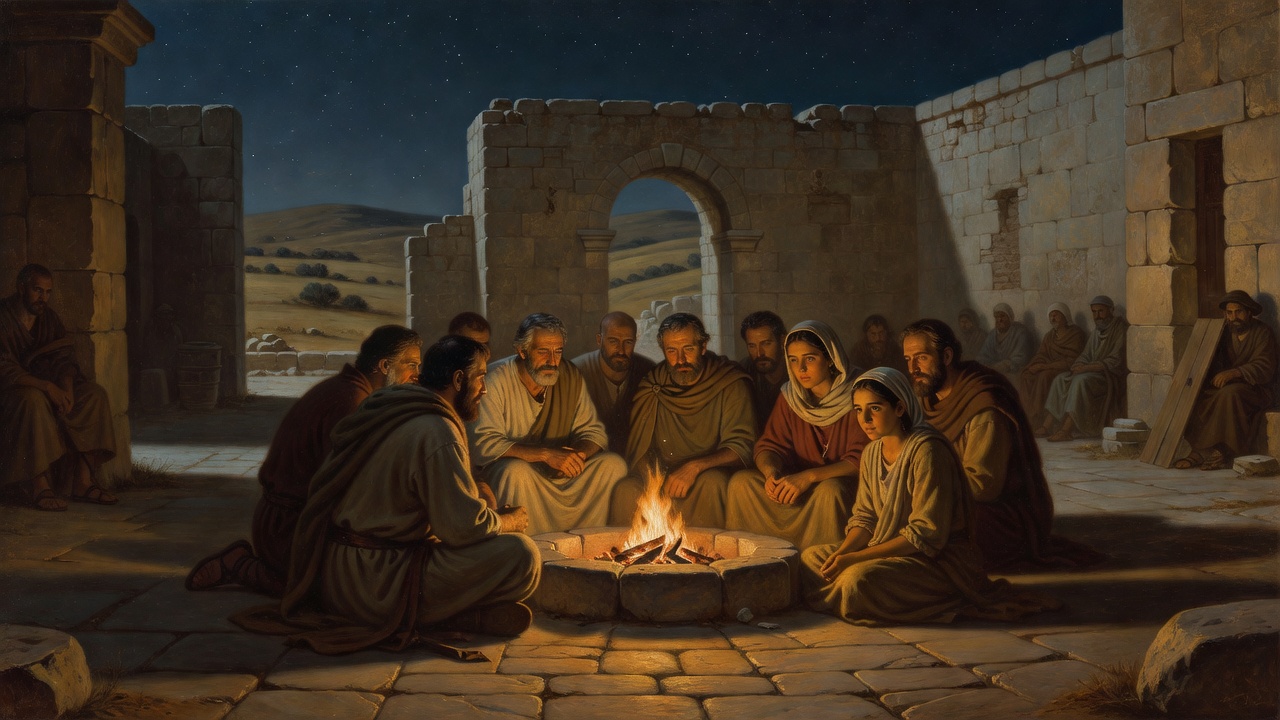
54Lè yo te fin arete Li, yo te mennen L ale, e te fè L rive lakay wo prèt la. Men Pierre t ap swiv a yon distans. 55Apre yo te fin sanble dife nan mitan lakou tribinal la, e te chita ansanm, Pierre te chita pami yo. 56Alò, yon fi ki t ap sèvi, lè l te wè li nan limyè dife a, li te gade l toupre, e te di: “Mesye sa a te avè L tou, wi.”
57Men Li te demanti sa, e te di: “Fanm, mwen pa konnen Li.”
58Yon ti jan pita, yon lòt te wè l, e te di: “Ou menm se youn nan yo tou.” Men Pierre te di: “Mesye, se pa mwen!”
59Apre anviwon yon èdtan te fin pase, yon lòt mesye te kòmanse ensiste, e te di: “Sètènman mesye sa a te avè l tou, paske li se yon Galileyen.”
60Men Pierre te di: “Mesye, mwen pa konnen anyen de sa w ap pale a!” E lapoula, pandan li te toujou ap pale, yon kòk te chante. 61Senyè a te vire gade Pierre. E Pierre te sonje pawòl a Senyè a, jan li te di li a: “Avan kòk la chante jodi a, ou va renye M twa fwa.” 62Li te sòti deyò, e te kriye byen amè.
63Alò mesye ki te kenbe Jésus yo t ap moke Li, e bat Li, 64Konsa, yo te mare kouvri zye Li avèk yon twal, e te di L: “Pwofetize non; se kilès ki frape Ou a?” 65Yo t ap di anpil lòt bagay kont Li, avèkblasfèm.
66Lè li te fè jou, Konsèy Ansyen a pèp la te reyini, ni chèf prèt avèk skrib yo. Yo te mennen Li nan chanm konsèy la, e t ap di: 67“Si Ou menm se Kris la, di nou sa a.” Men Li te di yo: “Si Mwen di nou, nou p ap kwè; 68epi si Mwen poze nou yon kesyon, nou p ap reponn, ni lage M ale. 69Men depi koulye a, Fis a Lòm nan va chita sou men dwat a pwisans Bondye a.”
70Konsa, yo tout te di: “Alò, Ou menm se Fis Bondye a?” Li te reponn yo: “Ou pale sa, paske, Mwen Se.”
71Answit yo te di: “Kisa nou bezwen anplis kòm temwayaj? Paske nou tande sa nou menm nan pwòp bouch Li!”
Did you know?
The Passover Meal and the Arrest
- The chapter calls the approaching Feast of Unleavened Bread the Passover and places the meal on the day the Passover lamb was to be sacrificed. Jesus sent Peter and John, both from Bethsaida and both fishermen, to prepare it; they found a large furnished upper room, and when the hour came he reclined at the table with the apostles.Sources: the Bible text itself · Simon Peter · John the Apostle
- Judas, one of the Twelve, is called Iscariot, a surname explained as meaning a man of Kerioth, and he is identified as the son of Simon. The chapter says that Satan—a name meaning adversary or accuser—entered him; Judas then agreed with the chief priests and temple officers to hand Jesus over for money, away from the crowd.Sources: the Bible text itself · Judas Iscariot · Satan
- After the meal Jesus went, as usual, to the Mount of Olives, a ridge east of Jerusalem named for the olive trees covering its slopes and separated from the city by the Kidron valley. He withdrew about a stone’s throw beyond the disciples, knelt, and prayed; then a crowd led by Judas arrived, and Jesus was taken to the high priest’s house.Sources: the Bible text itself · Mount of Olives
Notes written with AI assistance from open sources (Theographic Bible Metadata, CC BY-SA 4.0; Easton’s Bible Dictionary, public domain) and reviewed before publishing.
Places in this chapter
Only places identified with high confidence are shown (90% or more according to the scholarly sources compiled by OpenBible). Period map: DARE (Digital Atlas of the Roman Empire), CC BY 4.0; modern map: © OpenStreetMap contributors; places: OpenBible.info (CC BY 4.0).
Credits and license for this translation
Bib Sen An
The Holy Bible in Haitian Creole, 2023 update
copyright © 2017-2023 Ron Smith
Language: Kreyòl Ayisyen (Haitian)
Translation by: Ron Smith
Contributor: Felix Nixon
This translation is made available to you under the terms of the
Creative Commons Attribution Share-Alike license 4.0.
You have permission to share and redistribute this Bible translation in any format and to make reasonable revisions and adaptations of this translation, provided that:
You include the above copyright and source information.
If you make any changes to the text, you must indicate that you did so in a way that makes it clear that the original licensor is not necessarily endorsing your changes.
If you redistribute this text, you must distribute your contributions under the same license as the original.
Pictures included with Scriptures and other documents on this site are licensed just for use with those Scriptures and documents.
For other uses, please contact the respective copyright owners.
Note that in addition to the rules above, revising and adapting God's Word involves a great responsibility to be true to God's Word. See Revelation 22:18-19.
2026-06-11
Source: http://ebible.org/hatbsa/ · eBible.org