Job 4
Bib Sen An · Tap a verse to see its cross-references.
1Konsa, Éliphaz, Temanit lan te reponn;
2Si yon moun ta eseye pale yon mo avèk ou,
èske ou va pèdi pasyans?
Men se kilès ki kab refize pale?
3Gade byen, ou te enstwi anpil lòt moun;
ou te ranfòse menm fèb yo.
4Pawòl ou yo te ede fèb yo kanpe,
e ou te ranfòse jenou ki manke fòs yo.
5Men koulye a, se sou ou sa rive,
e ou pa gen pasyans.
Sa touche ou menm e ou vin dekouraje nèt.
6Èske se pa lakrent Bondye pa ou ki konfyans ou,
ak entegrite chemen ou yo ki espwa ou?
7“Sonje byen se kilès ki konn peri inosan?
Oswa ki kote ou wè moun ladwati yo te detwi?
8Selon sa ke mwen menm te wè, sila ki raboure inikite yo,
ak sila ki simen twoub yo, yo rekòlte li.
9Pa souf Bondye, yo peri,
e pa van chalè Li, yo fini nèt.
10Gwo vwa a lyon fewòs la,
vwa fewòs a lyon an,
e dan a jenn lyon yo fin kase.
11Pi gran lyon an peri paske li manke manje,
e pitit li yo vin gaye.
12“Alò, an kachèt yon pawòl rive sou mwen;
zòrèy mwen te resevwa yon ti souf li.
13Pami refleksyon enkyetan ki sòti nan vizyon lannwit yo,
lè dòmi pwofon tonbe sou moun,
14laperèz te vini sou mwen.
Mwen te tranble e zo m yo te souke.
15Konsa, yon lespri te pase kote figi mwen;
plim sou chè mwen, te kanpe sou kò m.
16Li te kanpe an plas, men mwen pa t kab distenge aparans li.
Yon fòm te devan zye m.
Te gen silans, epi mwen te tande yon vwa:
17'Èske lòm kapab jis devan Bondye?
Èske yon nonm kapab san tach devan Sila ki fè l la?
18Menm nan sèvitè Li yo, Li pa mete konfyans;
ak pwòp zanj Li yo, Li jwenn fot.
19Konbyen anplis, pou sila ki rete nan kay fèt an ajil yo,
ki gen pousyè kon fondasyon,
ki vin kraze devan papiyon!
20Antre maten ak aswè, yo vin kase an mòso;
san yo pa wè anyen, yo peri nèt.
21Èske kòd soutyen tant yo pa plwaye pa anndan?
Yo mouri konsa, san sajès.'
Did you know?
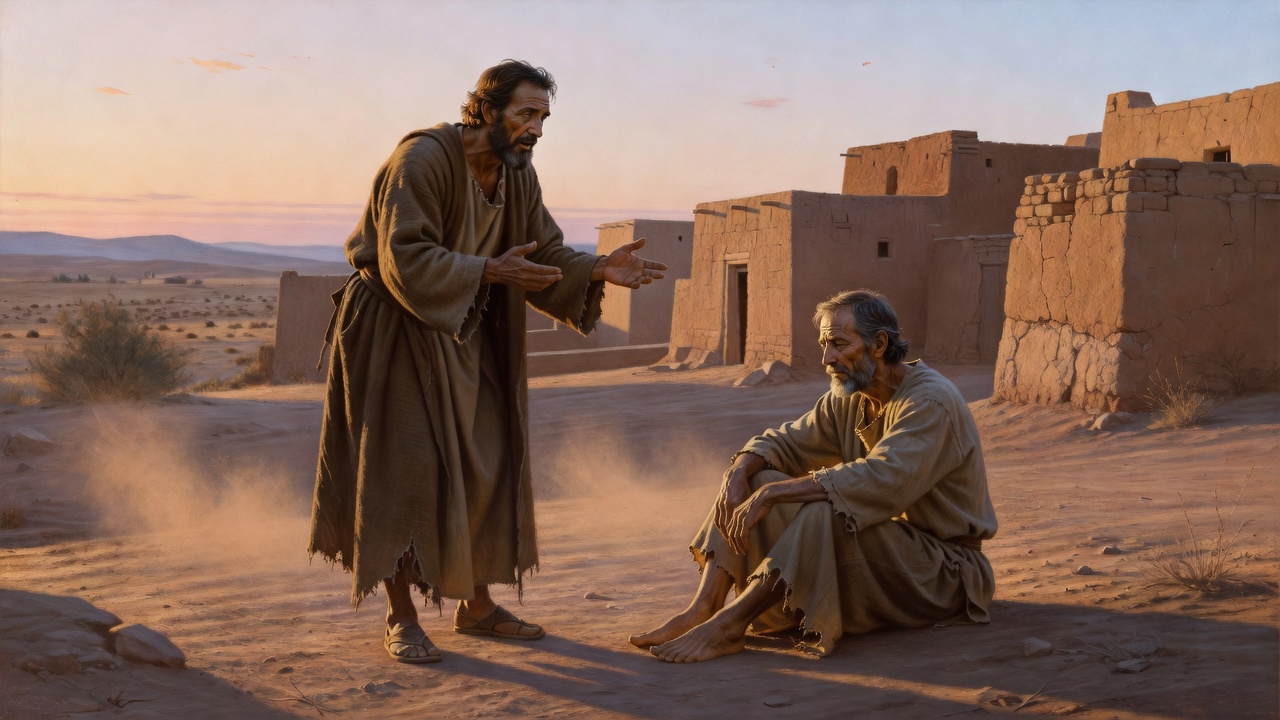
Eliphaz's First Speech
- Eliphaz the Temanite is the first of Job's companions to respond, breaking their week of silence. He acknowledges Job's past reputation for comforting and strengthening the distressed before questioning why Job cannot apply that same endurance to his own suffering.Sources: the Bible text itself · Eliphaz
- Eliphaz introduces the traditional principle of retribution, arguing that the innocent never perish and that individuals reap what they sow in life.Sources: the Bible text itself
- To support his theological claim, Eliphaz describes a chilling night vision where a mysterious spirit stood before him in the dark, declaring that fragile mortals dwelling in houses of clay cannot be more righteous or pure than their Maker.Sources: the Bible text itself
Notes written with AI assistance from open sources (Theographic Bible Metadata, CC BY-SA 4.0; Easton’s Bible Dictionary, public domain) and reviewed before publishing.
Credits and license for this translation
Bib Sen An
The Holy Bible in Haitian Creole, 2023 update
copyright © 2017-2023 Ron Smith
Language: Kreyòl Ayisyen (Haitian)
Translation by: Ron Smith
Contributor: Felix Nixon
This translation is made available to you under the terms of the
Creative Commons Attribution Share-Alike license 4.0.
You have permission to share and redistribute this Bible translation in any format and to make reasonable revisions and adaptations of this translation, provided that:
You include the above copyright and source information.
If you make any changes to the text, you must indicate that you did so in a way that makes it clear that the original licensor is not necessarily endorsing your changes.
If you redistribute this text, you must distribute your contributions under the same license as the original.
Pictures included with Scriptures and other documents on this site are licensed just for use with those Scriptures and documents.
For other uses, please contact the respective copyright owners.
Note that in addition to the rules above, revising and adapting God's Word involves a great responsibility to be true to God's Word. See Revelation 22:18-19.
2026-06-11
Source: http://ebible.org/hatbsa/ · eBible.org