John 12
Bib Sen An · Tap a verse to see its cross-references.
1Pou sa a, sis jou avan fèt la Jésus te vini nan Béthanie, kote Lazare, moun Li te fè leve sòti nan lanmò a te ye a. 2Konsa, yo te prepare yon manje pou li la.
Marthe t ap sèvi, men Lazare te youn nan yo ki te sou tab avèk Li. 3Nan lè sa a, Marie te pran yon liv pafen yo rele na ki te koute trè chè, e te vide sou pye a Jésus e te siye yo avèk cheve li. Kay la te ranpli avèk sant pafen sa a.
4Men Judas Iscariot, youn nan disip Li yo, ki te gen lentansyon pou trayi Li, te di: 5“Poukisa pafen sila a pa t vann pou twa san denye, pou yo ta bay malere yo?” 6Alò, li pa t di sa paske li te konsène pou malere yo, men paske se te yon vòlè li te ye. Epi konsi li te responsab lajan nan bwat kès la, li te konn piyaje sa ke yo mete ladann.
7Pou rezon sa a, Jésus te di “Pa deranje l, li te konsève sa a pou jou lantèman M. 8Paske malere yo ap toujou avè w, men Mwen, ou p ap toujou genyen M.”
9Konsa, gran foul Jwif yo te dekouvri ke Li te la, e yo te vini non sèlman akoz Jésus, men pou yo ta ka wè Lazare ke Li te leve sòti nan lanmò a.
10Men chèf prèt yo te mete tèt yo ansanm pou yo ta kapab anplis mete Lazare a lanmò. 11Paske akoz li menm, anpil nan Jwif yo t ap kite e t ap kwè nan Jésus.
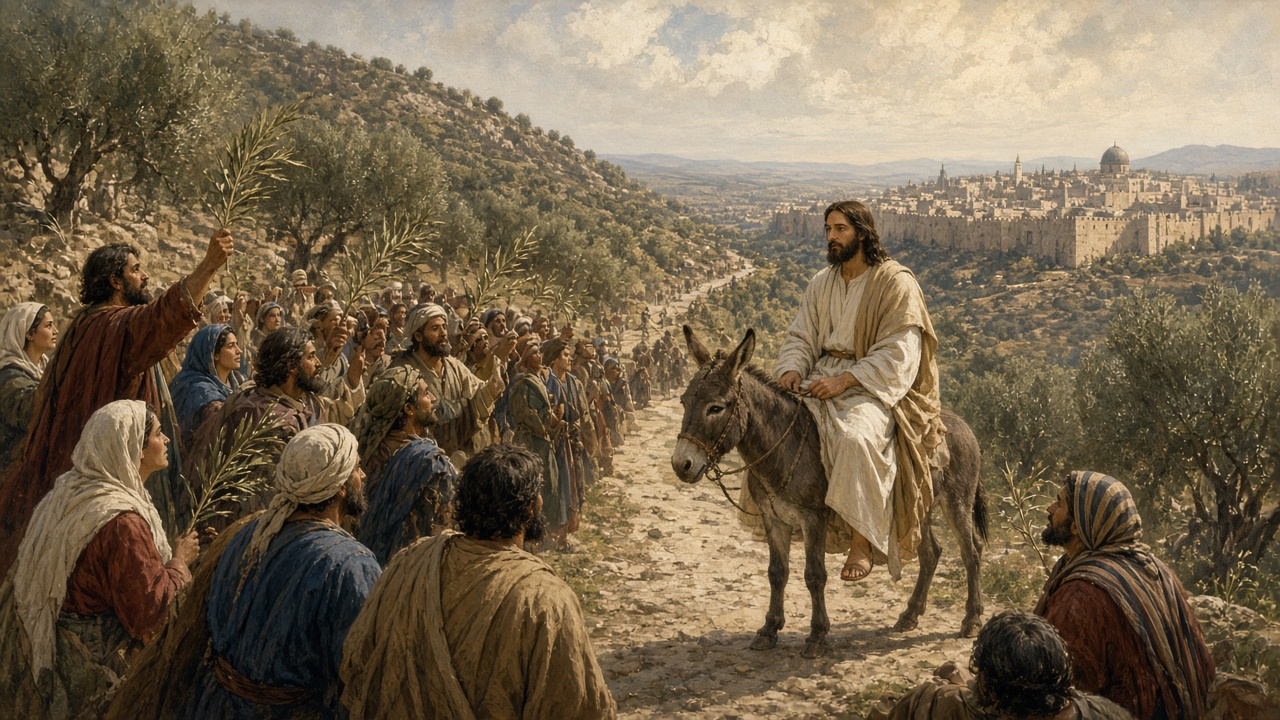
12Nan jou aprè a, yon gran foul ki te vini nan fèt la, lè yo tande ke Jésus t ap vini nan Jérusalem, 13te pran branch pye palmis, e te ale rankontre Li, e te kòmanse kriye “Ozana, ozana, beni sila a ki vini nan non Senyè a, Wa Israël la.”
14Jésus te twouve yon jenn bourik e te chita sou li. Tankou li ekri, 15“Pa pè, O fi a Sion. Gade byen, Wa ou ap vini, byen chita sou yon jenn bourik.”
16Nan kòmansman, disip Li yo pa t konprann bagay sa yo, men lè Jésus te resevwa glwa, Yo sonje ke yo te ekri sou Li e ke yo te fè L bagay sa yo.
17Konsa, pèp la ki te avè L lè Li te rele Lazare deyò nan tonm nan, e te fè l leve sòti nan lanmò a, t ap toujou fè temwayaj de Li. 18Pou koz sa, foul la te ale rankontre Li, paske yo te tande ke Li te fè sign sila a. 19Akoz sa a, Farizyen yo te di youn ak lòt: “Nou wè ke nou p ap fè anyen ki bon. Gade, lemonn ap kouri dèyè Li.”
20Konsa, te gen sèten Grèk pami yo ki t ap monte pou adore nan fèt la. 21Yo te ale kote Philippe ki te sòti nan Bethsaïda nan Galilée, e te kòmanse mande li: “Mesye, nou vle wè Jésus.”
22Philippe te vin di André. E André ak Philippe te di Jésus sa.
23Jésus te reponn yo e te di: “Lè a rive pou Fis a Lòm nan kapab resevwa glwa.
24“Anverite, anverite, Mwen di nou, sof ke yon grenn ble tonbe nan tè epi mouri, li rete pou kont li, men si li mouri, l ap fè anpil fwi. 25Moun ki renmen vi li va pèdi l, e moun ki rayi vi li nan mond sa a va konsève li jiska lavi etènèl.
26“Si nenpòt moun ap sèvi Mwen, fòk li swiv Mwen. E kote Mwen ye, la sèvitè Mwen va ye tou. Si nenpòt moun ap sèvi Mwen, Papa a va onore li.
27“Koulye a nanm Mwen vin twouble. Epi kisa M ap di: ‘Papa, sove M de lè sa a’? Men se pou rezon sa a ke M te rive nan lè sa a. 28Papa, ke non Ou kapab resevwa glwa!”
Yon vwa te sòti nan syèl la: “Mwen te non sèlman bay li glwa a, men Mwen va bay li glwa ankò.”
29Foul la ki te kanpe la epi te tande sa, te di ke yo tande loraj. Lòt yo te di: “Yon zanj pale avèk Li.”
30Jésus te reponn e te di: “Vwa sa a pa t vini pou kòz pa M, men pou kòz pa nou. 31Koulye a jijman vini sou mond sa a. Koulye a mèt mond sa a va jete deyò. 32E Mwen, si Mwen gen tan leve wo anwo tè a, Mwen va atire tout moun kote Mwen menm.” 33Men Li te di sa pou montre ki kalite mò Li ta pral mouri an.
34Pou sa, foul la te reponn Li: “Nou te tande nan Lalwa ke Kris la ap la jis pou janmen. E kijan ou kapab di: ‘Fis a Lòm nan oblije leve wo?’ Kilès Fis a Lòm sila a?”
35Akoz sa, Jésus te di yo: “Pou yon ti tan anplis, limyè a pami nou. Mache pandan nou gen limyè a, pou tenèb la pa gen tan pran nou. Sila ki mache nan tenèb la pa konnen kote l ap prale. 36Pandan nou gen limyè a, kwè nan limyè a pou nou kapab vini fis a limyè a.” Bagay sa yo Jésus te pale, epi Li ale kache kò Li pou yo pa jwenn Li.
37Men malgre ke Li te fè tout sign sa yo devan yo, toujou yo pa t kwè nan Li. 38Pou pawòl a pwofèt la, Ésaïe, ta kapab akonpli lè l te di:
“Senyè, kilès ki kwè nan rapò nou?
E a kilès bra Letènèl la devwale?”
39Pou rezon sa, yo pa t kab kwè. Paske Ésaïe te di ankò:
“Li te fè zye yo avegle, e te fè kè yo di,
sof ke yo wè avèk zye yo, apèsi avèk kè yo,
epi vin konvèti, epi Mwen ta geri yo.”
41Bagay sa yo, Ésaïe te di paske li te wè glwa Li, e akoz ke li te wè glwa Li, li te pale sou Li.
42Malgre sa, menm anpil nan gran chèf yo te kwè nan Li, men akoz Farizyen yo, yo pa t konfese sa a, akoz krent ke yo ta vin mete deyò nan sinagòg la. 43Paske yo te gen lanvi pou lwanj a lòm olye lwanj Bondye.
44Jésus te kriye e te di: “Sila a ki kwè nan Mwen, pa kwè nan Mwen, men nan Li menm ki te voye Mwen an. 45Sila a ki wè M, wè Li menm ki te voye Mwen an. 46Mwen te vini kon yon limyè nan mond lan, pou tout moun ki kwè nan Mwen pa rete nan tenèb.
47“Si nenpòt moun tande pawòl Mwen yo, e pa kenbe yo, Mwen pa jije li. Paske Mwen pa t vini nan lemonn pou jije lemonn, men pou sove lemonn.
48“Sila a ki rejte Mwen, epi pa resevwa pawòl Mwen yo, gen youn k ap jije li. Pawòl ke Mwen te pale a se li k ap jije li nan dènye jou a.
49“Paske Mwen pa t pale pou kont Mwen, men Papa a, Li menm, ki te voye M te kòmande Mwen kisa pou M pale, e kisa pou M di. 50E Mwen konnen ke kòmandman Li se lavi etènèl. Pou sa, se konsa Mwen pale; menm sa ke Papa a di Mwen yo, konsa Mwen pale.”
Did you know?
The Anointing at Bethany and the Entry into Jerusalem
- Bethany, where Jesus arrived six days before the Passover, lay about two miles east of Jerusalem on the southeastern slope of the Mount of Olives, along the road to Jericho, and took its name from the palm trees that grew there. It was the home of Lazarus, whom Jesus had raised from the dead after four days in the tomb, and of his sisters Martha and Mary; the chief priests planned to kill Lazarus as well, because on his account many people were believing in Jesus.Sources: the Bible text itself · Bethany · Lazarus
- At a dinner where Martha served and Lazarus reclined at the table, Mary anointed Jesus' feet with about a pint of expensive perfume made of pure nard and wiped them with her hair, so the house was filled with the fragrance. Judas Iscariot, son of Simon, whose surname means a man of Kerioth, asked why it was not sold for three hundred denarii for the poor; he was a thief who, as keeper of the money bag, used to take from what was put into it, and he was going to betray Jesus.Sources: the Bible text itself · Judas Iscariot · Simon
- The next day the great crowd that had come for the feast took palm branches and went out to meet Jesus as he came to Jerusalem, seated on a young donkey, shouting praise to the King of Israel, as it is written of the Daughter of Zion. Zion was the southeastern hill of Jerusalem, where David built a citadel and a palace after taking it, so that it became the city of David. At first his disciples did not understand these things, but after Jesus was glorified they remembered that they had also been written about him.Sources: the Bible text itself · Zion
Notes written with AI assistance from open sources (Theographic Bible Metadata, CC BY-SA 4.0; Easton’s Bible Dictionary, public domain) and reviewed before publishing.
Places in this chapter
- Jerusalem · 31.777, 35.234 · verses 11, 12, 20
- Zion · Today: Jerusalem · 31.777, 35.234 · verse 15
- Galilee · 32.760, 35.527 · verse 21
Only places identified with high confidence are shown (90% or more according to the scholarly sources compiled by OpenBible). Period map: DARE (Digital Atlas of the Roman Empire), CC BY 4.0; modern map: © OpenStreetMap contributors; places: OpenBible.info (CC BY 4.0).
Credits and license for this translation
Bib Sen An
The Holy Bible in Haitian Creole, 2023 update
copyright © 2017-2023 Ron Smith
Language: Kreyòl Ayisyen (Haitian)
Translation by: Ron Smith
Contributor: Felix Nixon
This translation is made available to you under the terms of the
Creative Commons Attribution Share-Alike license 4.0.
You have permission to share and redistribute this Bible translation in any format and to make reasonable revisions and adaptations of this translation, provided that:
You include the above copyright and source information.
If you make any changes to the text, you must indicate that you did so in a way that makes it clear that the original licensor is not necessarily endorsing your changes.
If you redistribute this text, you must distribute your contributions under the same license as the original.
Pictures included with Scriptures and other documents on this site are licensed just for use with those Scriptures and documents.
For other uses, please contact the respective copyright owners.
Note that in addition to the rules above, revising and adapting God's Word involves a great responsibility to be true to God's Word. See Revelation 22:18-19.
2026-06-11
Source: http://ebible.org/hatbsa/ · eBible.org