Jeremiah 17
Bib Sen An · Tap a verse to see its cross-references.
1Peche a Juda ekri ak yon plim fèt an fè,
ak yon pwent dyaman.
Li grave sou tablo kè yo,
ak sou kòn lotèl pa yo.
2Menm jan yo sonje pitit pa yo,
se konsa yo sonje lotèl pa yo,
ak Asherim sou kote bwa vèt, sou wo kolin yo.
3O mòn nan vil andeyò Mwen an,
Mwen va bay yo tout richès ou yo
ak tout trezò ou yo kon piyaj,
wo plas ou yo pou peche, nan tout lizyè ou yo.
4Epi ou va menm pou kont ou, kite eritaj ke M te ba ou la.
Konsa, Mwen va fè ou sèvi lènmi ou yo
nan peyi ke ou pa konnen an;
paske ou te limen nan kòlè Mwen yon dife
ki va brile jis pou tout tan.
5Konsa pale SENYÈ a:
“Modi se moun ki mete konfyans nan lòm,
ki fè lachè vin fòs li,
ak kè a sila ki tounen lwen SENYÈ a.
6Paske li va tankou bwa raje nan dezè;
li p ap janm wè lè bonè rive,
men li va viv pami wòch savann nan dezè a,
nan yon peyi sale, san moun ki rete ladann.
7“Beni se nonm ki konfye nan SENYÈ a,
ak sila ki mete konfyans li nan SENYÈ a.
8Paske li va tankou yon ab ki plante kote dlo,
ki lonje rasin li akote yon sous dlo.
Li p ap pè lè chalè a rive, men fèy li yo va vèt.
Li p ap twouble nan ane sechrès la,
ni sispann bay fwi.
9Kè lòm plen manti plis ke tout lòt yo.
Nanpwen lasante ladann.
Se kilès ki ka konprann li?
10“Mwen, SENYÈ a, Mwen sonde kè;
Mwen pase panse a leprèv,
pou M ka menm bay a chak moun selon chemen pa li,
selon fwi a zèv li yo.”
11Kon yon pentad ki kale ze ki pa t pou li,
se konsa sila ki ranmase richès san dwa.
Nan mitan jou li yo, yo va kite li,
e lè vi l fini, li va yon moun bèt.
12Yon twòn plen ak laglwa plase an wo,
depi kòmansman an, se li ki azil nou.
13O SENYÈ, espwa Israël la,
tout moun ki abandone Ou yo, va vin wont.
Sila yo ki kite Mwen sou latè yo,
sou latè non yo va vin enskri,
akoz yo te abandone SENYÈ a,
sous dlo vivan an.
14Geri mwen, O SENYÈ e mwen va geri nèt!
Sove mwen e mwen va sove!
Paske se Ou menm ki lwanj mwen an.
15Gade, y ap di mwen tout tan:
“Kote pawòl SENYÈ a?
Kite l ranpli koulye a”.
16Men pou mwen menm, mwen pa t kouri
pou m ta sispann fè bèje pou Ou,
ni mwen pa t anvi wè jou malè sa a.
Ou konnen!
Tout pawòl lèv mwen yo te nan prezans Ou.
17Pa fè m gwo laperèz.
Ou se azil mwen nan jou gwo twoub la.
18Ke sila ki pèsekite mwen yo vin wont,
men pou mwen menm, pa kite mwen vin wont;
kite yo twouble nèt, men pa kite m vin twouble.
Mennen sou yo yon jou gwo twoub.
Detwi yo ak yon destriksyon ki doub!
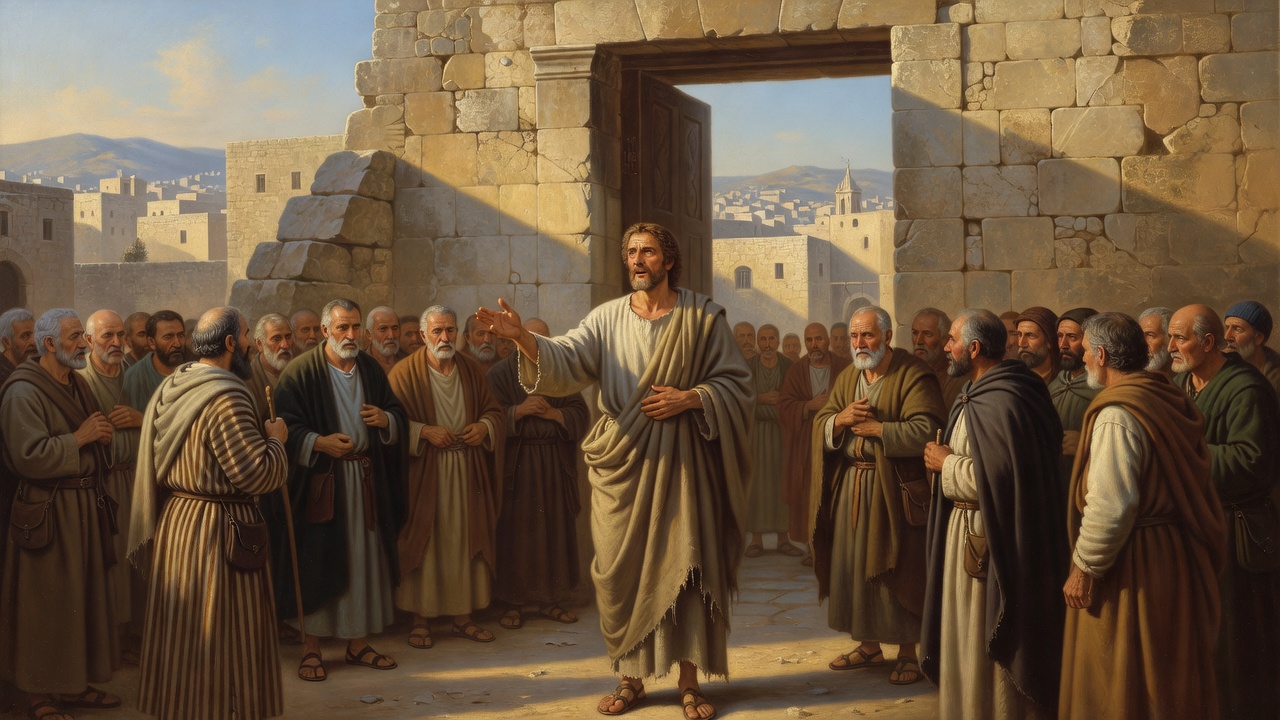
19Konsa SENYÈ a te pale mwen: “Ale kanpe nan pòtay piblik la, kote wa Juda yo fè antre sòti a, nan tout pòtay Jérusalem yo. 20Pale yo konsa: ‘Koute pawòl SENYÈ a, wa Juda yo, e tout Juda ak tout sila k ap viv Jérusalem yo, k ap fè antre sòti nan pòtay yo: 21Konsa pale SENYÈ a: “Veye afè nou e pa pote okenn chaj nan jou Saba a, ni pa mennen anyen antre nan pòtay Jérusalem nan. 22Nou p ap fè okenn chaj sòti lakay nou nan jou Saba a. Ni pa fè okenn travay, men kenbe jou Saba a sen, jan Mwen te kòmande papa zansèt nou yo. 23Men yo pa t koute, ni panche zòrèy yo, men yo te fè tèt di pou yo pa ta koute, ni vin korije. 24Men li va vin rive ke si ou koute M byen pre,” deklare SENYÈ a, “pou pa fè chaj antre nan pòtay lavil sa a nan jou Saba a, men ou kenbe Saba a sen e pa fè travay sou li, 25alò, va genyen moun ki antre nan pòtay lavil sa a, wa ak prens ki chita sou twòn a David yo, monte sou cha yo ak sou cheval yo, yo menm ak prens pa yo, moun Juda ak sila ki rete Jérusalem yo e vil sa a va abite jis pou tout tan. 26Yo va antre ladann soti nan vil a Juda yo ak tout andwa ki antoure Jérusalem yo; soti nan peyi Benjamin, soti nan ba plèn nan, nan peyi kolin yo ak nan dezè a, k ap pote ofrann brile, sakrifis, ofrann sereyal, ak lansan e yo va mennen sakrifis a remèsiman lakay SENYÈ a. 27Men si nou pa koute Mwen e pa kenbe jou Saba a sen ak sispann pote chaj e antre nan pòtay Jérusalem nan jou Saba a; alò, Mwen va limen yon dife nan pòtay li yo. Konsa, li va devore palè Jérusalem yo, e li p ap etenn menm.”’”
Did you know?
Trust, the Heart, and the Sabbath
- The iron stylus and diamond point were ancient tools used to carve deep, permanent inscriptions into hard stone or metal surfaces. Jeremiah invokes this image to emphasize that the idolatry of Judah was not a superficial slip, but deeply etched into their hearts and upon the horns of their altars.Sources: the Bible text itself
- Jeremiah contrasts a solitary shrub in the parched, salty desert with a flourishing tree planted by a stream. A tree with roots reaching into water stays green and continues bearing fruit even in years of drought, serving as an image of enduring life for those who trust in God rather than human strength.Sources: the Bible text itself
- Jeremiah was instructed to proclaim God's word at the gates of Jerusalem, specifically forbidding the carrying of commercial loads on the Sabbath. Keeping the Sabbath holy promised the continuation of kings on the throne of David and the arrival of worshippers from the territory of Benjamin, Judah, and the arid Negev.Sources: the Bible text itself · David · Benjamin (patriarch) · Jerusalem
Notes written with AI assistance from open sources (Theographic Bible Metadata, CC BY-SA 4.0; Easton’s Bible Dictionary, public domain) and reviewed before publishing.
Places in this chapter
- Arabah · 30.417, 35.151 · verse 6
- Jerusalem · 31.777, 35.234 · verses 19, 20, 21, 25, 26, 27
- People’s Gate · Today: in Jerusalem · 31.777, 35.234 · verse 19
- Negeb · 31.245, 34.841 · verse 26
- Shephelah · 31.692, 34.875 · verse 26
Only places identified with high confidence are shown (90% or more according to the scholarly sources compiled by OpenBible). Period map: DARE (Digital Atlas of the Roman Empire), CC BY 4.0; modern map: © OpenStreetMap contributors; places: OpenBible.info (CC BY 4.0).
Credits and license for this translation
Bib Sen An
The Holy Bible in Haitian Creole, 2023 update
copyright © 2017-2023 Ron Smith
Language: Kreyòl Ayisyen (Haitian)
Translation by: Ron Smith
Contributor: Felix Nixon
This translation is made available to you under the terms of the
Creative Commons Attribution Share-Alike license 4.0.
You have permission to share and redistribute this Bible translation in any format and to make reasonable revisions and adaptations of this translation, provided that:
You include the above copyright and source information.
If you make any changes to the text, you must indicate that you did so in a way that makes it clear that the original licensor is not necessarily endorsing your changes.
If you redistribute this text, you must distribute your contributions under the same license as the original.
Pictures included with Scriptures and other documents on this site are licensed just for use with those Scriptures and documents.
For other uses, please contact the respective copyright owners.
Note that in addition to the rules above, revising and adapting God's Word involves a great responsibility to be true to God's Word. See Revelation 22:18-19.
2026-06-11
Source: http://ebible.org/hatbsa/ · eBible.org