Jeremiah 12
Bib Sen An · Tap a verse to see its cross-references.
1Byen dwat, se Ou menm, O SENYÈ,
lè m plede ka m avèk Ou.
Anverite, mwen ta diskite yon ka lajistis avèk Ou.
Poukisa chemen mechan an byen reyisi konsa?
Poukisa tout sa ki aji nan manti yo rete alèz konsa?
2Ou te plante yo. Wi, konsa yo fin pran rasin.
Yo grandi. Wi, yo fè fwi.
Ou toupre nan lèv yo, men lespri yo lwen W.
3Men Ou konnen mwen, O SENYÈ.
Ou wè mwen.
Ou fè egzamen pou wè kè m vè Ou menm.
Rale yo akote, tankou mouton k ap prale labatwa;
mete yo apa pou jou gwo masak la.
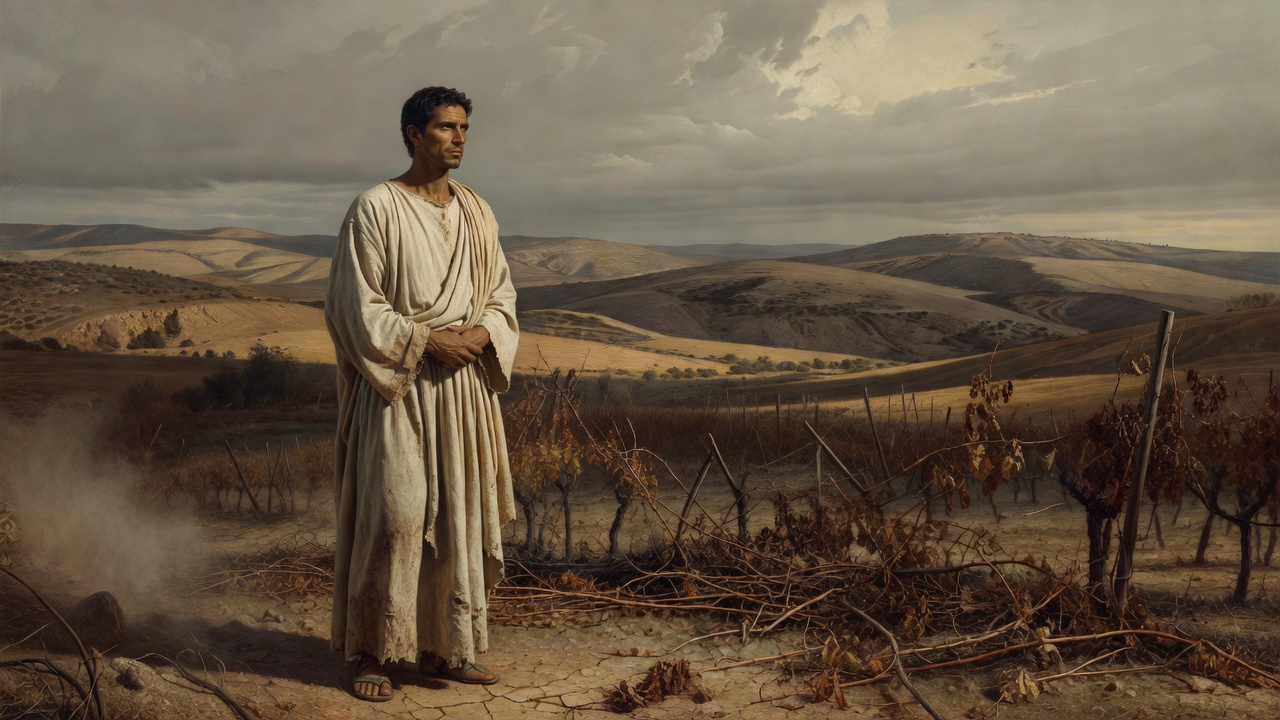
4Depi kilè peyi a va gen dèy konsa,
e vèdi chan an vin sèch konsa?
Akoz mechanste a sila ki rete ladann yo,
ni bèt ni zwazo detwi nèt;
akoz yo te di: “Li p ap wè dènye fen nou an.”
5Si ou te kouri ak moun apye yo,
e yo fè ou bouke,
kijan ou ka fè kous ak cheval?
Malgre, nan yon peyi lapè, ou gen sekirite,
men kijan ou va reyisi nan vye rakbwa Jourdain an?
6Paske menm frè ou yo ak lakay papa ou a;
menm yo menm, te fè trèt avèk ou!
Menm yo menm, te rele dèyè ou.
Pa kwè yo, malgre bèl pawòl dous.
7“Mwen te abandone lakay Mwen an,
Mwen te abandone eritaj Mwen an;
Mwen fin bay fi byeneme a nanm Mwen an
pou antre nan men lènmi li yo.
8Eritaj Mwen an te vini pou Mwen, kon yon lyon
k ap gwonde nan forè a.
Li te gwonde kont Mwen.
Akoz sa, Mwen te vin rayi li.
9Èske eritaj Mwen an gen tan vin tankou yon zwazo takte nan lachas?
Èske gen zwazo voras kont li tout kote?
Ale, rasanble tout bèt sovaj nan chan yo.
Mennen yo pou yo ka devore!
10Anpil bèje fin gate chan rezen Mwen yo.
Yo te foule chan Mwen an anba pye;
yo te fè bèl chan Mwen an vin yon savann dezole.
11Li te vin yon dezè.
Abandonen, li plenyen devan M.
Tout latè vin dezole,
akoz pèsòn pa pran sa an kè.
12Sou tout do mòn sèch nan dezè yo, destriktè yo vin parèt,
paske yon nepe SENYÈ a ap devore
soti nan yon pwent peyi a jis rive nan lòt la.
Nanpwen lapè pou pèsòn.
13Se ble yo te simen e yo rekòlte pikan.
Yo te fè gwo efò, san ke yo pa reyisi anyen.
Men se pou nou vin wont rekòlt nou an akoz gwo kòlè SENYÈ a.”
14Konsa pale SENYÈ a de tout vwazen mechan k ap atake eritaj ke Mwen te bay a pèp Mwen an, Israël: “Gade byen, Mwen prèt pou dechouke yo depi nan peyi pa yo. Anplis, Mwen va dechouke lakay Juda soti nan mitan yo. 15Epi li va vin rive ke apre Mwen dechouke yo, Mwen va ankò gen konpasyon pou yo. Mwen va mennen yo retounen, yo chak a eritaj pa yo, e yo chak nan pwòp peyi pa yo. 16Epi si, anverite, yo va aprann chemen a pèp Mwen an, pou sèmante pa non Mwen: ‘Kon SENYÈ a viv la’, menm jan ke yo menm te enstwi pèp Mwen an pou sèmante pa Baal yo, yo va vin etabli nan mitan pèp Mwen an. 17Men si yo pa koute, alò, Mwen va dechouke nasyon sa a, dechouke e detwi li,” deklare SENYÈ a.
Did you know?
Jeremiah's Complaint and the Nations
- Jeremiah wrestles with the difficult question of why the wicked prosper and live at ease while speaking of God with their lips but keeping him far from their hearts. The prophet's distress is deeply personal, as even the members of his own father's household had betrayed him and spoken against him.Sources: the Bible text itself
- God responds to Jeremiah's complaint by asking how he will compete with horses if racing with footmen tires him, and how he will manage in the thickets of the Jordan if he stumbles in a peaceful land. The Jordan River cuts through low valleys and dense, difficult terrain along its banks.Sources: the Bible text itself · Jordan
- The chapter extends hope even to hostile neighboring nations that had once taught Judah to swear by Baal, the principal male deity of the Phoenicians. If these nations turn and learn to swear by the name of the Lord, God promises to build them up among his people.Sources: the Bible text itself · Baal
Notes written with AI assistance from open sources (Theographic Bible Metadata, CC BY-SA 4.0; Easton’s Bible Dictionary, public domain) and reviewed before publishing.
Places in this chapter
- Jordan · Today: Jordan River · 31.761, 35.558 · verse 5
Only places identified with high confidence are shown (90% or more according to the scholarly sources compiled by OpenBible). Period map: DARE (Digital Atlas of the Roman Empire), CC BY 4.0; modern map: © OpenStreetMap contributors; places: OpenBible.info (CC BY 4.0).
Credits and license for this translation
Bib Sen An
The Holy Bible in Haitian Creole, 2023 update
copyright © 2017-2023 Ron Smith
Language: Kreyòl Ayisyen (Haitian)
Translation by: Ron Smith
Contributor: Felix Nixon
This translation is made available to you under the terms of the
Creative Commons Attribution Share-Alike license 4.0.
You have permission to share and redistribute this Bible translation in any format and to make reasonable revisions and adaptations of this translation, provided that:
You include the above copyright and source information.
If you make any changes to the text, you must indicate that you did so in a way that makes it clear that the original licensor is not necessarily endorsing your changes.
If you redistribute this text, you must distribute your contributions under the same license as the original.
Pictures included with Scriptures and other documents on this site are licensed just for use with those Scriptures and documents.
For other uses, please contact the respective copyright owners.
Note that in addition to the rules above, revising and adapting God's Word involves a great responsibility to be true to God's Word. See Revelation 22:18-19.
2026-06-11
Source: http://ebible.org/hatbsa/ · eBible.org