Isaiah 66
Bib Sen An · Tap a verse to see its cross-references.
1Konsa pale SENYÈ a:
“Syèl la se twòn Mwen e tè a se machpye M.
Alò, ki kote ou ta kab bati yon kay pou Mwen?
Epi ki kote pou M ta ka repoze?
2Paske se men M ki te fè tout bagay sa yo;
se konsa tout bagay sa yo te vin egziste,” deklare SENYÈ a.
“Men, anvè sila Mwen va gade;
sila ki enb ak kè ki repanti a,
e ki tranble devan pawòl Mwen yo.
3Men sila ki touye yon bèf la,
li tankou sila ki touye yon moun nan;
sila ki fè sakrifis a yon jenn mouton an,
li tankou yon moun ki kase kou a yon chen;
sila ki fè ofrann sereyal la, li tankou sila ki ofri san kochon an;
sila ki brile lansan an, li tankou sila ki fè beni yon zidòl la.
Konsi yo te chwazi pwòp chemen pa yo,
e nanm yo pran gwo plezi nan abominasyon yo.
4Konsa, Mwen va deziye pinisyon yo,
e Mwen va mennen sou yo sa ke yo plis pè a.
Paske Mwen te rele, men pèsòn pa t reponn;
Mwen te pale, men yo pa t koute,
men se mal yo te fè devan zye M,
e yo te chwazi sa ki pa t fè M plezi.”
5Tande pawòl SENYÈ a,
nou menm ki tranble devan pawòl Li yo:
“Frè nou ki rayi nou yo, ki rejte nou akoz non Mwen,
Yo te di:
‘Kite SENYÈ a resevwa glwa,
pou nou ka wè nou fè kè kontan.’
Men sila yo k ap wont.
6Yon vwa gwo boulvèsman soti nan vil la,
yon vwa soti nan tanp lan;
vwa SENYÈ a k ap rann rekonpans a lènmi Li yo.
7“Avan fi a gen doulè, li te anfante;
avan gwo doulè a te rive li, li te fè yon gason.
8Se kilès ki te tande yon koze konsa a?
Kilès ki te wè yon bagay konsa?
Èske yon peyi kapab fèt nan yon sèl jou?
Èske yon nasyon ka vin parèt nan yon enstan?
La menm Sion te vin gen doulè,
li te fè fis li yo vin parèt.
9Èske Mwen va rive pre pwen akouchman an,
pou mwen pa livre pitit la?” pale SENYÈ a.
“Oswa èske Mwen ki fè fanm akouche a,
ta fèmen vant lan?” pale Bondye nou an.
10“Fè kè kontan ak Jérusalem,
e rejwi de li, nou tout ki renmen li yo.
Fè kè kontan anpil, nou tout ki te fè kè tris pou li yo,
11pou nou kapab souse e jwenn satisfaksyon nan tete li,
pou nou kapab souse pou jwenn plezi nan gwo lestonmak li a.”
12Paske konsa pale SENYÈ a:
“Gade byen, Mwen lonje bay fi a lapè tankou yon rivyè
e glwa a nasyon yo kon yon flèv k ap debòde.
Nou va vin pran tete,
nou va pote sou kwis e vin jwe sou jenou.
13Tankou yon timoun ki jwenn rekonfò a manman l,
se konsa Mwen va rekonfòte nou;
epi nan Jérusalem, nou va rekonfòte.”
14Nou va wè sa;
kè nou va kontan e zo nou
va fleri tankou zèb vèt tounèf.
Men SENYÈ a va rekonèt pa sèvitè Li yo;
men Li va fè gwo kòlè kont lènmi Li yo.
15Paske gade byen, SENYÈ a va vini avèk dife,
e cha Li yo va tankou van toubiyon.
Li va rann kòlè Li ak gwo raj
e repwòch Li ak flanm dife.
16Paske SENYÈ a va egzekite jijman ak dife
e avèk nepe Li sou tout chè;
e sila ki va touye pa nepe yo va anpil.
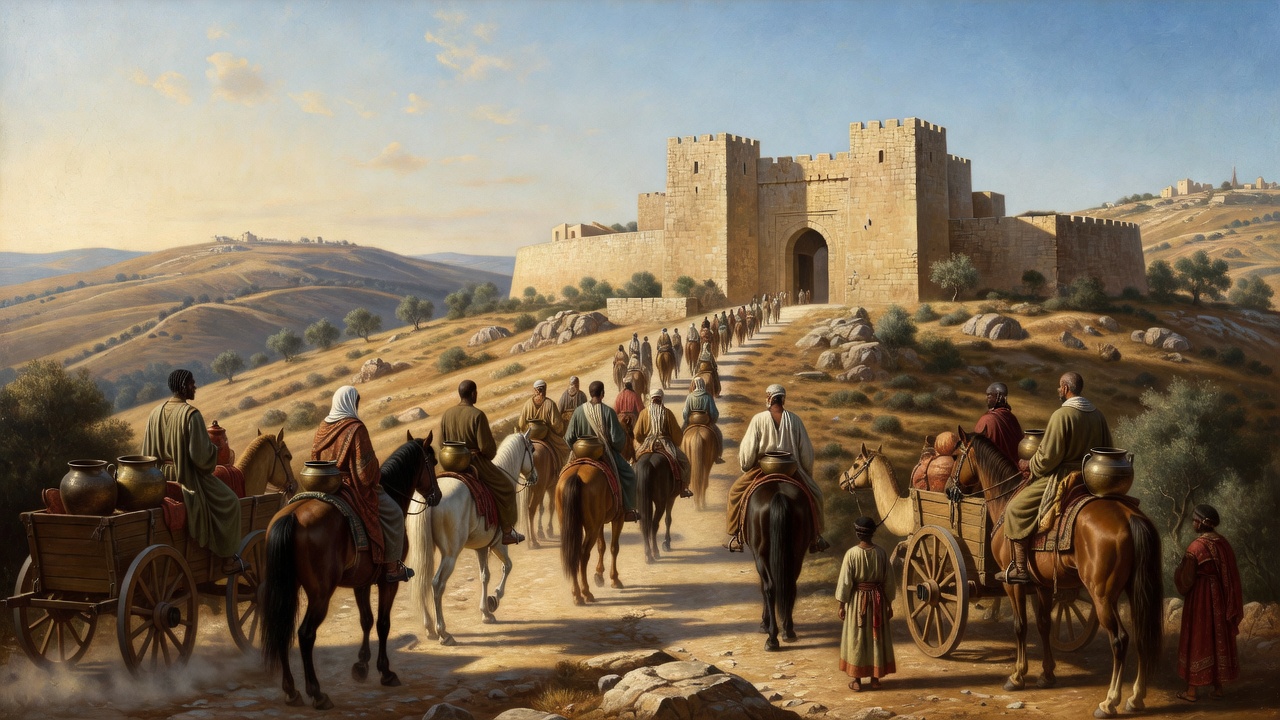
17“Sila ki sanktifye e pirifye tèt pou ale nan jaden yo, k ap swiv moun mitan an, ki manje chè kochon, bagay abominab, ak sourit la, va sispann nèt”, deklare SENYÈ a. 18“Paske Mwen konnen zèv yo ak panse yo. Lè a ap rive pou rasanble tout nasyon ak tout lang yo. Konsa, yo va vini wè glwa Mwen. 19Mwen va mete yon sign pami yo e Mwen va voye bay nasyon yo sila ki chape pami yo: Tarsis, Pul, Lud, Tubal ak Javan, nan peyi kot byen lwen ki pa t janm tande afè laglwa Mwen, ni ki pa t konn wè laglwa Mwen. Epi yo va deklare glwa Mwen pami nasyon yo. 20Yo va mennen tout frè nou yo soti nan tout nasyon yo kon yon ofrann sereyal a SENYÈ a. Yo va vini sou cheval, nan cha, sou kabwèt kouvri, sou milèt ak chamo pou rive sou mòn sen Mwen an, Jérusalem”, di SENYÈ a. “Jis konsa, fis Israël yo pote ofrann sereyal nan yon veso pwòp a lakay SENYÈ a. 21Anplis, Mwen va pran kèk nan yo kon prèt ak Levit”, SENYÈ a di.
22“Paske menm jan ke syèl tounèf la ak tè tounèf ke Mwen va fè a va dire nèt devan Mwen”, deklare SENYÈ a; “se konsa desandan nou yo ak non nou va dire nèt. 23Epi li va fèt ke soti nan lalin tounèf pou rive nan lalin tounèf la, e soti nan Saba a pou rive nan Saba a, tout limanite va vin pwostène devan Mwen,” SENYÈ a di. 24“Yo va ale gade sou kadav a moun ki te fè transgresyon kont Mwen yo. Paske vè pa yo p ap mouri e dife pa yo p ap etenn. Konsa yo va vin yon abominasyon pou tout limanite.”
Did you know?
True Worship and the Gathering of Nations
- Isaiah opens this final chapter declaring that heaven is God's throne and earth His footstool, meaning no human building can contain Him. Instead, God values those who are humble and contrite in spirit and who tremble at His word, contrasting this disposition with ritual sacrifices made without genuine devotion.Sources: the Bible text itself
- The prophetic vision mentions messengers sent to far-flung regions, including Tarshish, the archers of Lud, Tubal, and Javan, which was the generic Hebrew designation for the Greek world. People from these distant coastlands and nations are depicted journeying to Jerusalem to witness God's glory.Sources: the Bible text itself · Tarshish · Lud · Javan
- The closing section describes enduring new heavens and a new earth where all humanity comes to worship regularly from one Sabbath and New Moon to the next. In an unexpected development, God announces that He will select some from among these gathered nations to serve as priests and Levites.Sources: the Bible text itself
Notes written with AI assistance from open sources (Theographic Bible Metadata, CC BY-SA 4.0; Easton’s Bible Dictionary, public domain) and reviewed before publishing.
Places in this chapter
- Jerusalem · 31.777, 35.234 · verses 7, 10, 12, 13, 20
- Zion · Today: Jerusalem · 31.777, 35.234 · verse 8
- Javan · Today: Ionia · 38.200, 27.500 · verse 19
- Lud · Today: Lydia · 38.488, 28.040 · verse 19
- Meshech · Today: about 200 km around Gordion · 39.655, 31.994 · verse 19
- Tubal · Today: Tabal · 37.296, 36.254 · verse 19
Only places identified with high confidence are shown (90% or more according to the scholarly sources compiled by OpenBible). Period map: DARE (Digital Atlas of the Roman Empire), CC BY 4.0; modern map: © OpenStreetMap contributors; places: OpenBible.info (CC BY 4.0).
Credits and license for this translation
Bib Sen An
The Holy Bible in Haitian Creole, 2023 update
copyright © 2017-2023 Ron Smith
Language: Kreyòl Ayisyen (Haitian)
Translation by: Ron Smith
Contributor: Felix Nixon
This translation is made available to you under the terms of the
Creative Commons Attribution Share-Alike license 4.0.
You have permission to share and redistribute this Bible translation in any format and to make reasonable revisions and adaptations of this translation, provided that:
You include the above copyright and source information.
If you make any changes to the text, you must indicate that you did so in a way that makes it clear that the original licensor is not necessarily endorsing your changes.
If you redistribute this text, you must distribute your contributions under the same license as the original.
Pictures included with Scriptures and other documents on this site are licensed just for use with those Scriptures and documents.
For other uses, please contact the respective copyright owners.
Note that in addition to the rules above, revising and adapting God's Word involves a great responsibility to be true to God's Word. See Revelation 22:18-19.
2026-06-11
Source: http://ebible.org/hatbsa/ · eBible.org