Isaiah 50
Bib Sen An · Tap a verse to see its cross-references.
1Konsa pale SENYÈ a: “Kote sètifika divòs ak sila
Mwen te voye manman ou ale a?
Oswa èske Mwen te vann ou bay yo?
Gade byen, ou te vann akoz inikite ou yo,
e manman ou te voye ale akoz transgresyon ou yo.
2Poukisa pa t gen moun lè M te vini an?
Lè M te rele a, èske pa t gen moun pou reponn?
Èske men M tèlman kout pou li pa ka rachte?
Oswa èske Mwen pa gen okenn pouvwa pou rachte moun?
Gade byen, Mwen fè lanmè a sèk ak repwòch Mwen;
Mwen fè rivyè yo vin dezè.
Pwason pa yo gen move sant akoz mank dlo, e yo mouri ak swaf.
3Mwen abiye syèl yo ak fènwa
e kouvri yo ak twal sak.”
4Senyè a te ban Mwen lang a sa yo ki enstwi yo,
pou M ka konnen jan pou bay pawòl soutyen a sila ki fatige.
Li fè M leve maten apre maten,
Li fè zòrèy Mwen leve pou koute kon yon disip.
5SENYÈ a te ouvri zòrèy Mwen.
Mwen pa t rebèl, ni Mwen pa t fè bak.
6Mwen te bay do M a sila ki te vle frape Mwen yo,
ak machwè M a sila ki t ap rache bab Mwen yo;
Mwen pa t kouvri figi Mwen devan imilyasyon ak krache.
7Paske Senyè BONDYE a va fè M sekou.
Pou sa, Mwen pa t twouble menm.
Pou sa, Mwen te fè figi M vin di tankou silèks.
Konsa, Mwen konnen ke M p ap vin wont.
8Sila ki jistifye Mwen an toupre;
se kilès ki mennen ka a kont Mwen?
Kite li rale pre M.
9Gade byen, Senyè BONDYE a fè M sekou;
se kilès ki kondane Mwen?
Gade byen, yo tout va vin vye;
epwize tankou yon vètman.
Mit papiyon twal yo va manje yo.
10Se kilès pami nou ki krent SENYÈ a,
ki obeyi vwa a sèvitè Li a,
ki mache nan fènwa a e ki pa gen limyè a?
Kite li mete konfyans nan non SENYÈ a
e depann de Bondye li a.
11Gade byen, nou tout ki limen yon dife,
ki antoure nou ak tòch ki limen dife yo;
mache nan limyè dife nou te fè a,
e pami tòch yo nou te limen an.
Men sa nou va jwenn nan men Mwen an:
Nou va kouche pou fè lamantasyon.
Did you know?
The Obedient Servant and Divine Vindication
- In ancient Near Eastern legal custom, a husband issued a certificate of divorce to formalize a separation, and impoverished debtors might sell their children into servitude. In Isaiah 50:1, God uses these legal metaphors to demonstrate that Israel was not abandoned due to a divine debt or permanent annulment of the covenant, but went into exile because of its own transgressions.Sources: the Bible text itself
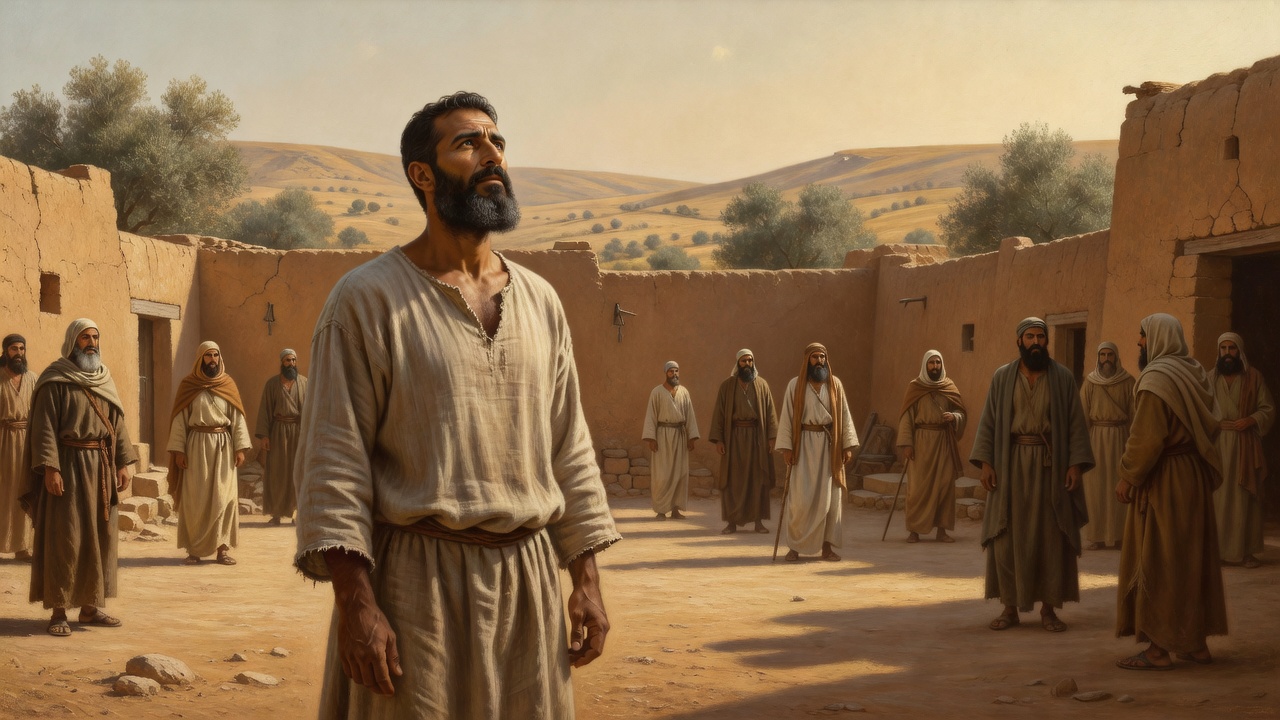
- The speaker in Isaiah 50:4–7 portrays the posture of an attentive disciple who willingly endures physical maltreatment, including beatings, the plucking of his beard, and being spat upon. Setting one's face 'like flint' is a vivid idiom signifying resolute determination and steadfast trust in God despite public shame and hostility.Sources: the Bible text itself
Notes written with AI assistance from open sources (Theographic Bible Metadata, CC BY-SA 4.0; Easton’s Bible Dictionary, public domain) and reviewed before publishing.
Credits and license for this translation
Bib Sen An
The Holy Bible in Haitian Creole, 2023 update
copyright © 2017-2023 Ron Smith
Language: Kreyòl Ayisyen (Haitian)
Translation by: Ron Smith
Contributor: Felix Nixon
This translation is made available to you under the terms of the
Creative Commons Attribution Share-Alike license 4.0.
You have permission to share and redistribute this Bible translation in any format and to make reasonable revisions and adaptations of this translation, provided that:
You include the above copyright and source information.
If you make any changes to the text, you must indicate that you did so in a way that makes it clear that the original licensor is not necessarily endorsing your changes.
If you redistribute this text, you must distribute your contributions under the same license as the original.
Pictures included with Scriptures and other documents on this site are licensed just for use with those Scriptures and documents.
For other uses, please contact the respective copyright owners.
Note that in addition to the rules above, revising and adapting God's Word involves a great responsibility to be true to God's Word. See Revelation 22:18-19.
2026-06-11
Source: http://ebible.org/hatbsa/ · eBible.org