Isaiah 48
Bib Sen An · Tap a verse to see its cross-references.
1“Tande sa, O lakay Jacob,
ki rele pa non Israël,
ki te sòti nan dlo Juda a.
Nou sèmante pa non SENYÈ a,
e envoke Bondye Israël la,
men san verite e san ladwati.
2Paske yo rele tèt yo menm jan ak vil sen an
e yo depann sou Bondye Israël la;
SENYÈ dèzame se non Li.
3Mwen te deklare ansyen bagay lontan yo,
yo te sòti nan bouch Mwen e Mwen te pwoklame yo.
Sibitman Mwen te fè yo, e yo te vin rive.
4Akoz Mwen konnen ke tèt ou di,
kou ou tankou ba fè,
e fwontèn ou tankou bwonz;
5pou sa, Mwen te deklare sa a ou menm lontan sa;
avan yo te rive, Mwen te pwoklame yo a Ou menm,
pou ou pa ta di: ‘Se zidòl mwen an ki te fè l;
imaj taye mwen ak imaj fonn mwen an
ki te kòmande yo.’
6Ou te tande sa!
Gade tout sa!
Konsa, ou menm, èske ou p ap deklare li?
Mwen pwoklame bagay tounèf yo a ou menm soti kounye a,
tout bagay kache a ke ou pa t konnen yo.
7Se koulye a yo fèt, e pa lontan sa.
Avan jou sa a, ou pa t tande yo.
Konsa, ou p ap di: “Gade byen, mwen te konnen yo”.
8Anverite, Ou pa t konn tande yo,
ni ou pa t konnen yo.
Menm depi lontan, zòrèy ou pa t ouvri,
paske Mwen te konnen ke ou aji nan koken.
Depi nan nesans ou, se rebèl ou te ye.
9Pou koz a non Mwen, M ap fè kòlè Mwen pran ti reta;
pou koz lwanj Mwen, Mwen ralanti l pou ou,
pou m pa koupe retire ou nèt.
10Gade byen, Mwen te rafine ou, men pa tankou ajan;
Mwen te fè ou pase a leprèv nan founo doulè a.
11Pou koz pa M,
pou pwòp koz pa Mwen, Mwen va aji;
paske kòman non Mwen ka vin pwofane konsa?
Glwa Mwen, Mwen p ap ka sede l bay yon lòt.
12Koute Mwen, O Jacob,
menm Israël ke M te rele a;
Mwen se Li menm nan.
Mwen se premye a.
E Mwen se osi dènye a.
13Anverite, men M te etabli latè,
e men dwat Mwen te louvri syèl yo.
Lè M rele yo, yo kanpe ansanm.
14Rasanble, nou tout pou koute!
Se kilès pami yo ki te deklare bagay sa yo?
Sila SENYÈ a renmen; li va akonpli sa li pito sou Babylone.
Men L va kont Kaldeyen yo.
15Mwen menm, Mwen te pale.
Anverite, Mwen te rele li.
Mwen te mennen li,
e Li va fè chemen li yo vin reyisi.
16Vin toupre Mwen, koute sa:
“Depi nan kòmansman, Mwen pa t pale an sekrè;
depi tan sa te rive a, Mwen te la.”
Epi koulye a Senyè BONDYE a te voye Mwen ak Lespri Li.
17Konsa pale SENYÈ a,
Redanmtè ou a,
Sila Ki Sen an Israël la:
“Mwen se SENYÈ a, Bondye ou a,
ki enstwi ou pou ou ta byen reyisi,
ki mennen ou nan chemen ke ou ta dwe ale a.
18Si sèlman ou te okipe kòmandman Mwen yo!
Konsa afè ou t ap mache byen tankou yon rivyè,
e ladwati ou tankou lam lanmè yo.
19Desandan nou yo t ap tankou sab e pitit ou yo tankou grenn sab.
Non pa li pa ta janm vin disparèt ni detwi devan prezans Mwen.”
20Ale kite Babylone!
Sove ale devan Kaldeyen yo!
Deklare ak son a kri lajwa, pwoklame sa.
Voye li rive jis nan dènye pwent latè.
Anonse li, “SENYÈ a te rachte sèvitè Li a, Jacob.”
21Yo pa t swaf lè Li te mennen yo travèse dezè yo.
Li te fè dlo sòti nan wòch pou yo;
Li te fann wòch la e dlo te vin pete.
22“Pa gen lapè pou mechan yo”, SENYÈ a di.
Did you know?
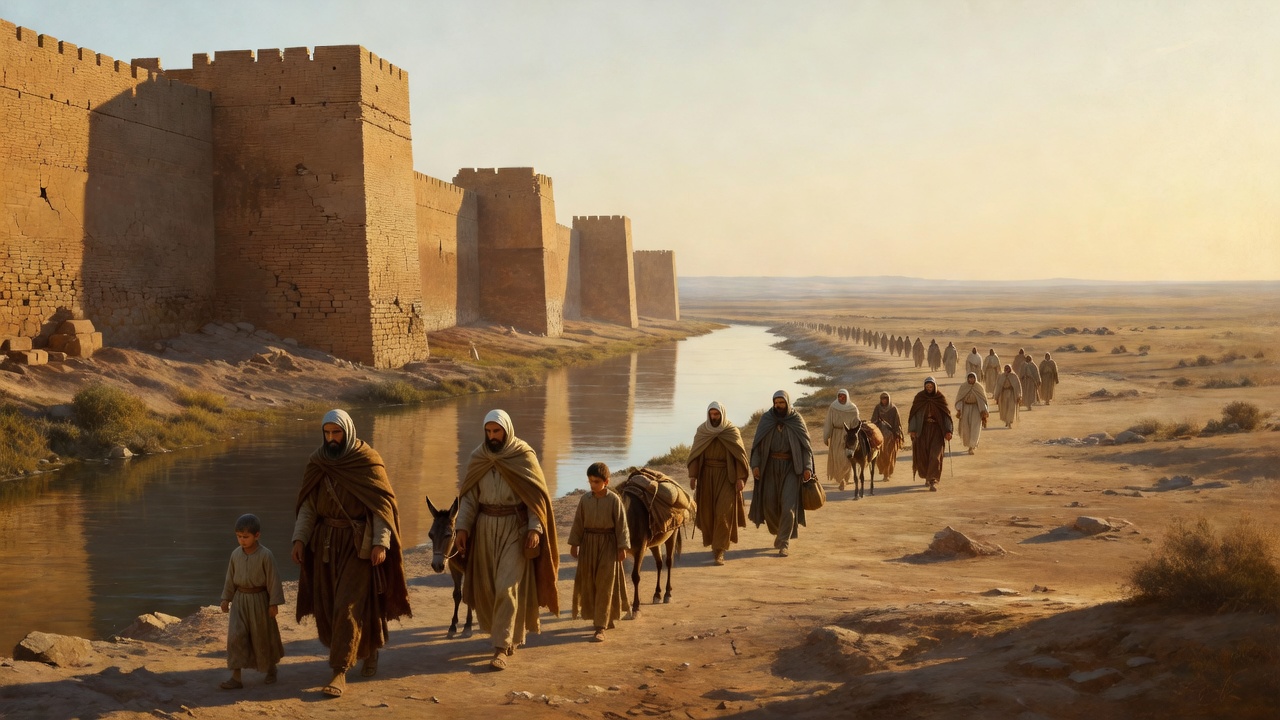
Refining Israel and Departure from Babylon
- In Isaiah 48, God explains that He revealed prophecies and fulfilled them suddenly so that the stubborn people could not credit their carved images or cast metal idols with these events. The announcement of both former and entirely new things was designed to dismantle any false claims of idol power.Sources: the Bible text itself
- The chapter urges the exiles to flee from Babylon and the Chaldeans, a region in Lower Mesopotamia along the vast plain nourished by the Euphrates and Tigris rivers. Babylon, situated on the Euphrates, served as the place of exile until this summons to depart with joyful proclamation.Sources: the Bible text itself · Babylon · Chaldea
- Although God speaks of refining the house of Jacob in the furnace of affliction rather than silver, the text promises divine provision on their return, evoking water gushing from a split rock in the desert.Sources: the Bible text itself
Notes written with AI assistance from open sources (Theographic Bible Metadata, CC BY-SA 4.0; Easton’s Bible Dictionary, public domain) and reviewed before publishing.
Places in this chapter
Only places identified with high confidence are shown (90% or more according to the scholarly sources compiled by OpenBible). Period map: DARE (Digital Atlas of the Roman Empire), CC BY 4.0; modern map: © OpenStreetMap contributors; places: OpenBible.info (CC BY 4.0).
Credits and license for this translation
Bib Sen An
The Holy Bible in Haitian Creole, 2023 update
copyright © 2017-2023 Ron Smith
Language: Kreyòl Ayisyen (Haitian)
Translation by: Ron Smith
Contributor: Felix Nixon
This translation is made available to you under the terms of the
Creative Commons Attribution Share-Alike license 4.0.
You have permission to share and redistribute this Bible translation in any format and to make reasonable revisions and adaptations of this translation, provided that:
You include the above copyright and source information.
If you make any changes to the text, you must indicate that you did so in a way that makes it clear that the original licensor is not necessarily endorsing your changes.
If you redistribute this text, you must distribute your contributions under the same license as the original.
Pictures included with Scriptures and other documents on this site are licensed just for use with those Scriptures and documents.
For other uses, please contact the respective copyright owners.
Note that in addition to the rules above, revising and adapting God's Word involves a great responsibility to be true to God's Word. See Revelation 22:18-19.
2026-06-11
Source: http://ebible.org/hatbsa/ · eBible.org