Isaiah 20
Bib Sen An · Tap a verse to see its cross-references.
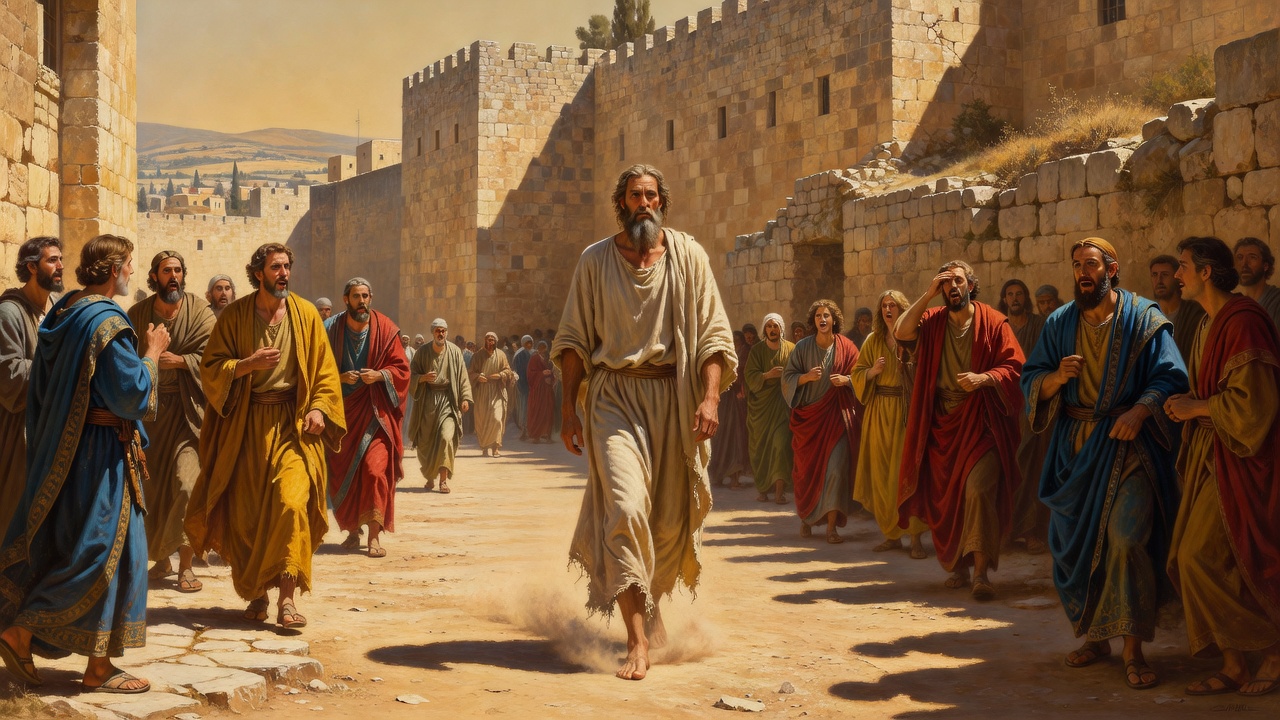
1Nan ane ke kòmandan Asiryen an te vini Asdod la, lè Sargon, wa Assyrie a, te voye li goumen kont Asdod la pou te pran li, 2nan lè ke SENYÈ a te pale pa Ésaïe, fis a Amots la, epi te di: “Ale retire twal sak la sou kwis ou e retire soulye nan pye ou.” Se konsa li te fè, epi li te ale toutouni, epi pye a tè. 3Konsa, SENYÈ a te di: “Menm jan tankou sèvitè Mwen an, Ésaïe, te ale toutouni e pye atè pandan twazan kon yon sign nan, e kon yon avètisman kont Égypte ak Éthiopie, 4menm jan, wa a Assyrie va mennen fè sòti kaptif Ejipsyen yo ansanm ak egzile Éthiopie yo jenn kon vye, toutouni, e pye atè ak tout do yo dekouvri, pou fè Égypte vin wont. 5Epi yo va vin dezole e wont akoz Éthiopie, ki te espwa yo, e anplis ak Égypte, fyète yo a. 6Pou sa, moun ki rete nan peyi bò lanmè sa a, va di nan jou sa a: ‘Gade byen, se konsa espwa nou vin rive! Gade kote nou te kouri ale pou sekou, pou delivre anba men wa a Assyrie a! Epi koulye a, nou menm, se kòman nou va chape?’”
Did you know?
Prophetic Sign Against Egypt and Cush
- Ashdod was a heavily fortified Philistine city situated along the coastal highway linking Palestine with Egypt. The Assyrian king Sargon sent his commander to besiege and capture the city as the Assyrian Empire expanded southward.Sources: the Bible text itself · Ashdod
- God commanded Isaiah to take off his outer sackcloth and sandals, walking stripped and barefoot for three years. This dramatic prophetic act symbolized how Assyria would conquer and lead away the captives of Egypt and Cush in humiliation.Sources: the Bible text itself · Isaiah · Cush
Notes written with AI assistance from open sources (Theographic Bible Metadata, CC BY-SA 4.0; Easton’s Bible Dictionary, public domain) and reviewed before publishing.
Places in this chapter
- Ashdod · Today: Tel Ashdod · 31.757, 34.658 · verse 1
- Assyria · 36.359, 43.153 · verses 1, 4, 6
- Cush · Today: Cush 1 · 16.935, 33.751 · verses 3, 4, 5
- Egypt · 30.129, 31.308 · verses 3, 4, 5, 6
Only places identified with high confidence are shown (90% or more according to the scholarly sources compiled by OpenBible). Period map: DARE (Digital Atlas of the Roman Empire), CC BY 4.0; modern map: © OpenStreetMap contributors; places: OpenBible.info (CC BY 4.0).
Credits and license for this translation
Bib Sen An
The Holy Bible in Haitian Creole, 2023 update
copyright © 2017-2023 Ron Smith
Language: Kreyòl Ayisyen (Haitian)
Translation by: Ron Smith
Contributor: Felix Nixon
This translation is made available to you under the terms of the
Creative Commons Attribution Share-Alike license 4.0.
You have permission to share and redistribute this Bible translation in any format and to make reasonable revisions and adaptations of this translation, provided that:
You include the above copyright and source information.
If you make any changes to the text, you must indicate that you did so in a way that makes it clear that the original licensor is not necessarily endorsing your changes.
If you redistribute this text, you must distribute your contributions under the same license as the original.
Pictures included with Scriptures and other documents on this site are licensed just for use with those Scriptures and documents.
For other uses, please contact the respective copyright owners.
Note that in addition to the rules above, revising and adapting God's Word involves a great responsibility to be true to God's Word. See Revelation 22:18-19.
2026-06-11
Source: http://ebible.org/hatbsa/ · eBible.org