Ecclesiastes 7
Bib Sen An · Tap a verse to see its cross-references.
1Yon bon non pi bon pase yon pomad swa, e jou mouri pi bon pase jou nou te ne a. 2Li pi bon pou ale nan kay k ap fè dèy pase nan kay k ap fè fèt; paske se konsa ke chak moun va fini, e sila ki vivan an pran sa a kè. 3Tristès pi bon pase ri; paske lè figi moun nan tris, kè a vin pi bon. 4Panse a saj la anndan lakay k ap fè dèy; men panse a san konprann nan kay plezi. 5Li pi bon pou koute repwòch a yon nonm saj pase pou yon moun ta koute chanson a moun san konprann yo. 6Paske tankou bwa pikan sèch pete nan dife; se konsa lè yon nonm ensanse ap ri; epi sa anplis se vanite. 7Paske chantay ka fè yon nonm saj vin fou, e lajan anba tab fè kè vin konwonpi. 8Lè yon bagay fin fèt, li pi bon pase lè l te kòmanse a.
Pasyans nan lespri pi bon pase awogans lespri a. 9Pa chofe kè ou pou vin fache; paske fache rete nan kè a moun ensanse. 10Pa di: “Poukisa jou lontan yo te pi bon pase jodi a”? Paske nanpwen sajès nan kesyon sa a.
11Sajès ansanm ak eritaj bon, e se yon avantaj pou sila ki konn wè solèy yo. 12Paske sajès se yon pwotèj, menm ke lajan se yon pwotèj la; men avantaj a bon konprann nan se ke sajès va prezève lavi a sila ki genyen l.
13Konsidere zèv Bondye yo, paske se kilès ki ka drese sa ke Li menm te koube? 14Nan jou bonè yo fè kè kontan; men nan jou malè yo, reflechi—Bondye te fè tou de pou lòm pa dekouvri anyen nan sa k ap swiv li.
15Mwen te wè tout bagay pandan tout jou vanite mwen yo; gen yon nonm dwat ki mouri nan ladwati, ak yon nonm mechan ki fè vi li long ak mechanste li a. 16Pa fè eksè nan ladwati, ni pa vin twò saj. Poukisa ou ta detwi pwòp tèt ou? 17Pa fè eksè nan mechanste, ni pa vin ensanse. Poukisa ou ta vle mouri avan lè ou? 18Li bon pou ou ta kenbe pran yon bagay san ou pa lage lòt la; paske sila ki gen lakrent Bondye a ap vini ak tou de. 19Sajès ranfòse yon nonm saj plis pase dis gwo chèf ki nan yon vil. 20Anverite, nanpwen yon moun dwat sou latè ki fè sa ki bon tout tan, e ki pa janm peche. 21Anplis, pa pran a kè tout pawòl ki pale, sof ke ou ta tande sèvitè ou lè l ap bay ou madichon. 22Paske ou vin konprann ke ou menm tou anpil fwa konn bay moun madichon. 23Mwen te tante fè tout sa ak sajès e mwen te di: “Mwen va saj”, men sa te chape lwen mwen. 24Sa ki te konn egziste vin lwen, e se yon mistè menm. Se kilès ki ka dekouvri li? 25Mwen te dirije panse m pou konnen; pou fè ankèt e chache sajès avèk rezon, e pou konnen mechanste se foli; e foli menm rive fè moun fou.
26Epi mwen te dekouvri pi anmè pase mouri, kè a fanm ki fè pèlen an. Men li yo se tankou chenn. Yon moun ki plè Bondye va chape anba men l, men pechè a va vin kaptire anba l.
27“Gade byen, se sa mwen dekouvri,” predikatè a di: “Ajoute yon bagay a yon lòt pou twouve konprann.” 28Sou sila m toujou ap chache a, men m poko jwenn; mwen te twouve yon nonm pami mil, men mwen pa t jwenn fanm pami tout sa yo. 29Men gade, se sèl sa mwen dekouvri; Bondye te fè lòm kanpe dwat, men yo chache anpil manèv pou vin koube.
Did you know?
Wisdom, Mortality, and the Limits of Understanding
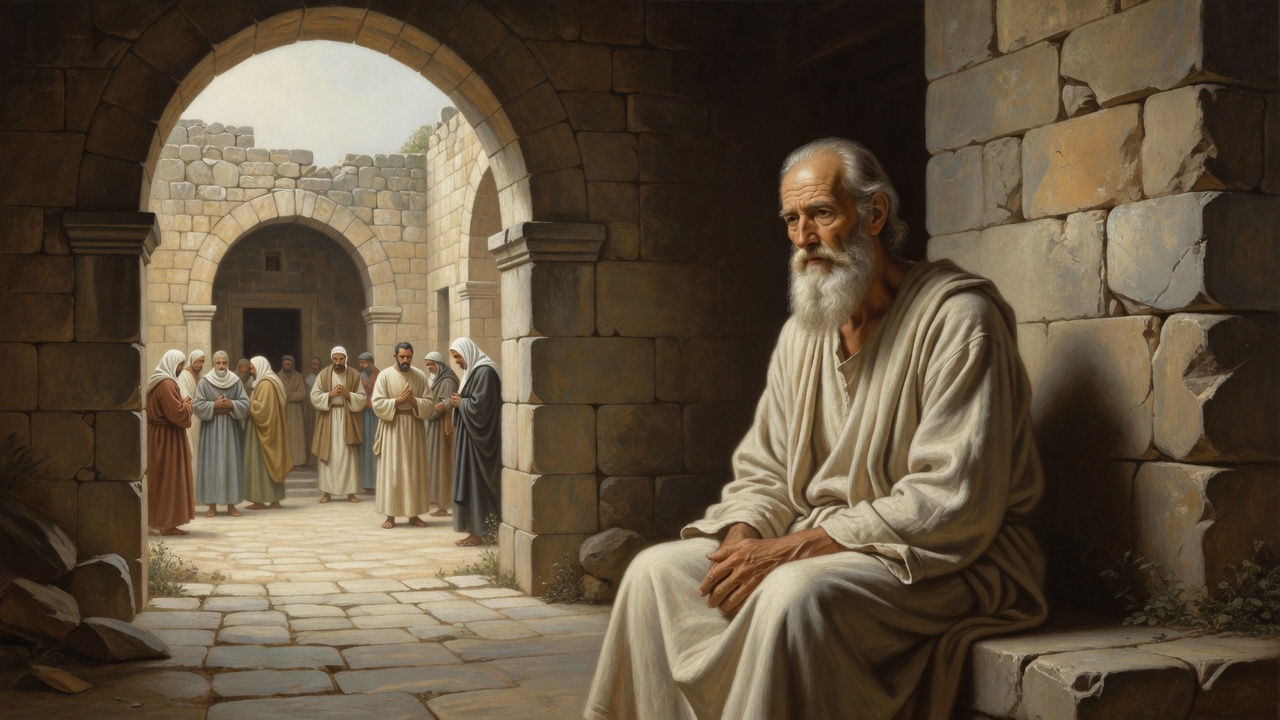
- Ecclesiastes 7 begins with a series of comparative proverbs arguing that moments of solemn reflection, such as visiting a house of mourning or facing sorrow, provide greater insight into life than superficial laughter and feast houses.Sources: the Bible text itself
- The Teacher reflects on the reality of human experience, noting that God has appointed both prosperous and adverse days so that humans cannot foresee their future, and that righteous people sometimes perish while the wicked live long.Sources: the Bible text itself
- The chapter highlights the universal limitation of human goodness, observing that there is no one on earth who does good and never sins, and concluding that while God created humanity upright, people pursue many complex schemes.Sources: the Bible text itself
Notes written with AI assistance from open sources (Theographic Bible Metadata, CC BY-SA 4.0; Easton’s Bible Dictionary, public domain) and reviewed before publishing.
Credits and license for this translation
Bib Sen An
The Holy Bible in Haitian Creole, 2023 update
copyright © 2017-2023 Ron Smith
Language: Kreyòl Ayisyen (Haitian)
Translation by: Ron Smith
Contributor: Felix Nixon
This translation is made available to you under the terms of the
Creative Commons Attribution Share-Alike license 4.0.
You have permission to share and redistribute this Bible translation in any format and to make reasonable revisions and adaptations of this translation, provided that:
You include the above copyright and source information.
If you make any changes to the text, you must indicate that you did so in a way that makes it clear that the original licensor is not necessarily endorsing your changes.
If you redistribute this text, you must distribute your contributions under the same license as the original.
Pictures included with Scriptures and other documents on this site are licensed just for use with those Scriptures and documents.
For other uses, please contact the respective copyright owners.
Note that in addition to the rules above, revising and adapting God's Word involves a great responsibility to be true to God's Word. See Revelation 22:18-19.
2026-06-11
Source: http://ebible.org/hatbsa/ · eBible.org