Ecclesiastes 6
Bib Sen An · Tap a verse to see its cross-references.
1Gen yon mal ke m konn wè anba syèl la e ki gaye patou pami lòm— 2Yon nonm ke Bondye fin bay richès, byen ak lonè, jiskaske nanm li pa manke anyen nan tout sa ke li dezire. Men Bondye pa kite li manje ladann, paske yon etranje ap jwi benefis yo. Sa se vanite ak gwo malè.
3Si yon nonm fè yon santèn timoun e viv anpil ane, malgre fòs kantite ke yo kapab ye, men nanm li pa janm satisfè ak bon bagay, e li pa menm ka fè yon bon antèman; alò, mwen di: “Pito li te sòti kon foskouch nan vant li.” 4Paske li parèt an ven e non li vin kouvri nan fènwa. 5Li pa janm wè solèy la, e li p ap janm konnen anyen; li pi bon pase lòt la. 6Menm si lòt la viv pandan mil ane de fwa e pa rejwi de bon bagay—èske se pa tout moun ki ale menm kote a? 7Tout travay a lòm se pou satisfè bouch li; malgre sa, apeti li pa janm satisfè. 8Paske, se ki lavantaj yon nonm saj genyen sou yon moun san konprann? Ki lavantaj malere a genyen nan konnen jan pou mache devan sila ki vivan yo? 9Sa ke zye wè pi bon pase sa ke nanm dezire. Sa tou, se san rezon ak kouri dèyè van. 10Tout sa ki egziste te gen non deja, e yo tout konnen sa ke lòm nan ye; paske li pa ka goumen ak sila ki pi fò pase l. 11Paske, gen anpil pawòl ki ogmante vanite. Alò, se ki lavantaj pou yon nonm? 12Paske kilès ki konnen sa ki bon pou yon nonm pandan lavi li, pandan ti kras ane lavi li ki san rezon an? Li va pase yo tankou lonbraj. Paske se kilès ki ka di sa k ap rive apre li anba solèy la?
Did you know?
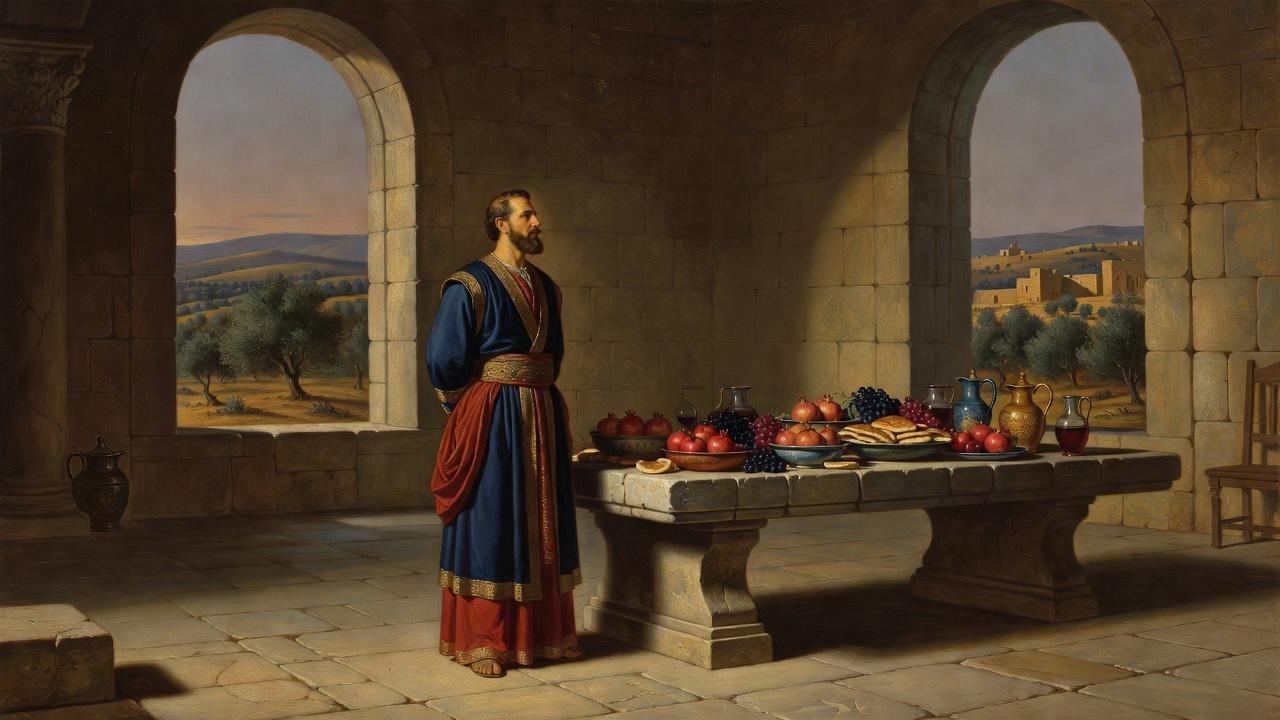
The Vanity of Unsatisfied Wealth
- In ancient thought, having a long life and fathering many children were considered the highest signs of blessing. Ecclesiastes observes, however, that even living two thousand years and fathering a hundred children is hollow if a person cannot enjoy their prosperity or receive a proper burial.Sources: the Bible text itself
- The author points out that although human labor is spent satisfying basic physical needs such as food, human appetite and desire remain continually unfulfilled. He contrasts enjoying what is directly present before the eyes with the ceaseless wandering of unsatisfied cravings.Sources: the Bible text itself
- The chapter emphasizes human limitations, noting that mortals cannot dispute with what has been established by one stronger than they are. Because life is fleeting like a shadow, humans cannot fully know what is truly good for them or foresee what will happen after they are gone.Sources: the Bible text itself
Notes written with AI assistance from open sources (Theographic Bible Metadata, CC BY-SA 4.0; Easton’s Bible Dictionary, public domain) and reviewed before publishing.
Credits and license for this translation
Bib Sen An
The Holy Bible in Haitian Creole, 2023 update
copyright © 2017-2023 Ron Smith
Language: Kreyòl Ayisyen (Haitian)
Translation by: Ron Smith
Contributor: Felix Nixon
This translation is made available to you under the terms of the
Creative Commons Attribution Share-Alike license 4.0.
You have permission to share and redistribute this Bible translation in any format and to make reasonable revisions and adaptations of this translation, provided that:
You include the above copyright and source information.
If you make any changes to the text, you must indicate that you did so in a way that makes it clear that the original licensor is not necessarily endorsing your changes.
If you redistribute this text, you must distribute your contributions under the same license as the original.
Pictures included with Scriptures and other documents on this site are licensed just for use with those Scriptures and documents.
For other uses, please contact the respective copyright owners.
Note that in addition to the rules above, revising and adapting God's Word involves a great responsibility to be true to God's Word. See Revelation 22:18-19.
2026-06-11
Source: http://ebible.org/hatbsa/ · eBible.org