Amos 8
Bib Sen An · Tap a verse to see its cross-references.
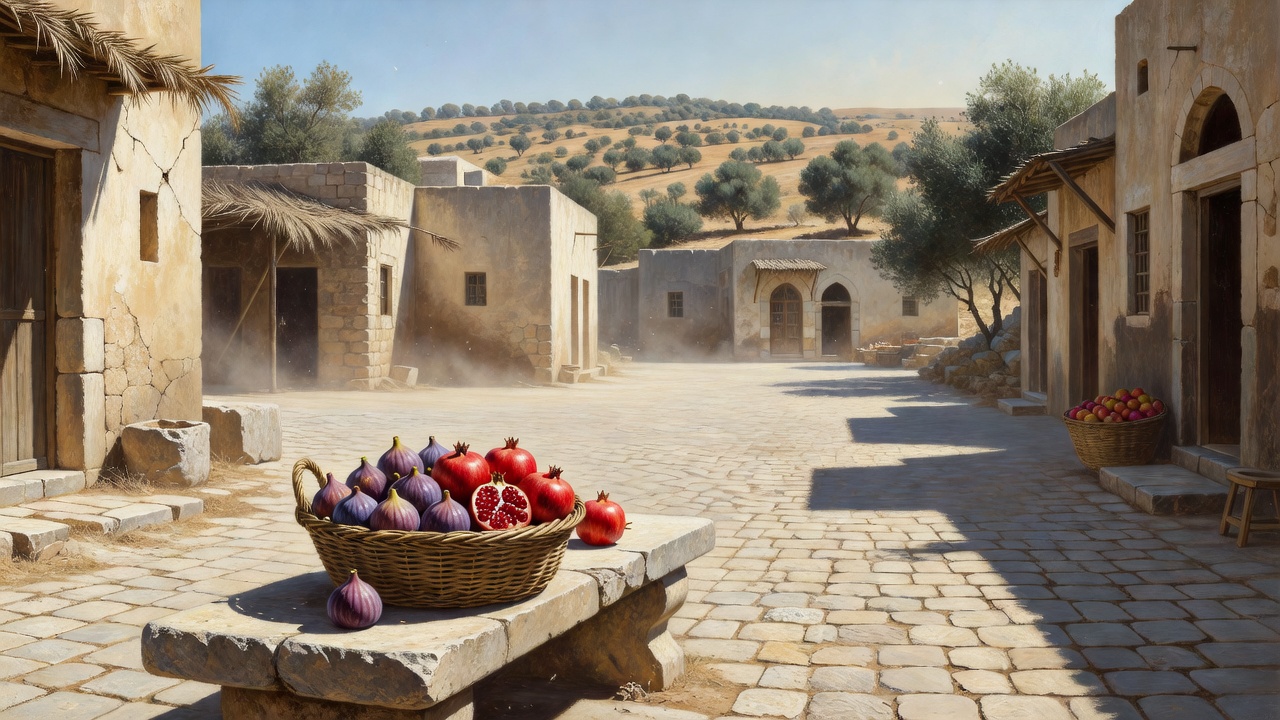
1Konsa Senyè BONDYE a te montre mwen, e gade byen, te gen yon panyen fwi gran sezon.
2Li te di: “Kisa ou wè, Amos?”
Epi mwen te di: “Yon panyen fwi gran sezon.”
Konsa, SENYÈ a te di mwen:
“Lafen gen tan rive pou pèp Mwen an, Israël.
Mwen p ap pwoteje yo ankò.
3Kantik a tanp lan va tounen chan lamantasyon
nan jou sa a,” deklare Senyè BONDYE a.
“Kadav yo va anpil.
Nan chak andwa, yo va jete yo deyò an silans.
4Tande sa, nou menm k ap vale malere yo nèt,
pou mete fen a tout pòv yo,
5k ap di: ‘Kilè nouvèl lin nan ap fini
pou nou ka vann sereyal la?
Ak Saba a pou nou ka ouvri mache ble a?
N ap fè efa a pi piti, e sik la pi gwo.
Anplis, n ap twonpe ak balans malonèt,
6pou achte sila ki san sekou a pou lajan,
ak malere a pou de grenn sapat.
Menm balizaj ble a n ap vann!’”
7SENYÈ a te sèmante pa glwa Jacob la:
“Anverite, Mwen p ap janm bliye okenn nan zak yo.
8Akoz sa, èske peyi a p ap pran tranble,
e tout moun ki rete ladann p ap fè lamantasyon?
Anverite, tout peyi a va leve tankou Rivyè Nil lan.
Li va vin ajite toupatou e bese tankou Rivyè Égypte la.
9Li va vin rive nan jou sa a”, deklare Senyè BONDYE a,
ke Mwen va fè solèy la desann a midi,
e mwen va fè tè a nan fènwa nan plen jounen.
10Answit, Mwen va fè fèt nou yo vin tounen dèy;
tout chan lajwa nou yo va tounen lamantasyon.
Mwen va fè nou pote twal sak sou senti a tout moun,
ak tèt chòv sou tout tèt.
Mwen va fè li tankou yon moman dèy
pou yon sèl fis inik,
e lafen li tankou yon jou anmè.
11“Gade byen, jou yo ap vini,” deklare Senyè BONDYE a,
“lè Mwen va voye gwo grangou sou peyi a,
pa yon grangou pou pen oswa pou dlo,
men pou koute pawòl SENYÈ a.
12Pèp la va kilbite tou egare
sòti nan yon lanmè pou rive nan lòt lanmè,
e sòti nan nò pou rive menm nan lès;
yo va gaye toupatou pou chache pawòl SENYÈ a,
men yo p ap jwenn li.
13Nan jou sa a, bèl tifi vyèj yo
ak jennonm yo va vin endispoze akoz swaf la.
14Menm jan pou sila ki sèmante pa peche Samarie a,
ki di: ‘Jan dye ou a vivan an, O Dan!’
e ‘Jan chemen Beer-Schéba vivan an’;
yo va tonbe e yo p ap leve ankò.”
Did you know?
The Basket of Summer Fruit and Coming Famine
- Amos condemned merchants who grew impatient with religious observances like the New Moon and the Sabbath because they paused commerce. These traders sought to cheat buyers by shrinking the measure for grain (the ephah), increasing the price (the shekel), using rigged scales, and selling worthless chaff to desperate buyers.Sources: the Bible text itself
- To describe the catastrophic shaking and upheaval awaiting the land, the prophet compared the ground rising and receding to the annual flooding of the Nile River in Egypt.Sources: the Bible text itself · Egypt
- Amos warned of a severe spiritual crisis: a famine not of bread or water, but of hearing the words of the Lord. He pictured people wandering in exhaustion from sea to sea across the land in search of divine guidance without finding it.Sources: the Bible text itself
Notes written with AI assistance from open sources (Theographic Bible Metadata, CC BY-SA 4.0; Easton’s Bible Dictionary, public domain) and reviewed before publishing.
Places in this chapter
- Egypt · 30.129, 31.308 · verse 8
- Nile · Today: Nile River · 31.465, 30.367 · verse 8
- Dan · Today: Tel Dan · 33.249, 35.652 · verse 14
- Samaria · 32.276, 35.195 · verse 14
Only places identified with high confidence are shown (90% or more according to the scholarly sources compiled by OpenBible). Period map: DARE (Digital Atlas of the Roman Empire), CC BY 4.0; modern map: © OpenStreetMap contributors; places: OpenBible.info (CC BY 4.0).
Credits and license for this translation
Bib Sen An
The Holy Bible in Haitian Creole, 2023 update
copyright © 2017-2023 Ron Smith
Language: Kreyòl Ayisyen (Haitian)
Translation by: Ron Smith
Contributor: Felix Nixon
This translation is made available to you under the terms of the
Creative Commons Attribution Share-Alike license 4.0.
You have permission to share and redistribute this Bible translation in any format and to make reasonable revisions and adaptations of this translation, provided that:
You include the above copyright and source information.
If you make any changes to the text, you must indicate that you did so in a way that makes it clear that the original licensor is not necessarily endorsing your changes.
If you redistribute this text, you must distribute your contributions under the same license as the original.
Pictures included with Scriptures and other documents on this site are licensed just for use with those Scriptures and documents.
For other uses, please contact the respective copyright owners.
Note that in addition to the rules above, revising and adapting God's Word involves a great responsibility to be true to God's Word. See Revelation 22:18-19.
2026-06-11
Source: http://ebible.org/hatbsa/ · eBible.org