1 Kings 1
Bib Sen An · Tap a verse to see its cross-references.
About this book
About 1 Kings
- Easton's Bible Dictionary (1897) treats the authorship of the books of Kings as uncertain. A tradition that Jeremiah wrote them is, in Easton's view, supported by passages almost identical with parts of Jeremiah and by events Jeremiah knew personally, yet Easton thinks it more probable that Ezra, after the Captivity, compiled the books from earlier documents, perhaps written by David, Solomon, Nathan, Gad, and Iddo. Easton dates the composition between 561 B.C., when Jehoiachin was released from captivity by Evil-merodach, and 538 B.C., the decree of Cyrus.Sources: Easton: Kings, The Books of
- Easton says these books contain the annals of the kingdom from Solomon's accession until Nebuchadnezzar and the Babylonians subdued it, a period he estimates at about 453 years. 1 Kings opens while David is dying: Adonijah, his fourth son, who had become heir-apparent to the throne after the deaths of Amnon and Absalom, has himself proclaimed king, but Nathan and Bathsheba persuade David to enthrone Solomon at once. Solomon, David's son by Bathsheba, whose history is recorded in 1 Kings 1-11, came to the throne, Easton suggests, at about sixteen or eighteen.Sources: Easton: Kings, The Books of · Adonijah · Solomon
- In the Hebrew Scriptures the two books of Kings originally formed one book; the Septuagint first divided them and, with the Vulgate, numbers them as the third and fourth books of Kings, the books of Samuel being the first and second. Easton notes that Chronicles gives greater prominence to the priestly or Levitical office, while Kings gives greater prominence to the royal office, and that in the threefold division of the Scriptures by the Jews these books are ranked among the Prophets. The narrative points to earlier sources: the book of the acts of Solomon and the chronicles of the kings of Judah and of Israel.Sources: Easton: Kings, The Books of
- After Solomon's death the ten tribes revolted and invited Jeroboam, son of Nebat, to be their king; Easton calls him the first king of those tribes and dates his reign from 976 to 945 B.C. He had fled to Egypt under the protection of Shishak I, and later moved his residence from Shechem, his first capital, to Tirzah, which remained the chief residence of Israel's kings until Omri bought the hill of Shomeron from Shemer for two talents of silver and built Samaria. The later narrative includes Ahab, Omri's son and the seventh king of Israel, whose wife was Jezebel: to the calf worship introduced by Jeroboam he added the worship of Baal, and he was severely admonished by the prophet Elijah.Sources: Jeroboam · Tirzah · Samaria · Ahab
Notes written with AI assistance from open sources (Theographic Bible Metadata, CC BY-SA 4.0; Easton’s Bible Dictionary, public domain) and reviewed before publishing.
1Alò, Wa David te vin vye, avanse nan laj. Malgre yo te kouvri li avèk rad, li te toujou fwèt. 2Konsa, sèvitè li yo te di li: “Kite yo chache yon jenn fi vyèj pou wa a, mèt mwen an, e kite li okipe wa a pou devni enfimyè li. Epi kite li kouche nan sen li pou wa a, mèt mwen an, pou li kapab chofe kò li.” 3Konsa, yo te chache toupatou yon bèl fi nan tout tèritwa Israël la, yo te twouve Abischag, Sinamit lan, e yo te mennen li kote wa a. 4Fi a te byen bèl. Li te devni enfimyè a wa a pou te okipe li, men wa a pa t antre nan relasyon avèk li.
5Alò, Adonija, fis a Haggith la te vin vante tèt li. Li te di: “Mwen va devni wa.” Konsa, li te prepare pou li menm cha avèk chevalye avèk senkant òm pou te kouri devan l. 6Papa li pa t janm konfwonte li nan okenn moman pou di: “Poukisa ou fè sa?” Li te osi yon bonòm byen bèl e te ne apre Absalom. 7Li te fè tèt a tèt ansanm avèk Joab, fis a Tseruja a, avèk Abiathar, prèt la; epi yo te swiv Adonija pou te ede li. 8Men Tsadok, prèt la, Benaja, fis a Jehojada a, Nathan, pwofèt la, Schimeï, Réï, ak mesye vanyan ki te apatyen a David yo, pa t avèk Adonija.
9Adonija te fè sakrifis mouton avèk bèf ak bèt gra kote wòch a Zohéleth la, ki akote En-Rouguel. Li te envite tout frè li yo, fis a wa yo ak tout mesye pwisan Juda yo, sèvitè a wa yo. 10Men li pa t envite Nathan, pwofèt la, Benaja, mesye vanyan yo, ni Salomon, frè l la.
11Konsa Nathan te pale avèk Bath-Schéba, manman a Salomon. Li te di: “Èske ou pa t tande ke Adonija, fis a Haggith la te devni wa, e David, mèt nou an, pa konnen sa? 12Pou sa, vini koulye a, souple, kite mwen ba ou konsèy pou sove lavi ou avèk lavi a fis ou a, Salomon. 13Antre koulye a, kote Wa David e di li: ‘Mèt mwen, O Wa a, èske ou pa t sèmante a sèvant ou an, e te di: “Anverite Salomon, fis ou a va wa apre mwen, e li va chita sou twòn mwen an”? Poukisa konsa, Adonija gen tan vin wa a?’ 14Veye byen, pandan ou toujou la a ap pale avèk wa a, mwen va parèt pou konfime pawòl ou yo.”
15Konsa, Bath-Schéba te antre kote wa a nan chanm dòmi an. Alò, wa a te byen vye, epi Abischag, Sinamit lan, t ap okipe wa a. 16Bath-Schéba te bese kouche nèt atè devan wa a. Epi wa a te di: “Se kisa ke ou vle?”
17Li te di li: “Mèt mwen, ou te sèmante a sèvant ou a pa SENYÈ a, Bondye ou a, ke: Anverite fis ou a, Salomon va devni wa apre mwen, e li va chita sou twòn mwen an.” 18Alò, gade byen, se Adonija ki wa a. Epi koulye a, mèt mwen an, wa a, ou pa menm konnen. 19Li gen tan fè sakrifis bèf avèk bèt gra ak mouton an gran kantite, e li te envite tout fis a wa yo avèk Abiathar, prèt la, avèk Joab, chèf lame a, men li pa t envite Salomon, sèvitè ou a. 20Epi koulye a, pou ou menm, mèt, wa a, zye a tout Israël ap gade ou, pou di yo se kilès k ap chita sou twòn a mèt mwen an, wa a, apre li. 21Otreman, li va vin rive ke depi mèt mwen an, wa a, vin dòmi avèk zansèt li yo, pou mwen avèk fis mwen an, Salomon va vin konsidere kòm koupab.”
22Epi gade, pandan li te toujou ap pale, Nathan, pwofèt la te vin antre. 23Yo te pale wa a, e te di: “Men Nathan, pwofèt la.”
Konsa, lè l te antre devan wa a, li te pwostène kò l devan wa a avèk figi li atè. 24Nathan te di: “Mèt mwen, wa a, èske ou te di: ‘Adonija va wa apre mwen e li va chita sou twòn mwen an’? 25Paske li te desann jodi a pou te fè sakrifis bèf avèk bèt gra, ak mouton an gran kantite, e li te envite tout fis a wa yo avèk chèf lame a, avèk Abiathar, prèt la. Men vwala, y ap manje bwè devan li, epi yo di: ‘Viv wa Adonija!’ 26Men mwen menm, sèvitè ou a, avèk Tsadok, prèt la ak Benaja, fis a Jehojada a, e sèvitè ou a, Salomon, li pa t envite nou. 27Èske bagay sa a te fèt pa mèt mwen an, wa a? Èske ou pa t montre sèvitè ou yo kilès ki ta dwe chita sou twòn a mèt mwen an, wa a, apre li?”
28Konsa, Wa David te reponn: “Rele Bath-Schéba vin kote m”. Li te parèt nan prezans a wa a e li te kanpe devan wa a. 29Wa a te sèmante. Li te di: “Jan SENYÈ a viv la, Li menm ki te peye ranson lavi mwen soti nan tout twoub, 30anverite, jan mwen te sèmante a ou menm pa SENYÈ a, Bondye a Israël la, e te di: ‘Fis ou a, Salomon va devni wa a apre mwen. Li va chita sou twòn mwen an nan plas mwen’. Mwen va, anverite, fè sa menm jodi a.”
31Bath-Schéba te bese avèk figi li atè devan wa a. Li te di: “Ke mèt mwen an, Wa David, viv pou tout tan.”
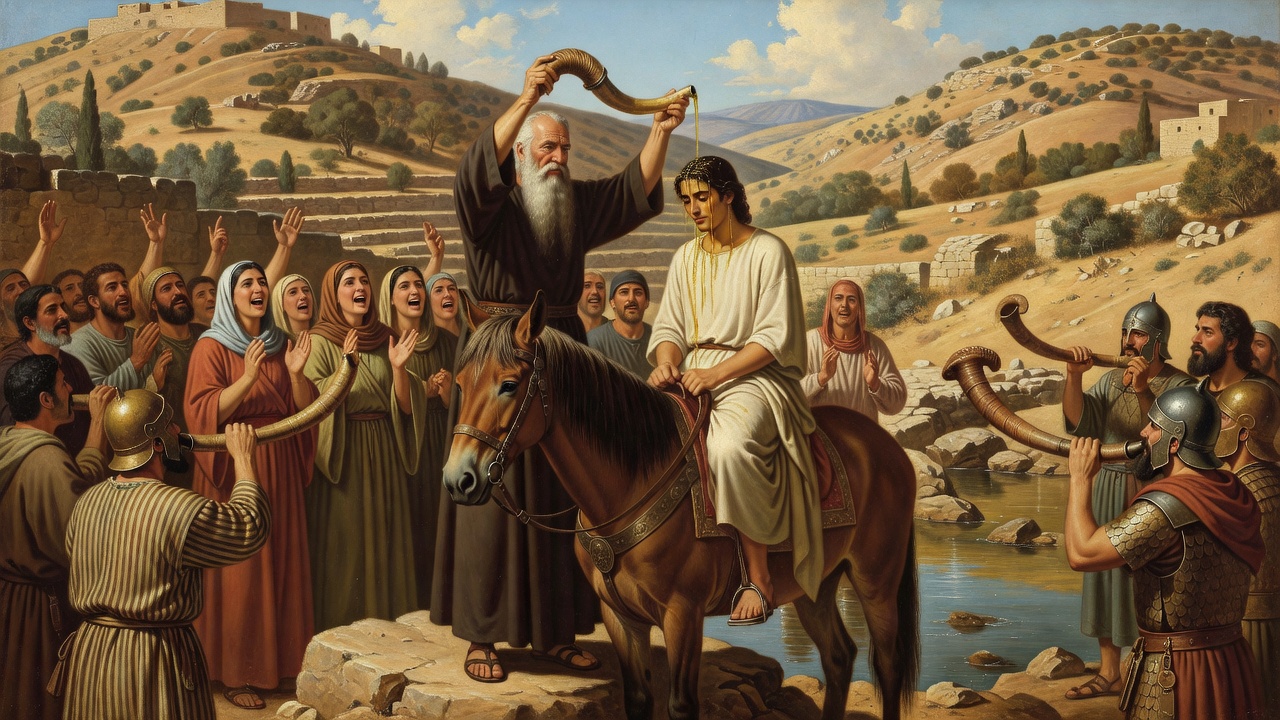
32Alò, Wa David te di: “Rele vin kote m Tsadok, prèt la, Nathan, pwofèt la, ak Benaja, fis a Jehojada a.” Epi yo te vini nan prezans a wa a. 33Wa a te di yo: “Pran avèk ou sèvitè a mèt ou yo, e fè fis mwen an, Salomon, monte sou milèt pa m nan pou l mennen anba nan Guihon. 34Kite Tsadok, prèt la ak Nathan, pwofèt la onksyone li an la, kòm wa sou Israël. Soufle twonpèt la e di: ‘Viv wa a, Salomon!’ 35Alò, ou va vin monte apre li. Li va vin chita sou twòn mwen an e li va vin wa nan plas mwen. Paske mwen te chwazi li pou renye sou Israël avèk Juda.”
36Benaja, fis a Jehojada a te reponn wa a. Li te di: “Amen!” Kite se konsa ke SENYÈ a, Bondye a mèt mwen an, pale. 37Jan SENYÈ a te avèk mèt mwen an, wa a, konsa ke li kapab avèk Salomon e fè twòn li an pi gran ke twòn a mèt mwen an, Wa David!
38Konsa Tsadok, prèt la, Nathan, pwofèt la, Benaja, fis a Jehojada a, Keretyen yo, Peletyen yo te desann. Yo te fè Salomon monte sou milèt a David la pou te mennen li kote Guihon. 39Tsadok, prèt la, te pran kòn lwil la nan tant lan pou te onksyone Salomon. Yo te soufle twonpèt la, e tout pèp la te di: “Viv wa Salomon!”
40Tout pèp la te monte apre li. Pèp la t ap jwe flit, yo t ap rejwi avèk gran jwa, jiskaske tè a te vin souke avèk bwi ke yo t ap fè yo. 41Alò, Adonija avèk tout envite ki te avèk li yo te tande sa pandan yo te fin manje. Lè Joab te tande bwi a twonpèt la, li te di: “Poukisa gen zen lavil la konsa?”
42Pandan li te toujou ap pale, men vwala, Jonathan, fis a Abiathar a, prèt la te vin rive. Alò Adonija te di: “Antre, pwiske ou se yon nonm vanyan ki pote bòn nouvèl.”
43Men Jonathan te reponn a Adonija: “Non! Mèt nou, Wa David, te fè Salomon wa. 44Wa a te anplis, voye avèk li Tsadok, prèt la, Nathan, pwofèt la, Benaja, fis a Jehojada a, Keretyen yo, Peletyen yo, epi yo te fè li monte sou milèt a wa a. 45Tsadok, prèt la, avèk Nathan, pwofèt la, te onksyone li wa nan Guihon. Yo te vin monte depi la, ranpli avèk jwa jiskaske tout vil la te vin boulvèse. Sa se bwi ke nou te tande a. 46Anplis menm, Salomon te vin pran chèz li sou twòn wayòm nan. 47Toujou, sèvitè a wa yo te vin beni mèt nou an, Wa David. Yo te di: ‘Ke Bondye ou a kapab fè non a Salomon pi bon ke non ou, e twòn pa li a pi gran ke twòn pa w la!’ Epi wa a te bese sou kabann nan. 48Wa a osi te di konsa: ‘Beni se SENYÈ a, Bondye Israël la, ki te pèmèt yon moun vin chita sou twòn mwen an jodi a pandan pwòp zye m toujou wè.’”
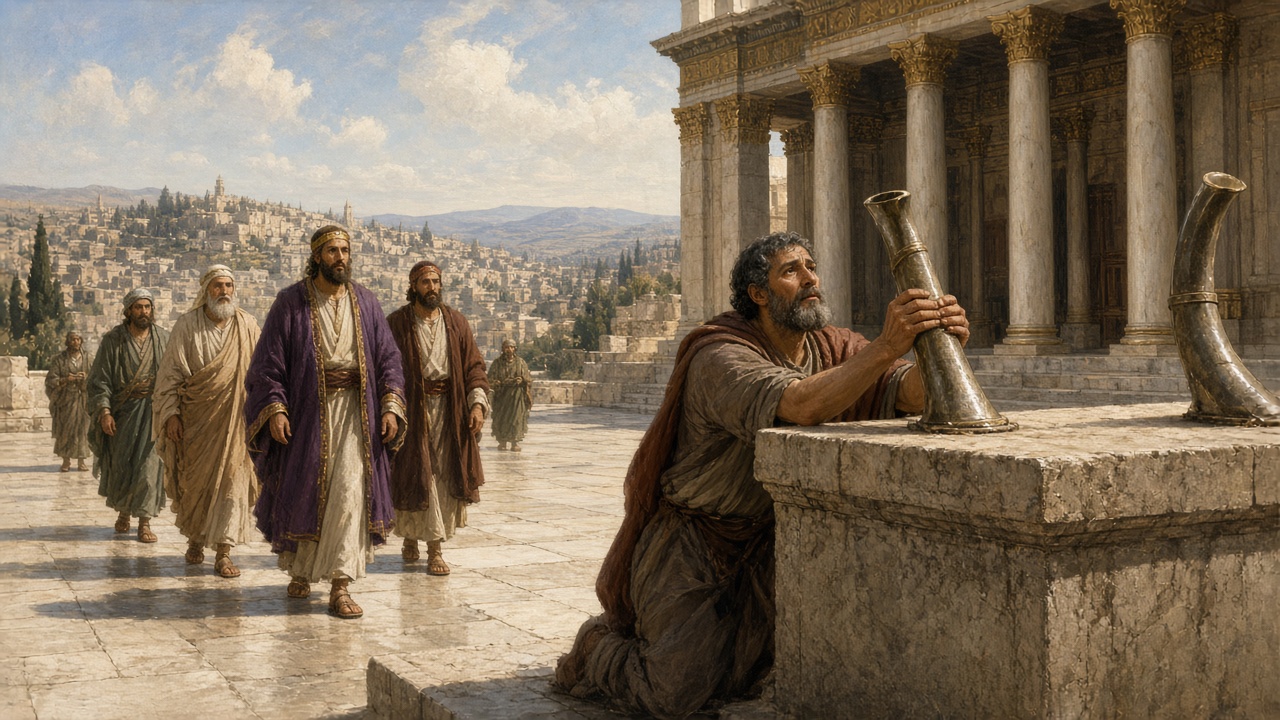
49Alò, tout envite a Adonija yo te ranpli avèk gwo laperèz. Yo te leve e yo chak te ale fè wout yo. 50Konsa, Adonija te pè Salomon. Li te leve ale pou sezi kòn lotèl yo, e li te di: “Kite Salomon sèmante a mwen menm jodi a ke li p ap mete sèvitè li a lanmò avèk nepe.” 51Alò, yo te pale a Salomon. Yo te di: “Gade byen, Adonija pè Wa Salomon; paske tande byen, li te ale sezi kòn lotèl yo, e li t ap di: ‘Kite Wa Salomon sèmante a mwen menm jodi a ke li p ap mete sèvitè li a lanmò avèk nepe.’”
52Salomon te di: “Si li se yon moun onèt, nanpwen menm youn nan cheve li k ap tonbe atè, men si se mechanste ki twouve nan li, li va mouri.”
53Konsa, Wa Salomon te voye mennen li desann soti nan lotèl la. Epi li te vin lonje kò l atè nèt devan Wa Salomon. Salomon te di li: “Ale lakay ou.”
Did you know?
The Succession to David's Throne
- As David's oldest surviving son after the deaths of Amnon and Absalom, Adonijah claimed the royal succession, backed by the military commander Joab and the high priest Abiathar. However, David chose his younger son Solomon, who was supported by the prophet Nathan, the priest Zadok, and the royal bodyguard under Benaiah.Sources: Adonijah · Solomon · the Bible text itself
- Riding the king's own mule was a decisive public declaration of royal authority. By David's explicit instruction, Solomon was escorted down to the spring of Gihon, where Zadok anointed him king with oil taken from the tabernacle to the sound of ram's horns and popular celebration.Sources: Gihon · Zadok · the Bible text itself
- Upon hearing of Solomon's public coronation, Adonijah fled in terror and sought asylum by taking hold of the horns of the sacrificial altar. Solomon granted him conditional clemency, sparing his life so long as he proved himself a worthy man.Sources: Adonijah · the Bible text itself
Notes written with AI assistance from open sources (Theographic Bible Metadata, CC BY-SA 4.0; Easton’s Bible Dictionary, public domain) and reviewed before publishing.
Places in this chapter
- Shunem · Today: Sulam · 32.606, 35.334 · verse 3
- Serpent’s Stone · Today: within 100 m of Bir Ayub · 31.767, 35.236 · verse 9
- Gihon · Today: Gihon Spring · 31.773, 35.236 · verses 33, 38, 44, 45
- Jerusalem · 31.777, 35.234 · verse 40
Only places identified with high confidence are shown (90% or more according to the scholarly sources compiled by OpenBible). Period map: DARE (Digital Atlas of the Roman Empire), CC BY 4.0; modern map: © OpenStreetMap contributors; places: OpenBible.info (CC BY 4.0).
Credits and license for this translation
Bib Sen An
The Holy Bible in Haitian Creole, 2023 update
copyright © 2017-2023 Ron Smith
Language: Kreyòl Ayisyen (Haitian)
Translation by: Ron Smith
Contributor: Felix Nixon
This translation is made available to you under the terms of the
Creative Commons Attribution Share-Alike license 4.0.
You have permission to share and redistribute this Bible translation in any format and to make reasonable revisions and adaptations of this translation, provided that:
You include the above copyright and source information.
If you make any changes to the text, you must indicate that you did so in a way that makes it clear that the original licensor is not necessarily endorsing your changes.
If you redistribute this text, you must distribute your contributions under the same license as the original.
Pictures included with Scriptures and other documents on this site are licensed just for use with those Scriptures and documents.
For other uses, please contact the respective copyright owners.
Note that in addition to the rules above, revising and adapting God's Word involves a great responsibility to be true to God's Word. See Revelation 22:18-19.
2026-06-11
Source: http://ebible.org/hatbsa/ · eBible.org