Song of Songs 7
Bib La · Tap a verse to see its cross-references.
1Ala bèl pye ou bèl nan sapat ou yo, nègès mwen! Ren ou tankou si li te dekore ak bon lò. Ou ta di travay yon bòs ki gen anpil ladrès ak gou! 2Lonbrit ou tankou yon bòl won ki pa janm manke diven melanje ak fèy santi bon. Anba vant ou menm tankou yon bèl jaden ble ak bèl ti flè sou tout arebò li. 3Tete ou yo doubout tankou de ti gazèl, de ti gazèl menm fòs, menm pòte. 4Kou ou tankou yon fò won fèt an ivwa. Je ou yo tankou basen dlo nan lavil Esbon, bò pòtay gwo lavil la. Nen ou tankou gwo fò peyi Liban an k'ap veye sou lavil Damas. 5Ou kenbe tèt ou dwèt sou kò ou, tankou mòn Kamèl. Cheve ou yo ap flote tankou bèl twal swa wouj grena. Nenpòt wa ta ka pèdi nan bouklèt cheve ou yo! 6Ala bèl ou bèl, mennaj mwen! Ala dous ou dous, bèl nègès mwen! 7Lè ou kanpe, ou ta di yon bèl pye palmis. De tete ou yo ou ta di de ti grap palmis. 8Mwen fè lide moute sou pye palmis la pou m' keyi grap yo. Pou mwen, tete ou yo tankou de grap rezen. Bouch ou gen sant ponm kajou! 9Anndan bouch ou, gen gou yon bon diven. Kite diven an koule pou mennaj mwen, Kite l' koule nan bouch nou antan n'ap dòmi. 10Se pou mennaj mwen mwen ye! Se mwen menm li anvi. 11Vini non, mennaj mwen! Ann al andeyò. N'a pase nwit lan nan jaden yo. 12Nan maten, n'apral gade pye rezen yo pou wè si yo konmanse boujonnen, si flè yo ap louvri, si pye grenad yo ap fleri. Se la n'a karese nèt ale. 13Ou ka pran sant mandragò yo. Devan papòt nou an gen tout kalite bon fwi, fwi ki fèk keyi ak fwi ki byen mi. Mennaj mwen, se mwen ki te sere yo pou ou.
Did you know?
Poetry of Love and Landscape
- The poem describes the woman's beauty using prominent landmarks of the region. Her eyes are compared to the calm pools of Heshbon near the gate of Bath-rabbim east of the Jordan, while her profile is likened to a majestic tower in the mountain range of Lebanon overlooking Damascus.Sources: the Bible text itself · Heshbon · Bath-rabbim · Lebanon
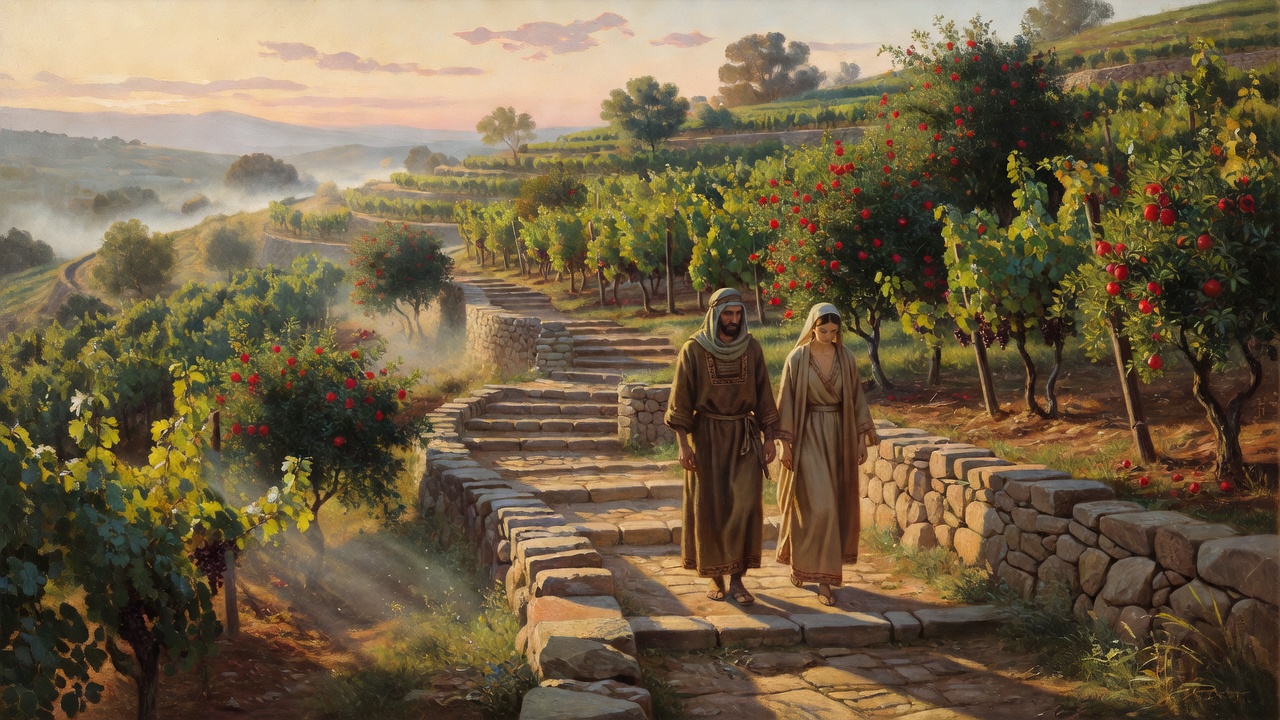
- The chapter concludes with an invitation to the countryside during the renewal of spring. The lovers seek out budding grapevines, blooming pomegranates, and fragrant mandrakes, reflecting the close connection in ancient Hebrew poetry between romantic intimacy and the vitality of the natural world.Sources: the Bible text itself
Notes written with AI assistance from open sources (Theographic Bible Metadata, CC BY-SA 4.0; Easton’s Bible Dictionary, public domain) and reviewed before publishing.
Places in this chapter
- Bath-rabbim · Today: in Tell Hesban · 31.801, 35.809 · verse 4
- Damascus · 33.511, 36.306 · verse 4
- Lebanon · 33.540, 35.584 · verse 4
- Mount Carmel · 32.672, 35.023 · verse 5
Only places identified with high confidence are shown (90% or more according to the scholarly sources compiled by OpenBible). Period map: DARE (Digital Atlas of the Roman Empire), CC BY 4.0; modern map: © OpenStreetMap contributors; places: OpenBible.info (CC BY 4.0).
Credits and license for this translation
Bib La
The Holy Bible in Haitian Creole
Public Domain
Language: Kreyòl Ayisyen (Haitian)
In the Public Domain due to publication without copyright notice in 1985, and without subsequent registration within 5 years.
2020-03-10
Source: http://ebible.org/hat/ · eBible.org