Song of Songs 2
Bib La · Tap a verse to see its cross-references.
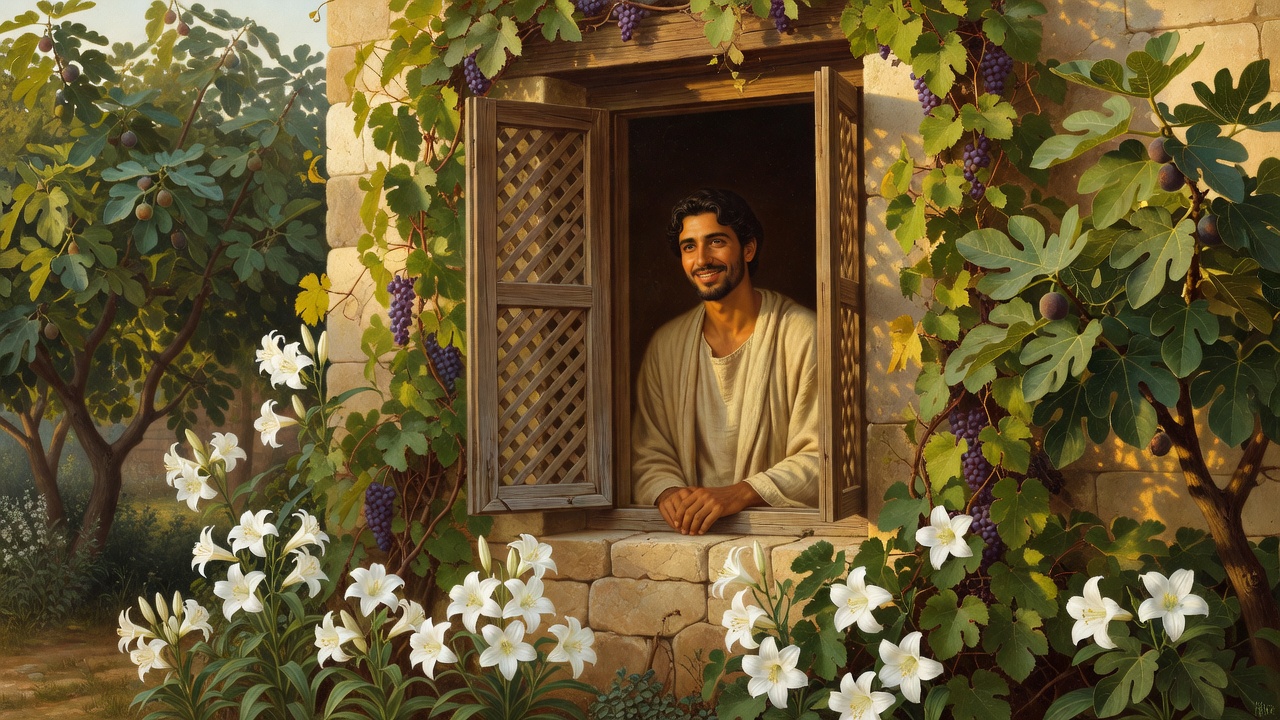
1Se yon woz mawon sou mòn Sawon mwen ye, yon bèl ti flè nan yon basrak. 2Tankou yon bèl ti flè nan mitan pikan, se konsa anmòrèz mwen ye nan mitan lòt jenn fi yo. 3Tankou yon pye ponm nan mitan yon rakbwa, se konsa mennaj mwen ye nan mitan lòt jenn gason yo. Mwen renmen chita anba lonbray li. Donn li gou nan bouch mwen. 4Li mennen m' yon ti kote al bwè avè l'. Se pawòl damou ase l'ap glise nan zòrèy mwen. 5Li remoute kouraj mwen ak pen rezen. Li rafrechi gòj mwen ak ponm. Mwen malad sitèlman mwen renmen! 6Li pase men gòch li anba tèt mwen, l'ap karese m' ak men dwat li! 7Nou menm, medam lavil Jerizalèm, tanpri, tanpri souple! Fè m' sèman sou tèt gazèl bèf ak fenmèl kabrit ki lage nan savann yo! Pa deranje anmòrèz mwen lè l'ap dòmi. Pa leve l' san l' pa vle. 8Mwen tande vwa mennaj mwen! Men l'ap vini. Li soti sou mòn yo, l'ap kouri desann timòn yo vin jwenn mwen. 9Mennaj mwen tankou yon kabrit, tankou yon jenn ti kabrit. Men li la dèyè miray kay la. L'ap gade nan fennèt la, l'ap veye nan jalouzi a pou wè sa m'ap fè. 10Mennaj mwen pale avè m', li di m': Vini non, anmòrèz mwen! Ann al avè m' non, bèl nègès mwen! 11Gade! Sezon fredi pase, lapli sispann tonbe. 12Nan tout jaden, flè yo louvri. Se sezon ou tande chante toupatou. Toutrèl gen tan ap chante nan bwa. 13Fig frans konmanse mi. Nou ka pran sant flè pye rezen yo. Vini non, anmòrèz mwen! Ann al avè m' non, bèl nègès mwen! 14Ti toutrèl mwen, ou kache nan fant wòch yo, anba gwo wòch byen wo yo. Moutre m' ti figi ou non! Fè m' tande vwa ou. Ala bèl ti figi ou bèl! Ala dous vwa ou dous! 15Kenbe vòlò yo, kenbe ti vòlò yo anvan yo ravaje jaden rezen nou yo, jaden rezen nou yo k'ap fleri. 16Mennaj mwen, se pou mwen li ye! Mwen menm, se pou li mwen ye! L'ap fè mouton l' yo manje nan mitan pye woz yo. 17Anvan labrin tonbe, anvan solèy vin kouche, kouri tounen vin jwenn mwen, mennaj mwen, tankou yon kabrit, tankou yon jenn ti kabrit k'ap kouri sou mòn byen wo yo.
Did you know?
Springtime and Awakening Love
- Sharon was a fertile coastal plain stretching between the Mediterranean Sea and the hill country west of Jerusalem, celebrated for its beauty and vegetation, which gave rise to imagery like the rose of Sharon.Sources: Saron · the Bible text itself
- The poem marks the arrival of spring through natural changes in the countryside, such as the end of winter rains, the cooing of turtledoves, ripening fig trees, and flowering grapevines that needed protection from foraging foxes.Sources: the Bible text itself
- The speaker repeatedly appeals to the daughters of Jerusalem, framing her cautions about love around wild animals of the open hills, such as gazelles and does of the field.Sources: Jerusalem · the Bible text itself
Notes written with AI assistance from open sources (Theographic Bible Metadata, CC BY-SA 4.0; Easton’s Bible Dictionary, public domain) and reviewed before publishing.
Places in this chapter
Only places identified with high confidence are shown (90% or more according to the scholarly sources compiled by OpenBible). Period map: DARE (Digital Atlas of the Roman Empire), CC BY 4.0; modern map: © OpenStreetMap contributors; places: OpenBible.info (CC BY 4.0).
Credits and license for this translation
Bib La
The Holy Bible in Haitian Creole
Public Domain
Language: Kreyòl Ayisyen (Haitian)
In the Public Domain due to publication without copyright notice in 1985, and without subsequent registration within 5 years.
2020-03-10
Source: http://ebible.org/hat/ · eBible.org