Psalms 87
Bib La · Tap a verse to see its cross-references.
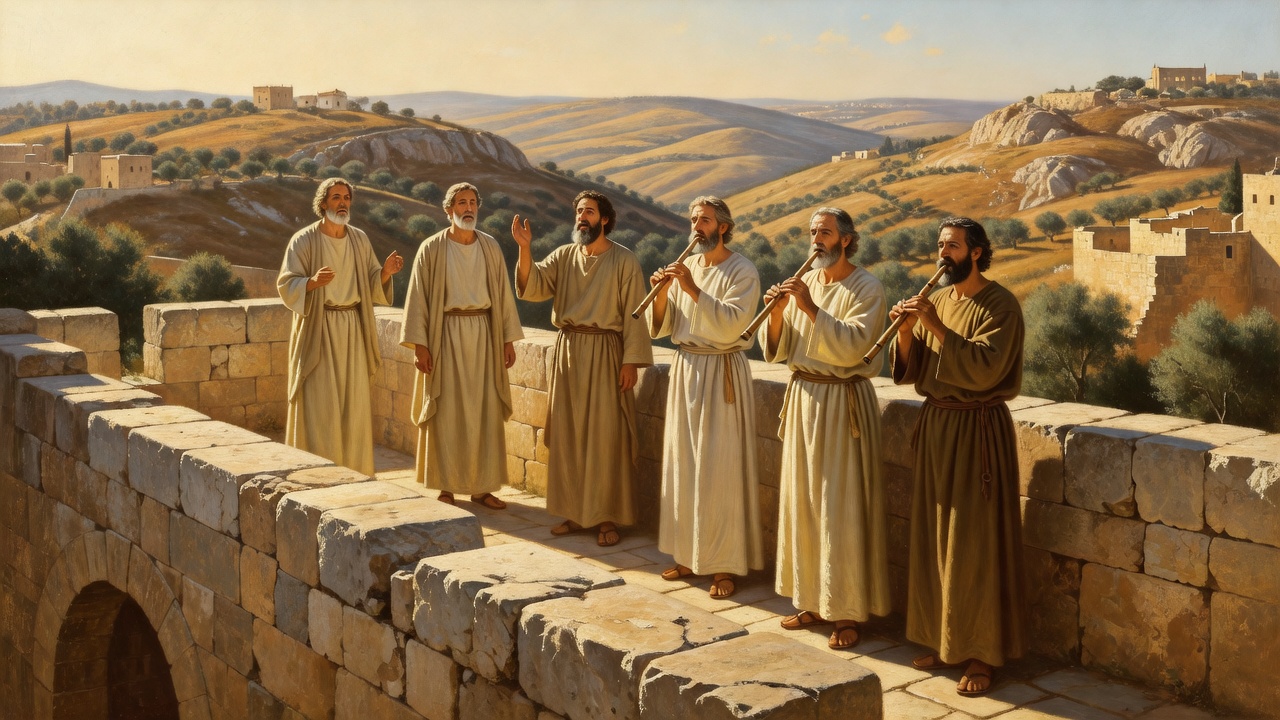
1Se yon sòm pitit Kore yo. Se yon chante li ye. Bondye bati lavil li a sou mòn ki apa pou li a! 2Li renmen lavil Jerizalèm pi plis pase tout lòt kote nan peyi Jakòb la. 3Ou menm, lavil Bondye a, tande bèl bagay y'ap di sou ou: 4Lè m'ap nonmen non moun k'ap sèvi m' yo, m'ap mete moun peyi Lejip, moun peyi Babilòn sou lis la. Moun peyi Filisti, moun peyi Tir ak moun peyi Etiopi, se Jerizalèm yo fèt. 5Lè moun ap pale sou mòn Siyon an yo di: -Yo rele l' manman, paske se la yo tout fèt. Se Bondye anwo nan syèl la ki mete l' kanpe. 6Seyè a fè lis tout pèp yo, li fè yo tout pase pou moun lavil Jerizalèm. 7Moun k'ap chante yo ansanm ak moun k'ap danse yo ap repete byen fò: -Se ou menm ki manman nou tout.
Did you know?
Zion and the Nations
- In Psalm 87, foreign and historically rival regions—including Babylon, Philistia, Tyre, and Cush—are depicted as being registered as native citizens born in Zion, the city of God.Sources: the Bible text itself · Zion · Tyre · Babylon
- The name 'Rahab' in verse 4 is a poetic Hebrew term meaning insolence or pride, used in biblical poetry as a symbolic designation for Egypt.Sources: Rahab · the Bible text itself
- The psalm is attributed to the 'sons of Korah,' a Levitical group that provided musical leadership in Jerusalem centuries after their ancestor Korah led a rebellion in the wilderness.Sources: Korah (Levite) · the Bible text itself
Notes written with AI assistance from open sources (Theographic Bible Metadata, CC BY-SA 4.0; Easton’s Bible Dictionary, public domain) and reviewed before publishing.
Places in this chapter
- Zion · Today: Jerusalem · 31.777, 35.234 · verses 2, 5
- Babylon · 32.543, 44.422 · verse 4
- Cush · Today: Cush 1 · 16.935, 33.751 · verse 4
- Egypt · 30.129, 31.308 · verse 4
- Jerusalem · 31.777, 35.234 · verses 4, 6, 7
- Philistia · 31.664, 34.546 · verse 4
- Tyre · 33.271, 35.196 · verse 4
Only places identified with high confidence are shown (90% or more according to the scholarly sources compiled by OpenBible). Period map: DARE (Digital Atlas of the Roman Empire), CC BY 4.0; modern map: © OpenStreetMap contributors; places: OpenBible.info (CC BY 4.0).
Credits and license for this translation
Bib La
The Holy Bible in Haitian Creole
Public Domain
Language: Kreyòl Ayisyen (Haitian)
In the Public Domain due to publication without copyright notice in 1985, and without subsequent registration within 5 years.
2020-03-10
Source: http://ebible.org/hat/ · eBible.org