Psalms 125
Bib La · Tap a verse to see its cross-references.
1Se yon chante pou yo chante lè y'ap moute lavil Jerizalèm. Moun ki mete konfyans yo nan Seyè a, yo tankou mòn Siyon an. Tankou l', yo p'ap janm brannen, y'ap la pou tout tan. 2Menm jan mòn sou rebò lavil Jerizalèm yo pwoteje lavil la, se konsa Seyè a ap pwoteje pèp li a depi koulye a ak pou tout tan. 3Non. Mechan yo p'ap gouvènen pou tout tan sou peyi ki pou moun k'ap mache dwat yo. Si se pa sa, moun k'ap mache dwat yo ka rive fè sa ki mal. 4Seyè, aji byen avèk moun k'ap fè byen, avèk moun k'ap mennen yon lavi san repwòch. 5Men, kanta pou moun ki vire do ba ou yo pou swiv chemen kwochi, se pou ou disparèt yo ansanm ak tout moun k'ap fè mechanste. Benediksyon Bondye sou pèp Izrayèl la.
Did you know?
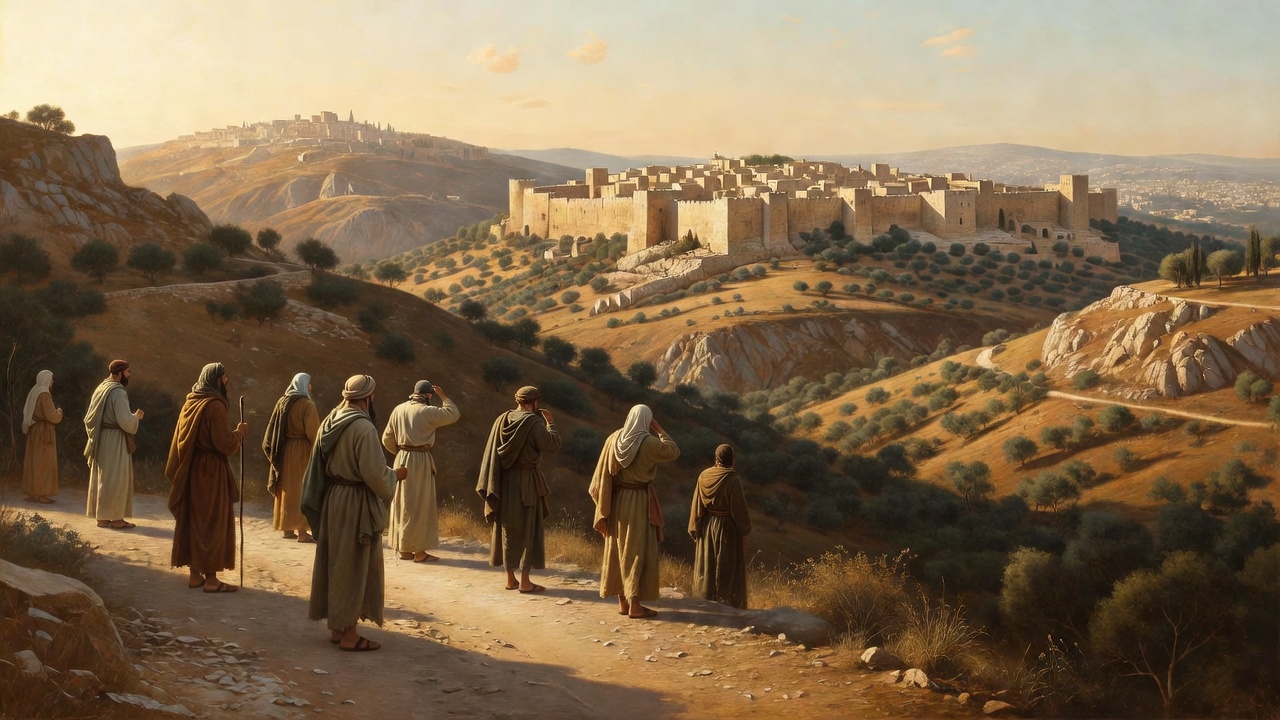
Unshakable Security in Jerusalem
- Psalm 125 is one of the Songs of Ascents, comparing those who trust in God to Mount Zion. Mount Zion was a naturally fortified hill in Jerusalem, surrounded by deep valleys on nearly all sides, making it a fitting symbol of permanence and stability.Sources: the Bible text itself · Mount Zion
- The psalmist draws on local geography by noting how mountains encircle Jerusalem. Built as a mountain fortress among neighboring heights, the city provided an evocative physical illustration of divine protection surrounding the community.Sources: the Bible text itself · Jerusalem
- The psalm concludes with a prayer for peace upon Israel, which resonates with the traditional interpretation of Jerusalem's Hebrew name as a foundation or possession of peace.Sources: the Bible text itself · Jerusalem
Notes written with AI assistance from open sources (Theographic Bible Metadata, CC BY-SA 4.0; Easton’s Bible Dictionary, public domain) and reviewed before publishing.
Places in this chapter
Only places identified with high confidence are shown (90% or more according to the scholarly sources compiled by OpenBible). Period map: DARE (Digital Atlas of the Roman Empire), CC BY 4.0; modern map: © OpenStreetMap contributors; places: OpenBible.info (CC BY 4.0).
Credits and license for this translation
Bib La
The Holy Bible in Haitian Creole
Public Domain
Language: Kreyòl Ayisyen (Haitian)
In the Public Domain due to publication without copyright notice in 1985, and without subsequent registration within 5 years.
2020-03-10
Source: http://ebible.org/hat/ · eBible.org