Joshua 1
Bib La · Tap a verse to see its cross-references.
About this book
About Joshua
- Easton's Bible Dictionary (1897) explains Joshua's name as "Jehovah is his help" or "Jehovah the Saviour." He was the son of Nun, of the tribe of Ephraim, born in Egypt, and Moses' successor as leader of Israel; the wars of conquest he carried on are recorded in the book that bears his name. That entry does not name the book's author or give a date for its writing.Sources: Easton: Joshua · Joshua
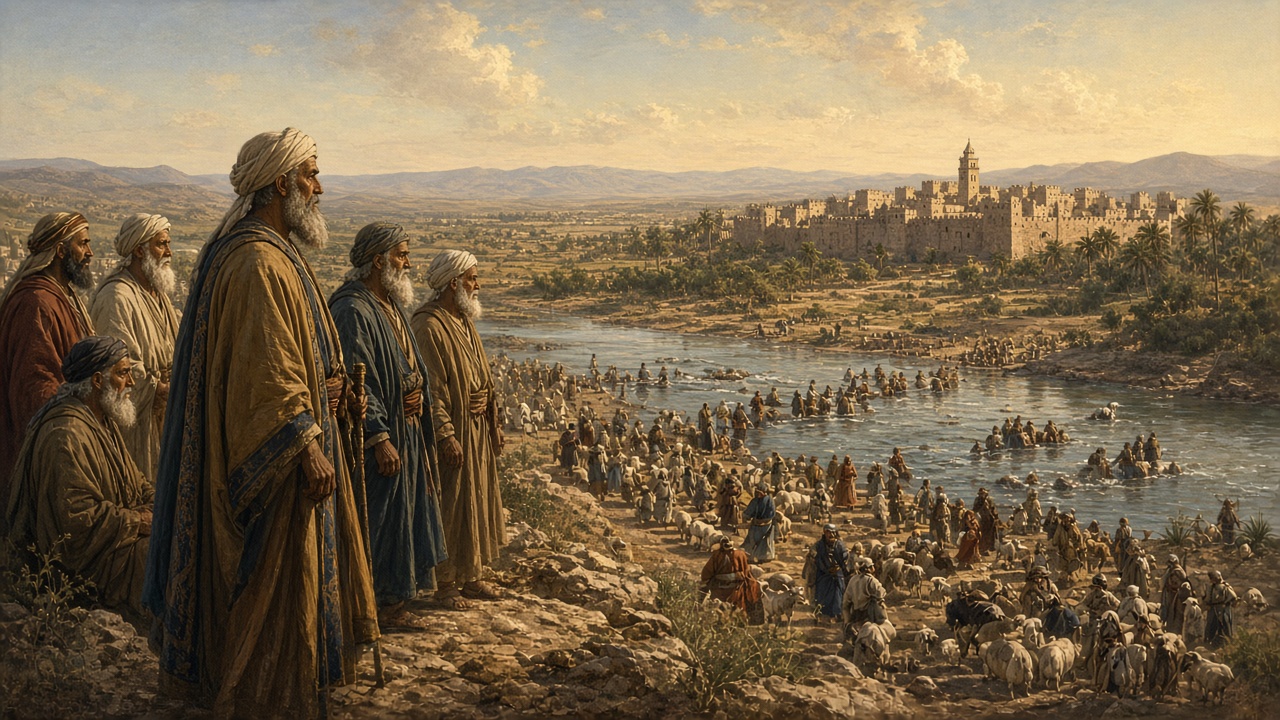
- When Joshua took command, the people were encamped at Shittim. They crossed the Jordan and camped at Gilgal, where, Easton says, he circumcised the people and kept the Passover. Jericho, a fortified city among palm trees about five miles west of the Jordan, is described as Canaan's strongest fortress and the key to western Palestine; Ai, east of Bethel, was the second Canaanite city taken, after an initial defeat.Sources: Easton: Joshua · Jericho · Ai
- Easton's Bible Dictionary (1897) says Joshua conquered six nations and thirty-one kings, then divided the land among the tribes, with Timnath-serah in Mount Ephraim assigned to himself. East of the Jordan, Gilead is described as a mountainous region held by the tribes of Gad and Reuben and the southern part of Manasseh.Sources: Easton: Joshua · Gilead
- Quoting Edersheim, the dictionary says Joshua's name was changed from Oshea, "help," to Jehoshua, "Jehovah is help," and notes that he is called Jesus in Acts 7:45 and Hebrews 4:8. It states that he died at the age of one hundred and ten, twenty-five years after crossing the Jordan, and was buried in his own city of Timnath-serah; of his father Nun, nothing more is recorded than that he was Joshua's father.Sources: Easton: Joshua · Joshua · Nun
- Before leading the conquest, Joshua commanded Israel's host against the Amalekites at Rephidim, served as Moses' minister, and was one of twelve sent to explore Canaan; only he and Caleb brought back an encouraging report. As Easton sketches the book, it runs from the crossing of the Jordan and the taking of Jericho through years of war to the division of the land and Joshua's last address.Sources: Easton: Joshua
Notes written with AI assistance from open sources (Theographic Bible Metadata, CC BY-SA 4.0; Easton’s Bible Dictionary, public domain) and reviewed before publishing.
1Apre Moyiz, sèvitè Seyè a, mouri, Seyè a pale ak Jozye, pitit gason Noun lan, ki te aladwat Moyiz nan tou sa li t'ap fè. Li di l' konsa: 2-Koulye a, Moyiz, sèvitè m' lan, mouri. Pare kò ou, ou menm ansanm ak tout pèp Izrayèl la. Nou pral janbe lòt bò larivyè Jouden an pou nou ka antre nan peyi m'ap ban nou an. 3Jan mwen te di Moyiz la, mwen pral ban nou tout peyi kote nou pral mete pye nou an. 4Peyi a pral konmanse depi nan dezè a sou bò nan sid, jouk mòn Liban nou wè laba a, nan nò. L'ap pran tout peyi moun Et yo, depi larivyè Lefrat sou bò solèy leve, jouk gwo lanmè a sou bò solèy kouche. 5Pandan tout rès vi ou, pesonn p'ap ka kenbe tèt ak ou. M'ap toujou kanpe la avèk ou, menm jan mwen te toujou la avèk Moyiz. Mwen p'ap vire do ba ou, mwen p'ap janm lage ou. 6Mete gason sou ou! Pa janm dekouraje, paske se ou menm ki pral fè pèp la antre pran peyi mwen te fè sèman m'ap bay zansèt yo a. 7Wi. Sèl bagay mwen mande ou, se mete gason sou ou, pa janm dekouraje. Veye kò ou pou ou mache dapre tout lòd Moyiz, sèvitè m' lan, te ba ou yo. Pa janm neglije anyen nan sa li te di ou, pou zafè ou ka mache byen kote ou pase. 8Se pou pawòl ki nan liv lalwa a toujou nan bouch ou. Se pou w'ap kalkile yo nan tèt ou lajounen kou lannwit, pou ou ka viv dapre sa ki ekri nan liv la. Se konsa w'a mennen bak ou byen. Tout zafè ou va mache byen. 9Chonje lòd mwen te ba ou! Mete gason sou ou! Pa janm dekouraje! Ou pa bezwen tranble, ou pa bezwen pè, paske Seyè a, Bondye ou la, ap toujou kanpe la avèk ou kote ou pase. 10Lè sa a, Jozye rele tout chèf pèp la. Li ba yo lòd sa a: 11-Mache nan tout kan an. Bay pèp la lòd pou yo pare tout zafè yo, paske nan twa jou nou pral janbe lòt bò larivyè Jouden an pou nou antre nan peyi Seyè a, Bondye nou an, ap ban nou pou peyi pa nou. 12Apre sa, Jozye pale ak moun branch fanmi Woubenn yo ak moun branch fanmi Gad yo ansanm ak mwatye moun nan branch fanmi Manase a. Li di yo: 13-Chonje lòd Moyiz, sèvitè Seyè a, te ban nou lè li te di nou: Seyè a, Bondye nou an, ap ban nou tè bò isit la pou nou tabli, pou nou viv ak kè poze. 14Madanm nou, pitit nou ak tout bèt nou yo pral rete nan peyi Moyiz ban nou sou bò isit larivyè Jouden an, bò solèy leve a. Men, nou menm gason yo, vanyan sòlda, se pou nou pran zam nou nan men nou pou nou mache devan tout rès pèp la, pou nou ka ede yo, si gen nesesite. 15Lè Seyè a va fin fè yo pran peyi a pou yo, lè l'a fin ba yo yon kote pou yo viv ak kè poze, menm jan li te fè l' pou nou an, se lè sa a atò n'a tounen nan peyi ki pou nou an. Wi, n'a vin rete nan peyi pa nou an, peyi Moyiz, sèvitè Bondye a, te ban nou lòt bò larivyè Jouden an, sou bò solèy leve. 16Yo tout yo reponn Jozye, yo di l': -Tou sa ou ban nou lòd fè, n'ap fè l'! Kote ou voye nou, nou prale! 17Menm jan nou te toujou obeyi Moyiz, se konsa n'ap obeyi ou tou. Sèl bagay, n'ap lapriyè pou Bondye toujou kanpe avè ou menm jan li te kanpe ak Moyiz la. 18Se pou yo touye tout moun ki pa dakò ak lòd ou, osinon ki pa vle obeyi lòd ou bay, osinon ki derefize fè sa ou mande yo fè. Sèlman, met gason sou ou! Pa janm dekouraje!
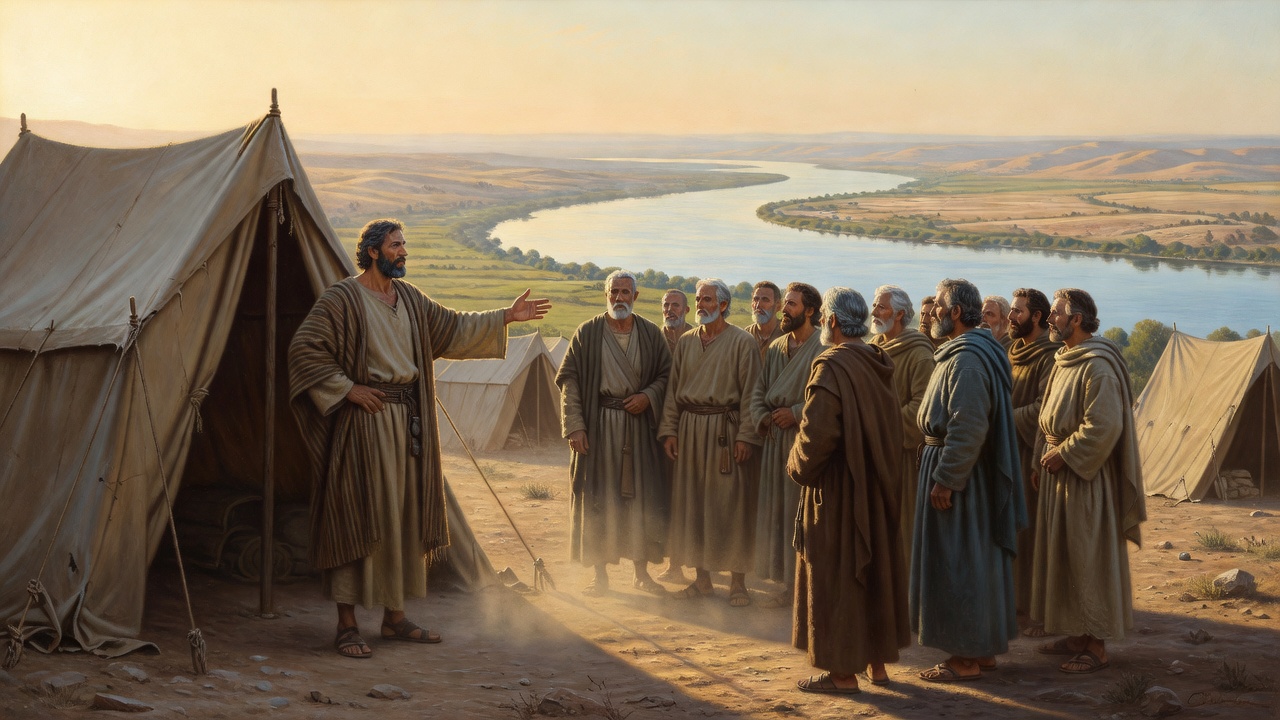
Did you know?
Joshua Assumes Leadership
- Joshua, the son of Nun from the tribe of Ephraim, served as Moses' assistant and military commander before being commissioned to succeed him as leader of Israel. His name means "Jehovah is his help" or "Jehovah the Saviour."Sources: Joshua · the Bible text itself
- The territory outlined in God's commission to Joshua stretches from the southern wilderness and the Lebanon mountain range in the north to the Euphrates (called "the great river") in the east and the Mediterranean ("the Great Sea") to the west.Sources: the Bible text itself · Lebanon · Euphrates · Great Sea
- The tribes of Reuben, Gad, and the half-tribe of Manasseh had already received territory east of the Jordan River under Moses. However, their armed warriors were required to cross over ahead of the other tribes to assist them until the entire land was secured.Sources: the Bible text itself · Manasseh (son of Joseph)
Notes written with AI assistance from open sources (Theographic Bible Metadata, CC BY-SA 4.0; Easton’s Bible Dictionary, public domain) and reviewed before publishing.
Places in this chapter
- Jordan · Today: Jordan River · 31.761, 35.558 · verses 2, 11, 14, 15
- Euphrates · Today: Euphrates River · 31.004, 47.442 · verse 4
- Great Sea · Today: Mediterranean Sea · 31.805, 34.170 · verse 4
- Lebanon · 33.540, 35.584 · verse 4
- Negeb · 31.245, 34.841 · verse 4
- Syria · Today: Aram · 33.511, 36.306 · verse 4
Only places identified with high confidence are shown (90% or more according to the scholarly sources compiled by OpenBible). Period map: DARE (Digital Atlas of the Roman Empire), CC BY 4.0; modern map: © OpenStreetMap contributors; places: OpenBible.info (CC BY 4.0).
Credits and license for this translation
Bib La
The Holy Bible in Haitian Creole
Public Domain
Language: Kreyòl Ayisyen (Haitian)
In the Public Domain due to publication without copyright notice in 1985, and without subsequent registration within 5 years.
2020-03-10
Source: http://ebible.org/hat/ · eBible.org