Jonah 4
Bib La · Tap a verse to see its cross-references.
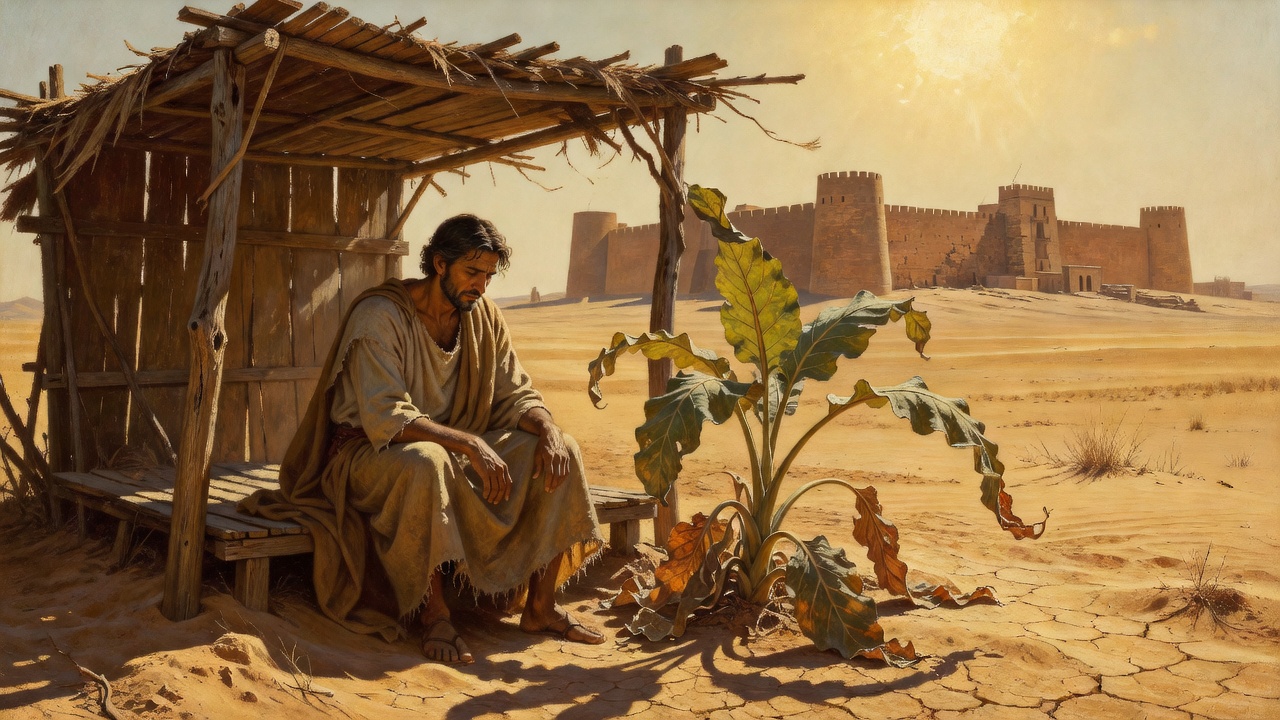
1Jonas pa t' kontan menm lè li wè sa, sa te fè l' fache anpil. 2Li lapriyè Seyè a, li di l' konsa: -Aa Seyè! Men sa m' t'ap di a wi, lè m' te nan peyi m' lan. Se sa menm wi, mwen pa t' vle rive a. Se poutèt sa mwen te vle al kache nan peyi Tasis. Mwen konnen ou: Ou se yon Bondye ki gen bon kè, ki gen pitye pou nou. Ou pa fè kòlè fasil, ou pa janm sispann renmen nou, se vre. Ou toujou pare pou padonnen moun, pou chanje lide pou ou pa pini yo. 3Koulye a, Seyè, ou mèt tou touye m' fini ak sa. M' pito mouri pase pou m' viv pou m' wè bagay sa a devan je m'! 4Seyè a reponn li: -Ki rezon ou genyen pou ou fache konsa? 5Jonas kite lavil la, li ale sou bò solèy leve, li chita. Lèfini, li fè yon tonèl, li chita nan lonbraj anba tonèl la, l'ap tann pou l' wè sa ki pral rive nan lavil la. 6Lè sa a, Seyè a, Bondye a, fè yon ti pye masketi pouse. Li fè l' rive yon ti wotè pi wo pase Jonas pou mete yon ti lonbraj sou tèt li, pou li ka santi l' pi alèz. Jonas te kontan anpil lè li wè pye masketi a. 7Men, nan denmen maten, anvan bajou kase, Bondye fè yon mawoka pike pye masketi a. Pye masketi a mouri. 8Lèfini, lè solèy fin leve, Bondye fè yon sèl van lès soufle byen cho. Jonas te prèt pou pèdi konesans avèk chalè solèy la ki t'ap bat li sou tèt. Msye mande mouri, li di konsa: -Pito m' tou mouri m' fini ak sa! 9Men, Bondye mande l' konsa: -Jonas, ou kwè ou gen rezon fache konsa pou yon ti pye masketi? Jonas reponn li: -Wi. Mwen gen rezon fache. M' fache pou m' mouri. 10Lè sa a, Seyè a reponn li: -An! Ou pran lapenn pou yon ti pye masketi ki pa koute ou anyen. Se pa ou ki te fè l' grandi. Li pran yon sèl nwit pou l' grandi. Apre yon sèl jou, li mouri. 11Epi ou pa ta vle m' pran lapenn pou lavil Niniv, gwo kapital sa a, kote ki gen depase sanven mil (0120.000) timoun inonsan, moun ki pa konnen ni sa ki byen ni sa ki mal, ansanm ak yon kantite bèt!
Did you know?
Jonah's Anger and God's Compassion
- Jonah admits that he originally attempted to flee toward Tarshish precisely because he knew God is gracious, compassionate, slow to anger, and relents from sending disaster. His distress arose when God chose to spare Nineveh rather than destroy it.Sources: the Bible text itself · Tarshish
- Nineveh, the flourishing capital of the Assyrian empire, is described at the conclusion of the book as home to more than 120,000 people who cannot discern between their right and left hand, along with many cattle. God highlights this massive population to contrast divine compassion with Jonah's concern for a single withered plant.Sources: the Bible text itself · Nineveh
Notes written with AI assistance from open sources (Theographic Bible Metadata, CC BY-SA 4.0; Easton’s Bible Dictionary, public domain) and reviewed before publishing.
Places in this chapter
- Nineveh · 36.359, 43.153 · verse 11
Only places identified with high confidence are shown (90% or more according to the scholarly sources compiled by OpenBible). Period map: DARE (Digital Atlas of the Roman Empire), CC BY 4.0; modern map: © OpenStreetMap contributors; places: OpenBible.info (CC BY 4.0).
Credits and license for this translation
Bib La
The Holy Bible in Haitian Creole
Public Domain
Language: Kreyòl Ayisyen (Haitian)
In the Public Domain due to publication without copyright notice in 1985, and without subsequent registration within 5 years.
2020-03-10
Source: http://ebible.org/hat/ · eBible.org