Job 8
Bib La · Tap a verse to see its cross-references.
1Lè sa a, Bildad, moun peyi Chwa a, pran lapawòl, li di konsa: 2-Kilè w'a sispann pale jan w'ap pale a? Se bri ase w'ap fè tankou kalbas gran bouch! 3Bondye pa nan lenjistis. Bondye ki gen tout pouvwa a ap toujou fè sa ki dwat. 4Si pitit ou yo te dezobeyi lòd li yo, li fè yo peye sa yo fè a. 5Ou menm menm, rele Bondye. Lapriyè nan pye Bondye ki gen tout pouvwa a. 6Si li pa gen anyen pou l' repwoche ou, si ou toujou mache dwat devan li, lè sa a, ou mèt sèten, l'a fè kichòy pou ou, l'ap renmèt ou tou sa ou te genyen. 7Tou sa ou te gen anvan an p'ap anyen devan sa Bondye pral ba ou a. 8Chache konnen sa ki te pase nan tan lontan. Gade sa ki te rive zansèt nou yo. 9Nou menm, nou se moun ayè. Nou pa konn anyen. Se pase n'ap pase sou tè a. 10Men, granmoun tan lontan yo va moutre ou anpil bagay. Y'a pale avè ou. Tande sa y'ap di ou. 11Se nan marekay ou jwenn jon. Wozo pa pouse kote ki pa gen dlo. 12Nan tan chechrès, li te mèt tou piti, tou vèt, lè lesèk tonbe, anvan menm yo koupe l', premye zèb ki fennen se li menm. 13Se menm bagay la tou pou moun ki bliye si gen Bondye. Moun ki vire do bay Bondye p'ap jwenn sa y'ap tann lan. 14Konfyans yo pa chita sou anyen. Se tankou si y'ap apiye sou bwa pouri. 15Si yo panche sou li, li ale. Si yo kenbe l' fò, y'ap blayi atè ansanm avè l'. 16Mechan yo pouse tankou move zèb nan solèy. Yo pran tout jaden an pou yo. 17Rasin yo mache nan mitan tout fant wòch yo. Se la yo jwenn sa yo bezwen pou yo viv. 18Rache ou rache yo pa gen moun ki pou konnen kote yo te ye a. 19Talè konsa, l'ap pouri bò chemen an. Se lòt k'ap pouse nan plas li. 20Non, monchè! Bondye pa janm lage moun ki kenbe pye l' fèm. Ni li pa janm lonje men l' pou l' soutni mechan yo. 21L'a fè kè ou kontan ankò, bouch ou pral chante bèl chante pou li. 22Men, l'ap fè moun ki pa vle wè ou yo wont. Fanmi mechan yo va disparèt.
Did you know?
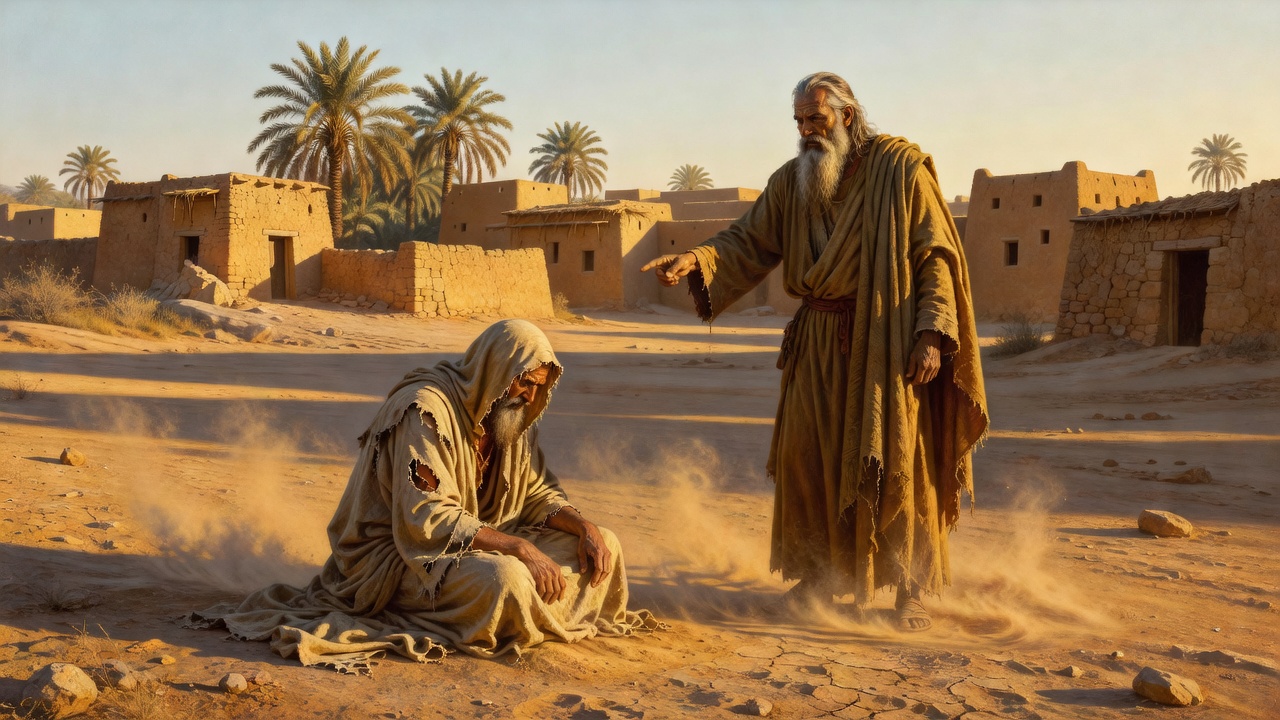
Bildad’s Appeal to Ancient Wisdom
- Bildad is identified as a Shuhite, which likely associates him with Shuah, an Arabian region settled by the descendants of Abraham and Keturah. In this chapter, he delivers the first of his three stern speeches to Job, maintaining that divine justice is absolute and unwavering.Sources: Bildad · the Bible text itself
- Rather than relying on personal experience, Bildad appeals to the accumulated knowledge of ancestral generations, describing human life as brief as a shadow. To argue that the wicked inevitably fall, he uses natural metaphors of marsh reeds withering without water and the fragility of a spider's web.Sources: the Bible text itself
Notes written with AI assistance from open sources (Theographic Bible Metadata, CC BY-SA 4.0; Easton’s Bible Dictionary, public domain) and reviewed before publishing.
Credits and license for this translation
Bib La
The Holy Bible in Haitian Creole
Public Domain
Language: Kreyòl Ayisyen (Haitian)
In the Public Domain due to publication without copyright notice in 1985, and without subsequent registration within 5 years.
2020-03-10
Source: http://ebible.org/hat/ · eBible.org