Isaiah 11
Bib La · Tap a verse to see its cross-references.
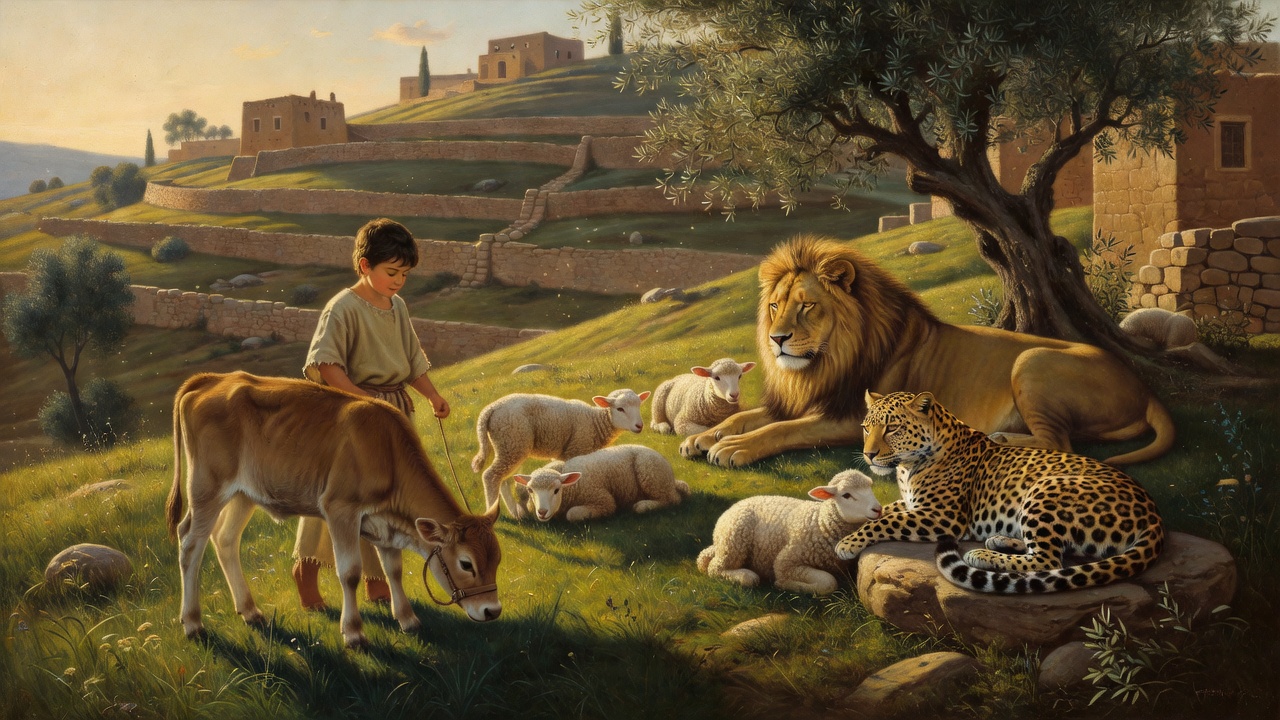
1Menm jan yon ti plan pouse soti nan rasin yon pyebwa yo koupe, yon ti kreyòl soti nan chouk li, se konsa tou yon wa pral soti nan ras David la. 2Lespri Bondye a pral desann sou li. L'ap ba li bon konprann ak lespri. L'ap ba li konesans ak ladrès pou l' dirije. L'ap fè l' konn Seyè a, l'ap fè l' gen krentif pou li. 3L'a pran plezi l' pou l' obeyi Seyè a nan tout bagay. Li p'ap gade sou figi moun pou l' jije yo. Li p'ap rete sou sa yo vin di l' pou l' rann jijman. 4L'ap rann jijman pou pòv yo san patipri. L'ap defann dwa pòv malere nan peyi a san paspouki. L'ap denonse sa moun ap fè nan peyi a, l'ap pini yo. L'ap soufle ak bouch li sou mechan yo, l'ap disparèt yo. 5L'a gouvènen pèp la san patipri, l'a dirije pèp la jan sa dwe fèt! 6Bèt nan bwa ak mouton va viv ansanm. Tig pral kouche menm kote ak jenn kabrit. Jenn ti bèf ak jenn ti lyon pral manje ansanm. Lèfini, se yon timoun ki pral okipe yo. 7Manman bèf ak manman lous va manje ansanm nan menm savann. Ti bèf ak ti lous va jwe ansanm. Lyon va manje zèb tankou bèf. 8Ti bebe nan tete va jwe devan twou koulèv. Timoun fèk sevre va lonje men yo nan bouch twou sèpan san anyen p'ap rive yo. 9Pesonn p'ap fè mechanste. Pesonn p'ap fè sa ki mal sou mòn ki apa pou Bondye a, sou mòn Siyon an! Paske kè tout moun nan peyi a pral plen konesans Bondye, menm jan fon lanmè a plen dlo. 10Yon jou gen pou vini. Lè sa a, ti kreyòl ki va soti nan chouk fanmi Izayi a va kanpe tankou yon siy pou tout nasyon yo. Moun va soti toupatou pou yo vin bò kote l'. Y'a fè lwanj li nan lavil kote l' rete a. 11Jou sa a, Seyè a va fè wè fòs ponyèt li yon dezyèm fwa ankò. L'a delivre ti rès pèp li a, ponyen moun ki rete nan sa yo te depòte nan peyi Lasiri, nan peyi Lejip, ak nan tout peyi sa yo: Patwòs, Letiopi, Elam, Babilòn ak Amat, nan tout peyi lakòt yo ak nan tout zile yo. 12Seyè a pral leve yon drapo pou l' fè moun lòt nasyon yo wè li pral sanble tout moun pèp Izrayèl yo te depòte yo. L'ap ranmase tout moun pèp Jida ki te gaye toupatou sou latè yo. L'ap mennen yo tounen nan peyi yo. 13Moun peyi Efrayim yo p'ap fè jalouzi ankò. Peyi Jida a p'ap kenbe moun nan kè ankò. Moun peyi Efrayim yo p'ap anvye sò moun Jida yo. Moun Jida yo p'ap lènmi ankò ak moun Izrayèl yo. 14Y'ap mete ansanm, yo pral atake moun Filisti yo ki bò solèy kouche, yo pral piye moun k'ap viv bò solèy leve yo. Yo pral donminen sou peyi Edon ak sou peyi Moab. Moun peyi Amon pral soumèt devan yo. 15Seyè a pral voye yon van cho ki pral cheche tout dlo gwo larivyè Lejip la. Li pral cheche dlo larivyè Lefrat la. L'ap fè l' tounen sèt ti kannal dlo, konsa tout moun ka janbe l' ak tout sapat nan pye yo. 16L'ap louvri yon gran chemen soti peyi Lasiri pou rès pèp li a k'ap viv laba a, menm jan li te fè l' pou pèp Izrayèl la jou yo t'ap soti kite Lejip la.
Did you know?
The Peaceful Kingdom and the Restored Remnant
- Jesse of Bethlehem was the father of King David. By describing the coming ruler as a shoot from the stump of Jesse and as the root of Jesse, the prophecy points to a renewal of the Davidic line even after the royal house appeared cut down.Sources: Jesse · the Bible text itself
- The places listed for the gathering of the remnant reflect the ancient Near Eastern world: Pathros designates Upper Egypt, Shinar is an ancient name for Babylonia in southern Mesopotamia, and Elam was a highland territory east of Babylon.Sources: Pathros · Shinar · Elam · the Bible text itself
- Ephraim, named for the second son of Joseph, was often used in prophetic literature to represent the northern kingdom of Israel. Isaiah foresees a time of lasting reconciliation that ends the long-standing jealousy and conflict between the northern tribes and Judah.Sources: Ephraim · the Bible text itself
Notes written with AI assistance from open sources (Theographic Bible Metadata, CC BY-SA 4.0; Easton’s Bible Dictionary, public domain) and reviewed before publishing.
Places in this chapter
- Assyria · 36.359, 43.153 · verses 11, 16
- Cush · Today: Cush 1 · 16.935, 33.751 · verse 11
- Egypt · 30.129, 31.308 · verses 11, 16
- Elam · 32.189, 48.258 · verse 11
- Great Sea · Today: Mediterranean Sea · 31.805, 34.170 · verse 11
- Hamath · Today: Hama · 35.136, 36.750 · verse 11
- Pathros · Today: Upper Egypt · 24.100, 32.700 · verse 11
- Shinar · Today: Babylonia · 32.543, 44.422 · verse 11
- Ammon · 31.955, 35.934 · verse 14
- East · Today: region around Amman · 31.955, 35.934 · verse 14
- Edom · 30.746, 35.604 · verse 14
- Moab · Today: Moab 1 · 31.181, 35.701 · verse 14
- Philistia · 31.664, 34.546 · verse 14
- Euphrates · Today: Euphrates River · 31.004, 47.442 · verse 15
Only places identified with high confidence are shown (90% or more according to the scholarly sources compiled by OpenBible). Period map: DARE (Digital Atlas of the Roman Empire), CC BY 4.0; modern map: © OpenStreetMap contributors; places: OpenBible.info (CC BY 4.0).
Credits and license for this translation
Bib La
The Holy Bible in Haitian Creole
Public Domain
Language: Kreyòl Ayisyen (Haitian)
In the Public Domain due to publication without copyright notice in 1985, and without subsequent registration within 5 years.
2020-03-10
Source: http://ebible.org/hat/ · eBible.org