Hosea 10
Bib La · Tap a verse to see its cross-references.
1Pèp Izrayèl la te tankou yon bèl pye rezen ki te konn donnen anpil. Plis pye rezen an t'ap donnen, se plis yo t'ap bati lotèl pou zidòl. Plis tè a t'ap bay, se plis yo t'ap fè pi bèl estati pou zidòl yo. 2Yo pa t' sensè! Koulye a, yo pral peye pou sa yo fè: Bondye pral kraze ni lotèl yo, ni estati yo. 3Talè konsa, y'a di: -Nou pa gen wa, paske nou pa pè Seyè a. Lèfini, yon wa, sa l' ka fè pou nou? 4Men, tou sa se pale mete la. Y'ap fè sèman yo p'ap kenbe. Y'ap siyen kontra ki p'ap sèvi yo anyen. Nan tribinal, y'ap rann move jijman. Se tankou move zèb k'ap pouse nan yon jaden ou fèk pare. 5Moun ki rete lavil Samari pral tranble tèlman y'ap pè pou ti bèf an lò Betavenn yo. Y'ap kriye paske yo pèdi l'. Prèt yo tou ap pouse rèl, paske sa ki te fè pouvwa yo a, yo wete l' nan mitan yo. 6Yo pran zidòl la, yo mennen l' ale nan peyi Lasiri. Yo fè gwo wa a kado l'. Yo pral fè Efrayim wont. Wi, pèp Izrayèl la pral wont paske yo t'ap swiv move konsèy. 7Y'ap fini ak lavil Samari a, wa li a ap disparèt tankou kim sou dlo. 8Yo gen pou yo fè disparèt tout kote pèp Izrayèl la te konn adore zidòl sou mòn Betavenn yo. Pikan ak raje ap pouse sou lotèl yo. Moun yo va rele, y'a mande mòn yo pou tonbe sou yo, y'a mande ti mòn yo pou kache yo. 9Seyè a di: -Nou menm moun Izrayèl, depi nou te lavil Gibeya, n'ap fè peche. Depi lè sa a, nou pa janm sispann. Se konsa, lagè y'ap mennen kont mechan yo ap vire sou nou jouk lavil Gibeya. 10Se poutèt sa, mwen soti pou m' pini yo. Moun lòt nasyon ap mete tèt ansanm sou do yo. Wi, y'ap pini yo akòz peche yo fè. 11Te gen yon lè Efrayim te tankou yon jenn ti gazèl byen drese, li te renmen degrennen mayi sou glasi. Men, koulye a, m'ap mete yon jouk sou bèl ti kou l' la, m'ap sele l' pou fè l' travay pi di. M'ap fè moun Jida yo raboure tè. Moun Jakòb yo menm, m'ap fè yo kraze boul tè. 12Mwen te di yo: Kenbe kè nou nan kondisyon pou nou sèvi Bondye. Fè sa ki dwat devan Bondye. Konsa n'a rekòlte benediksyon m'ap ban nou paske n'ap sèvi m' ak tout kè nou. Fè bwa nèf. Wi, li lè pou nou tounen vin jwenn mwen. M'a vini, m'a vide benediksyon sou nou tankou lapli. 13Men, nou te pito fè sa ki mal devan je m'. Se konsa, nou rekòlte sa ki mal tou. N'ap peye manti nou te bay yo. Nou fè sa ki nan lide nou. Nou te mete konfyans nou nan gwo kantite sòlda nou te genyen. 14Se konsa, lènmi pral tonbe sou moun nou yo. Y'a detwi tout fò nou yo. Se va tankou lè wa Chalman te sakaje lavil Betabèl jou gwo batay la. Lè sa a, yo te kraze ata manman ak pitit. 15Men sa k'ap rive nou, nou menm moun lavil Betèl. Poutèt gwo mechanste nou te fè a, konmanse batay la va konmanse, wa Izrayèl la gen pou mouri.
Did you know?
Judgment on Idols and Broken Altars
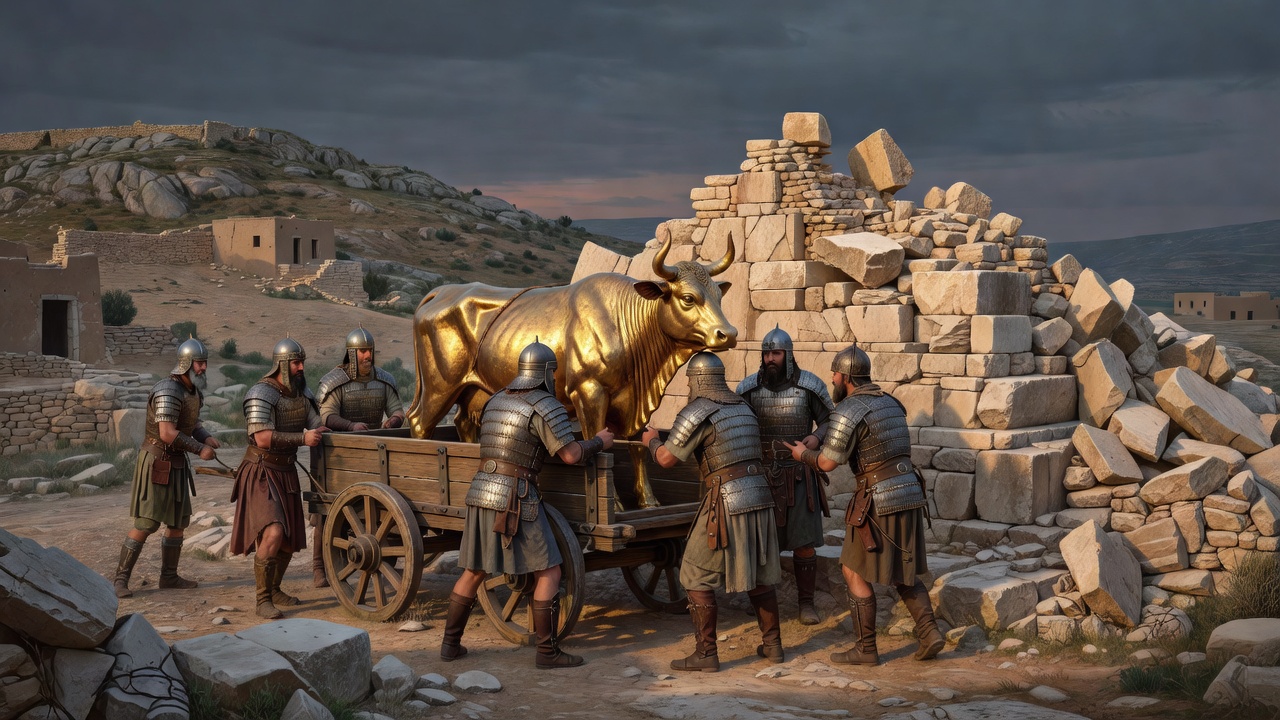
- The prophet refers to Bethel, which means house of God, by the derogatory name Beth-aven, meaning house of nothingness or house of idols. This wordplay highlights how the calf shrine erected there transformed a sacred site into a center of idolatry, whose revered calf would eventually be carried away to Assyria.Sources: Beth-aven · the Bible text itself
- Hosea evokes the days of Gibeah to remind Israel of a historic moral catastrophe recorded in Judges 19 and 20, where horrific violence in the town of Gibeah led to a disastrous civil war against the tribe of Benjamin.Sources: Gibeah · the Bible text itself
- The text warns of devastating military defeat by citing the ruin of Beth-arbel by Shalman. Scholars generally identify Shalman with the Assyrian monarch Shalmaneser, whose brutal conquests served as a vivid warning to Israel.Sources: Beth-arbel · Shalmaneser · the Bible text itself
Notes written with AI assistance from open sources (Theographic Bible Metadata, CC BY-SA 4.0; Easton’s Bible Dictionary, public domain) and reviewed before publishing.
Places in this chapter
- Beth-aven · Today: Beitin · 31.923, 35.241 · verse 5
- Samaria · 32.276, 35.195 · verses 5, 7
- Assyria · 36.359, 43.153 · verse 6
Only places identified with high confidence are shown (90% or more according to the scholarly sources compiled by OpenBible). Period map: DARE (Digital Atlas of the Roman Empire), CC BY 4.0; modern map: © OpenStreetMap contributors; places: OpenBible.info (CC BY 4.0).
Credits and license for this translation
Bib La
The Holy Bible in Haitian Creole
Public Domain
Language: Kreyòl Ayisyen (Haitian)
In the Public Domain due to publication without copyright notice in 1985, and without subsequent registration within 5 years.
2020-03-10
Source: http://ebible.org/hat/ · eBible.org