Habakkuk 3
Bib La · Tap a verse to see its cross-references.
1Men lapriyè pwofèt Abakouk te fè pou li plenyen sò li bay Bondye. 2-Seyè! Mwen tande tou sa ou te di. M' sezi, m'ap tranble nan tout kò m'. Seyè, gwo mèvèy ou te konn fè nan tan lontan yo, koulye a, fè nou wè yo nan lanne k'ap vini yo. Menm lè ou fache, pa bliye gen pitye pou nou! 3Bondye ap vini soti peyi Edon. Bondye tout bon an ap desann soti sou mòn Paran an. Pouvwa li kouvri tout syèl la. Lwanj li toupatou sou latè. 4Li klere kou gwo solèy. Zèklè ap soti nan men l'. Se la li kache tout pouvwa li. 5Li voye vye maladi pran devan li. Li mete lanmò mache dèyè l'. 6Lè l' kanpe, latè pran tranble. Li annik gade, moun tout nasyon gen kè kase. Mòn ki la depi lontan yo kraze an miyèt moso. Ti mòn tan lontan yo vin plat. Chemen kote li te konn pase tan lontan yo louvri devan l'. 7Mwen wè moun peyi Letiopi yo nan gwo lafliksyon. Moun peyi Madyan yo tou pè. 8Eske se sou gwo rivyè yo ou move konsa, Seyè? Eske se sou lanmè a ou fache? Eske se sou lanmè a ou ankòlè konsa, kifè ou moute sou nwaj yo tankou sou chwal ou, tankou sou cha ou pou al delivre pèp ou a? 9Ou kenbe banza ou tou pare nan men ou. Pawòl ou se pakèt flèch anpwazonnen. Zèklè ou yo fann tè a louvri. 10Mòn yo wè ou, yo pran tranble. Gwo lapli ap tonbe soti nan syèl la. Dlo anba tè yo ap gwonde. Gwo lanm lanmè ap leve byen wo. 11Flèch ou yo pati tankou zèklè. Lans ou yo klere byen klere. Lalin ak solèy pa parèt tèt yo deyò. 12Ou move, w'ap mache toupatou sou latè. Nan kòlè ou, ou pilonnen nasyon yo anba pye ou. 13Ou soti pou delivre pèp ou a, pou sove wa ou chwazi a. Ou kraze chèf mechan yo. Ou detwi tout moun li yo nèt. 14Avèk flèch ou yo, ou pèse kòmandan an chèf lame yo a, lè yo t'ap vare sou nou tankou yon van tanpèt pou gaye nou. Je yo gran louvri ak kontantman tankou moun ki pral devore pòv malere yo kote yo kache a. 15Ou foule lanmè a anba pye chwal ou yo. Ou fè dlo lanmè a kimen. 16Mwen tande tou sa. Vant mwen bouyi! Lè m' tande tout bri sa yo, bouch mwen pran tranble. Tout zo nan kò m' ap fè m' mal. M' pa ka kanpe sou janm mwen ankò! Mwen rete byen trankil, m'ap tann jou malè a rive, jou Bondye pral mache pran moun k'ap chache nou kont yo. 17Pye fig frans yo te mèt pa donnen, pye rezen yo te mèt pa bay rezen, rekòt oliv yo te mèt pa bon, jaden yo te mèt pa bay manje, mouton yo te mèt mouri nan sèka yo, bèf yo te mèt mouri nan pak yo, 18mwen menm, m'ap toujou kontan poutèt Seyè a. M'ap fè fèt pou Bondye k'ap delivre m' lan. 19Se Seyè a ki tout fòs mwen. Li asire pye m' tankou pye kabrit. Li fè m' mache sou mòn yo, san m' pa tonbe. Pou chèf k'ap dirije moun k'ap chante yo.
Did you know?
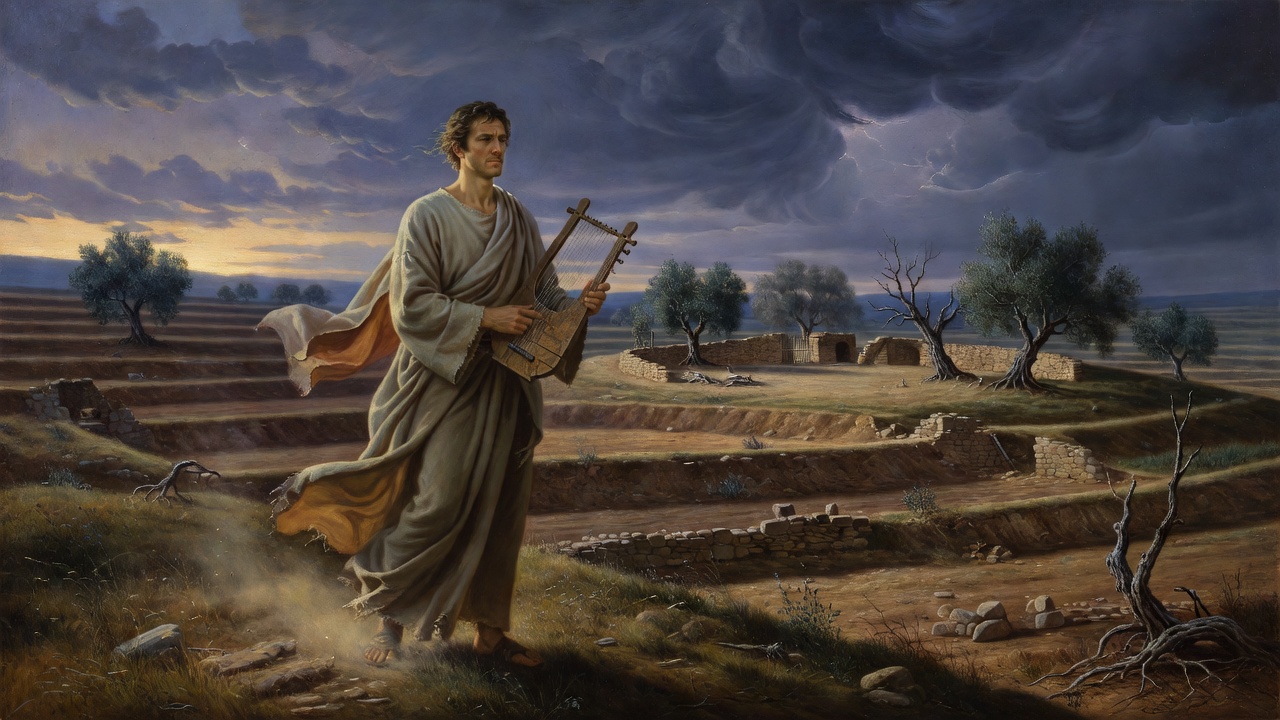
Habakkuk's Prayer and Song of Faith
- The poem depicts God appearing from the southern wilderness, mentioning Teman in southern Idumea and Mount Paran on the desert boundary of the Promised Land. These geographic references echo ancient poetic descriptions of the Lord marching in majesty from the south.Sources: Teman · Mount Paran · the Bible text itself
- Cushan and Midian are portrayed trembling before the divine advance. The Midianites were nomadic Arabian tribes dwelling in tents across the desert regions and pasturelands of Sinai and northern Arabia.Sources: Cushan · Midian · the Bible text itself
- The chapter is structured as a liturgical psalm, complete with musical terms such as 'Shigionoth', 'Selah', and a closing dedication to the choirmaster for performance with stringed instruments.Sources: the Bible text itself
Notes written with AI assistance from open sources (Theographic Bible Metadata, CC BY-SA 4.0; Easton’s Bible Dictionary, public domain) and reviewed before publishing.
Places in this chapter
- Midian · 28.495, 35.012 · verse 7
Only places identified with high confidence are shown (90% or more according to the scholarly sources compiled by OpenBible). Period map: DARE (Digital Atlas of the Roman Empire), CC BY 4.0; modern map: © OpenStreetMap contributors; places: OpenBible.info (CC BY 4.0).
Credits and license for this translation
Bib La
The Holy Bible in Haitian Creole
Public Domain
Language: Kreyòl Ayisyen (Haitian)
In the Public Domain due to publication without copyright notice in 1985, and without subsequent registration within 5 years.
2020-03-10
Source: http://ebible.org/hat/ · eBible.org