Amos 6
Bib La · Tap a verse to see its cross-references.
1Sa pral rèd nèt pou moun k'ap mennen lavi dous nan peyi Siyon an, pou moun sou mòn Samari ki kwè pa gen danje pou yo! Yo pase pou lelit nan peyi Izrayèl, premye peyi sou latè. Se bò kote yo pèp la ap kouri vini. Yo di: 2Al gade sa k'ap pase lavil Kalne. Apre sa, ale pase bò gwo lavil Amat la. Lèfini, desann kay moun Filisti yo lavil Gat. Eske zafè yo pi bon pase zafè peyi Jida ak zafè peyi Izrayèl? Eske peyi yo a pi gran pase pa nou yo? 3N'ap twonpe tèt nou, nou refize admèt jou malè a fin rive sou nou. Men, se nou menm ankò k'ap rale malè sou peyi a. 4Sa pral rèd nèt pou moun ki kouche sou bèl kabann, k'ap layite kò yo sou bon matla dous, k'ap manje jenn ti mouton ak jenn ti bèf! 5Y'ap plede ranse pandan gita ap jwe. Yo kwè yo jwe mizik tankou David. 6Y'ap bwè diven san gad dèyè, y'ap pase pi bon kalite odè ki genyen sou yo. Men, yo pa gen lapenn pou malè k'ap tonbe sou pitit pitit Jozèf yo. 7Se poutèt sa, premye moun y'ap depòte se yo menm. Sosyete moun k'ap fè banbòch yo va disparèt. 8Seyè a, Bondye sèl Mèt la, te fè sèman sou tèt li. Men avètisman Seyè a, Bondye ki gen tout pouvwa a, bay: Mwen pa ka sipòte lògèy pèp Izrayèl la gen nan kè li. Mwen pa ka wè gwo kay y'ap plede bati yo. M'ap lage kapital la nan men lènmi ak tout moun ladan l'. 9Si gen dis gason nan yon kay ki rete, y'ap touye yo. 10Lè yon fanmi moun mouri a va vin pran kadav la anndan kay la pou li al antere l', l'a pale ak moun ki nan fon kay la, l'a mande: Eske gen moun la ankò ak ou? Yon vwa va reponn: Non, pa genyen. Lè sa a, l'a di: Pe bouch nou! Pa nonmen non Bondye nan bagay sa a! 11Men lòd Seyè a bay: Y'ap kraze gwo kay yo an miyèt moso. Y'ap demoli ti kay yo. 12Eske chwal ka kouri sou glasi? Eske moun ka raboure lanmè avèk bèf? Men nou menm, nou fè lajistis tounen pwazon, nou fè inonsan pase pou koupab. 13Nou fè kè nou kontan paske nou pran lavil Lodeba. N'ap plede di: O wi, se avèk fòs kouraj nou nou pran kòn lan. 14Men sa Seyè a, li menm ki Bondye ki gen tout pouvwa a, di: Nou menm, moun Izrayèl, m'ap fè yon nasyon leve dèyè nou. Wi, se mwen menm menm k'ap fè sa, yon nasyon k'ap pran peyi a nan men nou, yon nasyon ki pral peze nou depi nan pas Amat nan nò rive jouk ravin Araba nan sid.
Did you know?
Complacency and Impending Exile
- Amos addresses the ruling elite who felt secure in both Zion, the fortified hill of Jerusalem, and Mount Samaria, the capital of the northern kingdom built on an elevated summit by King Omri. Despite the natural defenses and prestige of these cities, their leaders are warned that their ease and overconfidence would end in captivity.Sources: Zion · Samaria · the Bible text itself
- The prophet challenges Israel to look at renowned foreign cities such as Calneh near the Euphrates, Hamath on the Orontes in Upper Syria, and the Philistine stronghold of Gath. These neighboring powers were neither smaller nor less protected, yet they could not escape destruction.Sources: Calneh · Hamath · Gath · the Bible text itself
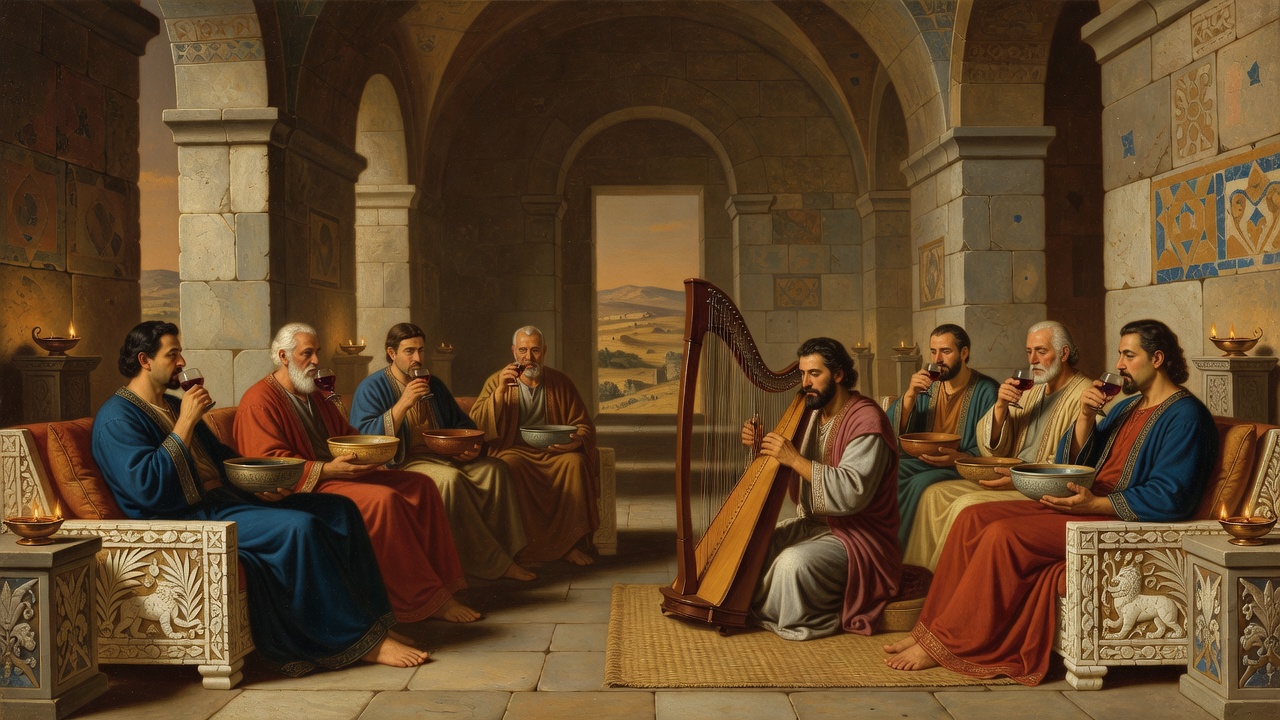
- Amos criticizes the aristocracy for indulging in extravagant banquets, resting on beds inlaid with ivory, and improvising music on harps like David, all while ignoring the impending ruin of Joseph. The name Joseph here designates the northern tribes of Israel, whose moral decay and social injustice were neglected by their wealthy leaders.Sources: David · Joseph (son of Jacob) · the Bible text itself
Notes written with AI assistance from open sources (Theographic Bible Metadata, CC BY-SA 4.0; Easton’s Bible Dictionary, public domain) and reviewed before publishing.
Places in this chapter
- Samaria · 32.276, 35.195 · verses 1, 8
- Zion · Today: Jerusalem · 31.777, 35.234 · verse 1
- Hamath · Today: Hama · 35.136, 36.750 · verse 2
- Philistia · 31.664, 34.546 · verse 2
Only places identified with high confidence are shown (90% or more according to the scholarly sources compiled by OpenBible). Period map: DARE (Digital Atlas of the Roman Empire), CC BY 4.0; modern map: © OpenStreetMap contributors; places: OpenBible.info (CC BY 4.0).
Credits and license for this translation
Bib La
The Holy Bible in Haitian Creole
Public Domain
Language: Kreyòl Ayisyen (Haitian)
In the Public Domain due to publication without copyright notice in 1985, and without subsequent registration within 5 years.
2020-03-10
Source: http://ebible.org/hat/ · eBible.org