Exodus 7
Buki Kimaasabaina · Tap a verse to see its cross-references.
1E Yauwe ilatuwokoigu idigo kana,
‘Kunovēgu. Bogina avayokoim kom bei kueyaubada Pero yaina goi go, kina siyam Eroni bei im tokabivalavala. 2E kom sem kaga liliuna bogina alatuuwokoim siyam Eroni kulatuwōko nakae. E kina go Eroni bei ina Pero ilatuwoko komi Isileli tubunao Itipita goi italigeimi bei ina kaba lovina goi kosowóduwo. 3E Yau sem Pero ina dabakasa bei avaituwe. Guna kaba kinana be nakae guna guinuwa aba kainaopa badabadaidi nava bei Itipita goi aguinuwedi. 4Go Pero bei geya inovemta. Tuwo nimagu toogagaina bei abisisobu mou gagaidi ayatoidi da Itipita yaidi, nakae guna guinuwa aba takínona aguinuwedi yaidi, namliyeta baige komi guna bodao Isileli tubunao badabadaaimi Itipita goi akabimi anavemi go, dala dala nakae goi kosowóduwo. 5Da Itipita bei siyagoidokoigu Yau Yauwe tutayana nimagu toogagaina ayosale alauidi be nakae yaidi goi komi Isileli tubunao akabimi anavemi.’
6E tuwo moitamo Eroni be yau kaga madabokina Yauwe ilatuuwokoima, nakae madabokiina kaguinuwe. 7Ego tutayana yau guna tala ana badabada bogina 80 go, Eroni ana tala ana badabada 83, e kana Pero yaina kabóbwara.
Liuna yawou
Eroni ina kaituko imalaamoteta tetelina
8E Yauwe Eroni be yau ilatuwokoima idigo kana,
9‘Pero bei ilatuwokoimi kana,
“Guinuwa aba kainaopa koguinūwe.”
Tutayana nakae ilatuwokoimi, e Mosese, siyam Eroni kulatuwōko kam,
“Im kaituko kuláve Pero matana goi.”
E tutayana ilave, bei imalamoteta.’
10E tuwo moitamo Eroni be yau katáoya kana Pero goi kaga nakae Yauwe bogina ilatuuwokoima kaguinuwe. Eroni ina kaituko ikalisobuye Pero mana pakonayao matadi goi, e imalamoteta. 11E kina Pero ina tonuwopolalayao be ina tomemeyavayao iduduwedi sima. Sima, kidi nakae itoboinedi idi méyava goi nakae siguinuwe. 12Koroto tamo tamo idi kaituko sikalisobuyedi simalamoteta go, Eroni ina kaituko itáoya, kidi idi kaitukoyadi ilotonoidi. 13Go kina Pero dabana ikasa toina, tauna geya inovemeta, nakae Yauwe boi bogina idige.
Liuna vakuumgoina: // Bwae imalaikaika
14E Yauwe ilatuwokoigu idigo kana,
‘Pero dabana ikasa, tuwo tomotayadi geya italigeidita bei sisowóduwo.
15Go tauyana itomo nobuyana bei itáoya ina sákala Nairi goi go, kom mainao im kaituko boi imalaamoteta kukavāle kunāve Nairi kikina goi kuutāoya, tauyana kutuuyaōsi. Tutayana iwowoiwo sakalayana manuna, 16e kulatuwōko kudīgo kam,
“Yauwe kai Iberiu ima Yaubada ietunegu ama yaim. Tauyana idigo kana, ‘Guna bodao kutaligēidi bei sima yoyowo goi sisakululu yau yaigu.’ Go Kunōve. Ame lovinayana nava geya kukabikaoneyeta. 17Tuwo Yauwe ibóbwara ame nakae, kana, ‘Guna guinuwa ame goi bei kuyagoigu bego Yau Yauwe.’ Kunōve. Aitukoyana nimagu goi sákala Nairi bwaena bei asapi imalaikaika. 18Go íyana madabokidi Nairi goi sikaaiyaka bei sikámasa. Tuwo Nairi bwaena bei ibówana. Nakae komi da Itipita geya itoboinemita bwaenayana konim.” ’
19E aiyuwoina idigo kana,
‘Eroni kulatuwōko kudīgo kam,
“Im kaituko kukābi kuyosāle Itipita bwaena liliudi yatanaidi goi, nakae sákala liliudi, oveya liliudi, otoku liliudi be dorom liliudi goi bei simalaikaika. Tuwo bwae Itipita madabokina goi imalaikaika. Idi kontena alova o gurewa nakae, bwae simalaikaika.” ’
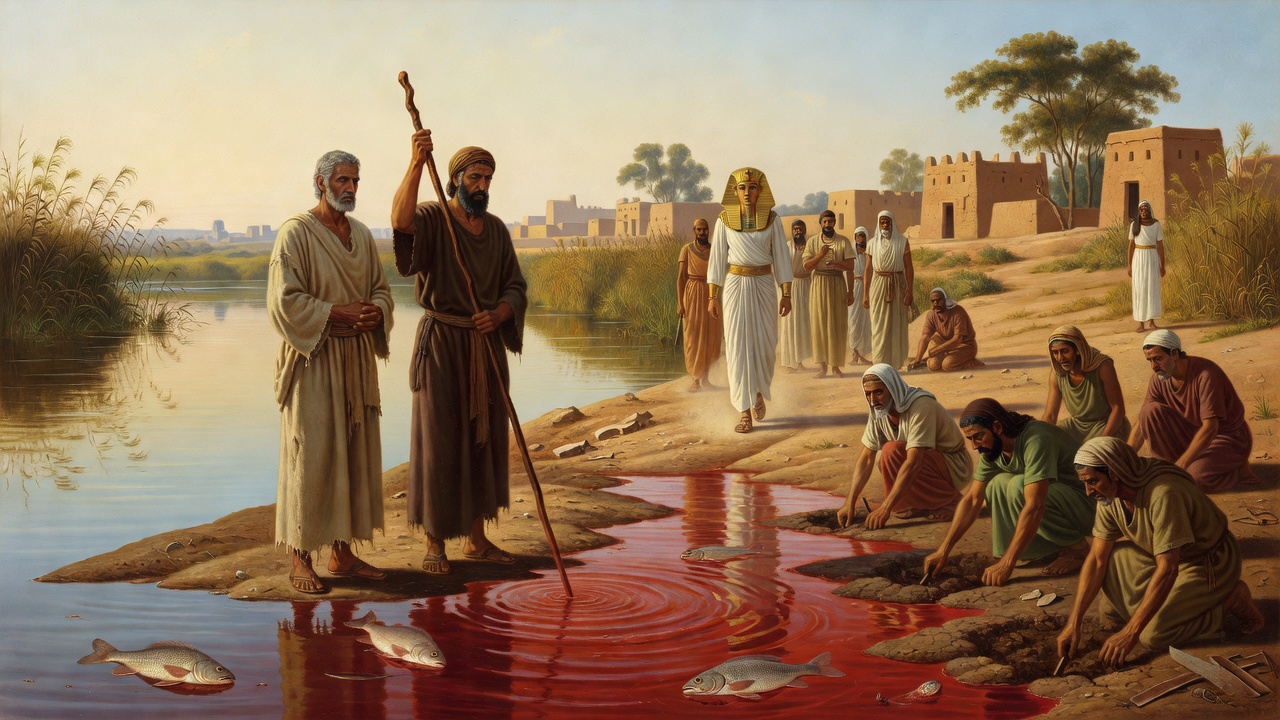
20Tuwo Eroni be yau kana kaguinuwe nakae Yauwe ilatuwokoima. Aitukoyana Eroni ikatulagasi Pero mana pakonayao matadi goi go, Nairi bwaena isapi, e bwae liliuna Nairi goi simalaikaika.
21Go Nairi iyaiyanidi sikaaiyaka madabokidi sikámasa, tauna Nairi bwae ibówana, e da Itipita geya itoboinedita sinim. Itipita goi madabokiina bwae simalaikaika. 22E da Itipita idi tomemeyavayao idi méyava goi nakae siguinuwe. Tuwo Pero nava idaabakasa, e Eroni be yau geya inovemeta nakae Yauwe boi bogina idige.
23E Pero itugavilema ikaluvila ina ina vada goi isiu go, ame manuna nakae geya inuwonuwoneta. 24E da Itipita madabokidi sina Nairi kikina goi siélina adi bwae silusala. Bogina kuyagoi. Geya itoboinedita bwae sákala Nairi goi sinim.
25E Yauwe Nairi bwaena isapi mlina maliyalina ana badabada ainima aiyuwo sikavava.
Did you know?
Moses and Aaron before Pharaoh
- Moses was eighty years old and Aaron eighty-three when they spoke to Pharaoh. Easton's Bible Dictionary (1897) notes that Aaron, the eldest son of Amram and Jochebed, was born in Egypt three years before his brother Moses. In this chapter the LORD says he has made Moses "like God to Pharaoh," with Aaron as his prophet: Moses is to speak all that he is commanded, and Aaron is to tell Pharaoh to let the Israelites leave his land.Sources: the Bible text itself · Aaron
- Easton's Bible Dictionary (1897) notes that the name Nile is not found in Scripture; the Old Testament calls that river Sihor, "the black stream," or simply "the river," and also "the flood of Egypt." The Nile is formed by the White Nile and the Blue Nile, which meet at Khartoum, and it is the water Aaron strikes in this chapter. The fish died, the river stank, the Egyptians could not drink it and dug around the Nile for water, and seven full days passed.Sources: Nile · the Bible text itself
- Easton's Bible Dictionary (1897) says the Pharaoh of the Exodus was probably Menephtah I, the fourteenth and eldest surviving son of Rameses II, and that he resided at Zoan, where he had the interviews with Moses and Aaron recorded in Exodus. The same entry leaves the identification open: it is still a question whether Seti II or his father Menephtah was that Pharaoh, and some think the evidence favors Seti II.Sources: Pharaoh (of the Exodus) · the Bible text itself
Notes written with AI assistance from open sources (Theographic Bible Metadata, CC BY-SA 4.0; Easton’s Bible Dictionary, public domain) and reviewed before publishing.
Places in this chapter
- Egypt · 30.129, 31.308 · verses 3, 4, 5, 11, 19, 21, 22
- Nile · Today: Nile River · 31.465, 30.367 · verses 15, 17, 18, 20, 21, 24, 25
Only places identified with high confidence are shown (90% or more according to the scholarly sources compiled by OpenBible). Period map: DARE (Digital Atlas of the Roman Empire), CC BY 4.0; modern map: © OpenStreetMap contributors; places: OpenBible.info (CC BY 4.0).
Credits and license for this translation
Buki Kimaasabaina
The New Testament and part of the Old Testament of the Holy Bible in the Gumawana language of Papua New Guinea
Buk Baibel long tokples Gumawana long Niugini
copyright © 2019 Wycliffe Bible Translators, Inc.
Language: Gumawana
This translation is made available to you under the terms of the
Creative Commons Attribution-Noncommercial-No Derivatives license 4.0.
You may share and redistribute this Bible translation or extracts from it in any format, provided that:
You include the above copyright and source information.
You do not sell this work for a profit.
You do not change any of the words or punctuation of the Scriptures.
Pictures included with Scriptures and other documents on this site are licensed just for use with those Scriptures and documents.
For other uses, please contact the respective copyright owners.
2026-10-02
Source: http://png.bible/gvs/ · eBible.org