Exodus 6
Buki Kimaasabaina · Tap a verse to see its cross-references.
1Go kina Yauweyana ilatuwokoigu idigo kana,
‘Ame tuta bei kugite manakaegu aguinuwa Pero yaina. Moitamo. Nimagu toogagaina goi bei komi Isileli tubunao ivalilivemi kona. Ina kaba lovina goi bei ivatapiyemi!’
2E tuwaina idigo kana,
‘Yau Yauwe. 3Tutayana boi toinigu akaiwoduwegu Eberamo be Aisake be Yakobo yaidi goi, alatuwokoidi Yau Tokavavágana Tokalika go, yoigu Yauwe, moe geya avatulukoidita. 4Nakae boi akanasiukoidi go, akatótula bego da Kenani idi poyapoya bei avinidi. Boi poyapoyayana goi situliya nakae sieogaoga. 5Yau bogina Isileli tubunao idi kalayawoi anove. Idi kalayawoiyana unana da Itipita sipakoidi, tauna kidi da Itipita idi pakonayao. Idi lida anove, e guna kanasíuna yaidi goi anuwokavate. 6Tauna semowo Isileli tubunao kulatuwokōidi kam,
“Yau Yauwe. Da Itipita idi kogúyala moumouna goi bei ayavemi. Ami pákwana goi bei ataligeimi be nimagu yoosalaina goi bei guna liuna gagaidi avinidi go, komi bei atatetemi. 7Bei akinavemi komi guna bodao go, Yau imi Yaubada. Bei koyagoigu Yau Yauwe imi Yaubada, da Itipita idi kogúyala moumoudi goi bei ayavemi 8go, avakedemi koma poyapoyayana goi boi nimagu akatuulagasi akatótula bego Eberamo, Aisake be Yakobo avinidi. Ame poyapoyayana bei komi imi poyapoya. Yau Yauwe.” ’
9E tuwo atáoya, ana Isileli tubunao nakae alatuwokoidi go, wowodi sikaliwoya be adi kogúyala ivakaigaga, tauna sopagu geya sikabikaoneyeta.
10E Yauwe ilatuwokoigu idigo kana,
11‘Kutāoya kūna Pero da Itipita adi tolovina kulatuwōko Isileli tubunao ina kaba lovina goi italigeimi.’
12Go yau adigo kagu,
‘Kunōve! Segowo Isileli tubunao sopagu geya sikabikaoneyeta go, Pero masa bei sopagu ikabikaone. Yau maegu imoumou!’
13E Yauwe ibóbwara Eroni be yau yaima, e ima lovina semao Isileli tubunao manudi be nakae Pero da Itipita adi tolovina manuna ivinima, idigo kana,
‘Isileli tubunao Itipita goi kokabīdi konavēdi.’
Mosese ana liliu
14Ame Isileli tubunao adi dala yawou aiyuwo adi nunu adi tovakumgoyao:
Isileli ina botomoya Rubeni natunao koroto ame nakae: Enoki be Palu, Esironi be Karami. Ame tauna dala yoina Rubeni ana nunu adi tovakumgoyao.
15Ame Simioni natunao koroto: Yemweli, Yamini, Owadi, Yakini, Sokara be Saulo. Sauloyana sinana guma Kenani. Ame tauna dala yoina Simioni ana nunu adi tovakumgoyao.
16Ame Livai natunao koroto adi bíbina goi: Gerasoni, Kowate be Merari. Kina Livai ana tala ana badabada 137 tutayana ikámasa.
17Gerasoni natunao koroto adi bíbina goi ame nakae: Livani be Simei go, niga moe tubudiyao adi nunu yoidi nakae.
18Kowate natunao koroto ame nakae: Amram, Isari, Ebironi be Useyeli. Kowate ana tala ana badabada 133 tutayana ikámasa.
19Merari natunao koroto ame nakae: Makili be Mse. Ame tauna dala yoina Livai ana nunu adi tovakumgoyao adi bíbina goi.
20E Amram inai tamana niuna yoina Yokebedi. Niga go Yokebediyana natunao koroto Eroni be yau ivenatunima. Amramyana ana tala ana badabada 137 tutayana ikámasa.
21Isari natunao koroto ame nakae: Kora, Nepegi be Sikiri.
22Useyeli natunao koroto ame nakae: Misaeli, Elisapani, Siteli.
23E Eroni inai Aminadabi natuna yoina Eliseba go, Eliseba siyana yoina Nakasoni. Elisebayana ivenátuna, natunao koroto ame nakae: Nadabi be Abaiu, Eliyasa be Itamari.
24E Kora natunao koroto ame nakae: Asira, Elikana be Aviyasapi. Ame nunu tamo tamo Kora ina bodao goi.
25E kina go Eroniyana natuna Eliyasa inai Putiyeli natuna go, ivenátuna, natuna koroto yoina Pinikasi.
Ame tauna dala yoina Livai ana nunu adi tovakumgoyao.
26E ame Eroniyana be yau Mosese boi Yauwe ilatuwokoima kana,
‘Kōna semiyao Isileli tubunao Itipita goi kokabīdi konavēdi go, kidi badabadaaidi dala dala nakae goi sisowóduwo.’
27Moe kai ama taiyuwo, e kana Pero da Itipita adi tolovina kalatuwoko kai Isileli tubunao itagonema Itipita goi kasowóduwo. Ame Eroniyana be yau Mosese.
Yauwe aiyuwoina Mosese be Eroni // ietunedi sina Pero goi tetelina
28E tutayana Itipita goi Yauwe ilatuwokoigu, 29idigo kana,
‘Yau Yauwe. Kūna Pero da Itipita adi tolovina kulatuwōko kaga liliuna bogina alatuwokoim.’
30Go yau adigo kagu,
‘Kunōve. Yau maegu imoumou. Masa bei Pero sopagu ikabikaone.’
Did you know?
I Am the LORD
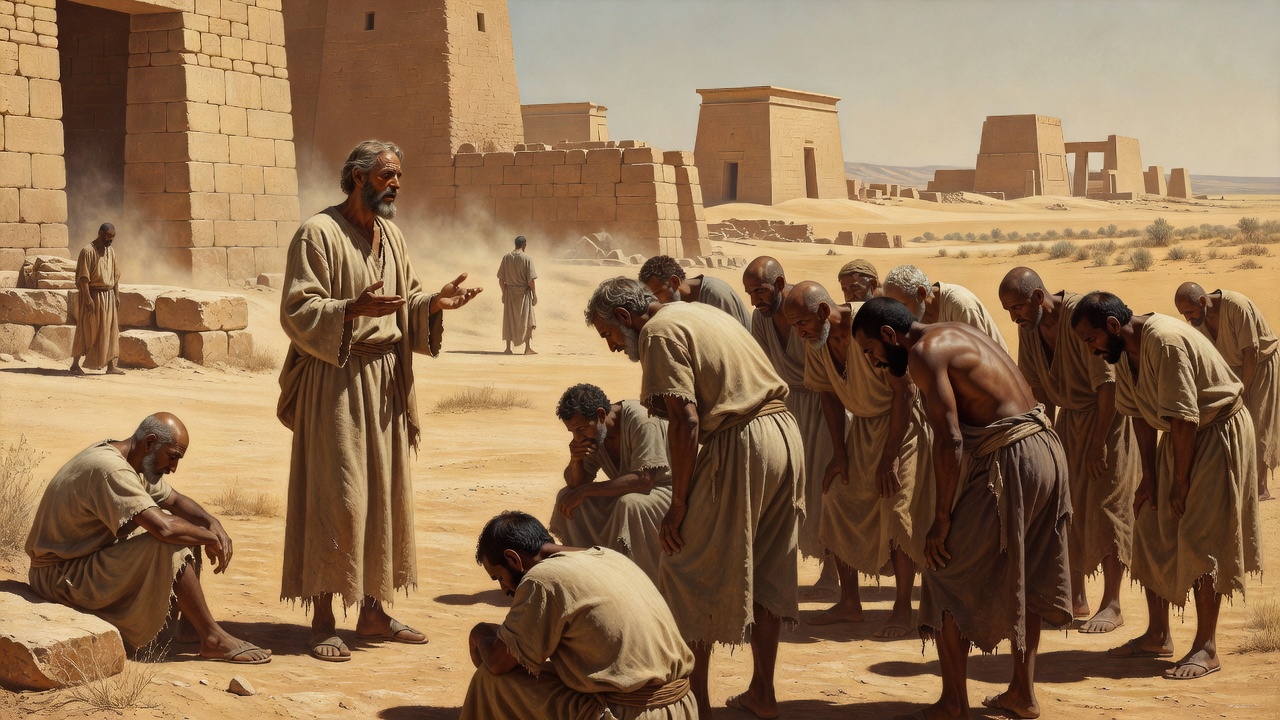
- In Exodus 6 God tells Moses that he is the LORD, and that he appeared to Abraham, Isaac, and Jacob as God Almighty but did not make himself known to them by the name the LORD. He recalls the covenant to give them the land of Canaan, where they had lived as foreigners. Easton's Bible Dictionary (1897) says the name Canaan signifies the lowlands, and that in the time of Moses and Joshua it denoted the whole country west of the Jordan and the Dead Sea.Sources: the Bible text itself · Canaan
- A family list then identifies the men charged to bring the Israelites out of Egypt: Levi, Jacob’s third son by Leah, whose name is linked to her Hebrew word meaning joined, and Levi’s sons Gershon, Kohath, and Merari. Levi lived 137 years, and Kohath, Amram’s father, lived 133; Amram married his father’s sister Jochebed, a daughter of Levi, and she bore Aaron and Moses. Aaron, the elder brother, was born in Egypt three years before Moses and married Elisheba, daughter of Amminadab of the house of Judah.Sources: the Bible text itself · Levi (patriarch) · Kohath · Aaron
- Moses and Aaron are sent to speak to Pharaoh king of Egypt. Easton's Bible Dictionary (1897) says the Pharaoh of the Exodus was probably Menephtah I, the fourteenth and eldest surviving son of Rameses II, who resided at Zoan, where those interviews took place. That entry still leaves open whether Seti II or his father Menephtah was that Pharaoh, and notes that some think the evidence favors Seti II.Sources: the Bible text itself · Pharaoh (of the Exodus)
Notes written with AI assistance from open sources (Theographic Bible Metadata, CC BY-SA 4.0; Easton’s Bible Dictionary, public domain) and reviewed before publishing.
Places in this chapter
Only places identified with high confidence are shown (90% or more according to the scholarly sources compiled by OpenBible). Period map: DARE (Digital Atlas of the Roman Empire), CC BY 4.0; modern map: © OpenStreetMap contributors; places: OpenBible.info (CC BY 4.0).
Credits and license for this translation
Buki Kimaasabaina
The New Testament and part of the Old Testament of the Holy Bible in the Gumawana language of Papua New Guinea
Buk Baibel long tokples Gumawana long Niugini
copyright © 2019 Wycliffe Bible Translators, Inc.
Language: Gumawana
This translation is made available to you under the terms of the
Creative Commons Attribution-Noncommercial-No Derivatives license 4.0.
You may share and redistribute this Bible translation or extracts from it in any format, provided that:
You include the above copyright and source information.
You do not sell this work for a profit.
You do not change any of the words or punctuation of the Scriptures.
Pictures included with Scriptures and other documents on this site are licensed just for use with those Scriptures and documents.
For other uses, please contact the respective copyright owners.
2026-10-02
Source: http://png.bible/gvs/ · eBible.org