Malachi 1
Nhanderuete ayvu iky'a e'ỹ va'e · Tap a verse to see its cross-references.
About this book
About Malachi
- Easton's Bible Dictionary (1897) presents Malachi, a name meaning "messenger" or "angel," as the last of the minor prophets and the writer of the last book of the Old Testament canon. Nothing is known of him beyond what is contained in his book of prophecies.Sources: Easton: Malachi · Malachi
- Some have supposed that the name is simply a title for a messenger of Jehovah, not a proper name. Easton's Bible Dictionary (1897) concludes, however, that there is reason to regard Malachi as the prophet's ordinary name.Sources: Easton: Malachi · Malachi
- Easton's Bible Dictionary (1897) dates the prophecies to about 420 B.C., after Nehemiah's second return from Persia, or possibly before that return. Because Ezra does not mention him and he does not mention the restoration of the temple, the dictionary infers that he prophesied after Haggai and Zechariah.Sources: Easton: Malachi
- Easton's Bible Dictionary (1897) treats Malachi as a contemporary of Nehemiah, comparing Malachi 2:8 with Nehemiah 13:15 and Malachi 2:10-16 with Nehemiah 13:23. It also notes that the temple services were still in existence, citing Malachi 1:10, 3:1 and 3:10.Sources: Easton: Malachi
Notes written with AI assistance from open sources (Theographic Bible Metadata, CC BY-SA 4.0; Easton’s Bible Dictionary, public domain) and reviewed before publishing.
Jacó oayvua rami Senhor ijayvuague
1Kova'e ayvu ma Malaquias pe Senhor omombe'u uka va'ekue Israel kuery rovai.
2— Xee ma roayvu va'e — he'i Senhor.
Ha'e rã peẽ kuery ma peporandu:
— Mba'exa vy tu ndee orerayvu?
Senhor ombovai:
— Esaú ma Jacó ryke'y e'ỹ teve raka'e? Ha'e rami teĩ Jacó ae ayvu,
3ha'e rã Esaú re ma ndaxea'ei, ha'e rami vy ha'e kuery rekoarã yvyty ome'ẽ mbyre ambovaipa vy amboaxa raka'e jagua-tuvy nhe'ẽ tekoa e'ỹa rupigua pe rive — he'i.
4Ha'e gui ma xapy'a rei Edom pygua kuery aipoe'i 'rã: “Kore nhanderekoa Senhor ombovaipa teĩ oityague py ae ju 'rã jajapopa”, he'i 'rã okuapy.
Ha'e rã Senhor ixondaro reta va'e ma aipoe'i: “Ha'e kuery ojapopa teĩ xee aitypa ju 'rã. Ha'e rami rire Edom yvy omboerya 'rã: ‘Yvy teko vai renda’, ha'e ‘Ha'e kuery pe Senhor ipoxy raka'e rã peve’ 'ea 'rã.
5Ha'e nunga penderexa py ae 'rã pexa. Ha'e vy ‘ Senhor tu ipo'akapa va'e rima ra'e, Israel kuery ikuaia rupi anho e'ỹ’, peje 'rã”, he'i.
Sacerdote kuery pe Senhor ijayvu eteague
6Senhor ixondaro reta va'e aipoe'i:
— Ta'y kuery ikuai va'e omboete 'rã nguu, ha'e tembiguai kuery voi omboete 'rã herekoa. Ha'e rami teĩ xee ri Penderu aiko teĩ mamo tu oĩ xemboetea? Xee ri Pendererekoa ae avi aiko teĩ mamo tu ha'vy oĩ xemboetea? Mba'eta peẽ sacerdote kuery pendekuai va'eri xerery napemboetei va'e.
— Ha'e rã peẽ kuery ma peporandu 'rã: “Mba'e nunga py tu noromboetei ri nderery?” peje 'rã.
7— Ambovai: “Mba'eta mbojape ha'eve'ỹ va'e rive peme'ẽ xevygua altar áry”, ha'e.
— Ha'e gui peporanduve tema: “Mba'e nunga py tu ndee noromboetei?”
— Ambovai: “Mba'eta aipopeje: ‘ Senhor pegua mesa ma ojou vaipy’ pejea py.
8Mba'eta xevy pe peme'ẽ 'rã mymba oma'ẽ e'ỹ va'e. Ha'e nunga rive peru ramo nda'evei e'ỹ teve? Ha'e rami e'ỹ vy hetyma rovai va'e, e'ỹ vy imba'eaxykue peru ramo nda'evei e'ỹ avi teve? Xapy'a rei penderuvixa pe ha'e ramigua peme'ẽ va'e rire ha'e va'e nda'u pendejou porã vy pendererovy'a 'rãgue? Any”, he'i Senhor ixondaro reta va'e.
9— Aỹ ma pejapukai ke Penderuete pe penemboaxy nho aguã. Ha'e rami avi namigua pendepo py peme'ẽ va'erã peru ramo xee rojou porã 'rã teve? — he'i Senhor ixondaro reta va'e.
10— Ha'eveve 'rãgue peẽ kuery va'e regua xero rokẽ pembotypa va'e rire, xevygua altar áry tata napemoendy rivevei aguã. Mba'eta xee ma ndoroguerovy'ai ruxã'i ma voi. Ha'e rami vy ndajopyi 'rã guive peme'ẽ va'erã pendepo py peru va'e — he'i Senhor ixondaro reta va'e.
11— Ha'e rã yvy regua ikuaia rupi ma xerery omboete 'rã okuapy, kuaray oẽa katy guive oikea katy peve. Opa rupi xevy oapy 'rã heakuã porã va'e, ha'e iky'a e'ỹ va'e anho 'rã ogueru ome'ẽ va'erã. Mba'eta xerery omboetea 'rãe yvy regua kuery ikuaia rupi — he'i Senhor ixondaro reta va'e.
12— Ha'e rã peẽ kuery ma pemongy'apa xerery, mba'eta aipopeje: “ Senhor pegua mesa ma ha'eve'ỹ va'e, ha'e hi'áry tembi'u nhame'ẽ va'e voi ojou vaipy”, peje.
13Aipopeje avi: “Ai nhanekane'õ rive ma!” peje vy xemboetea rupi e'ỹ pendekuai. Mba'eta oixu'upa pyre peme'ẽ, hetyma rovaikue, ha'e imba'eaxykue guive. Namigua rive peme'ẽ ramo xee ajopy 'rã ri ty'y pendepo gui? Any — he'i Senhor ixondaro reta va'e.
14— Ijayvu vaipy toiko xembotavypaxe va'e, guymba hexaĩmba va'e oguereko vy ha'e va'e ae Senhor pe ome'ẽ aguã re ijayvu teĩ hekovia ivaikue'i rive ome'ẽ va'e. Mba'eta xee ma huvixave yvate ete va'e aiko. Ha'e ramo yvy regua kuery ma xerery oendu vy oikuaa pavẽ 'rã ijavaete va'e aikoa — he'i Senhor ixondaro reta va'e.
Did you know?
Honoring God and Defective Offerings
- The name Malachi means messenger or angel. While some have suggested it was a title rather than a proper name, scholars and traditions widely treat it as the prophet's personal name, placing his ministry during the period of Nehemiah, after Haggai and Zechariah.Sources: Malachi
- The opening dispute recalls the twin brothers Jacob and Esau, the ancestors of Israel and Edom. The text contrasts God's covenant love for Israel with the judgment and desolation coming upon the mountainous region of Edom.Sources: Esau (Edom) · Jacob (Israel) · Edom · the Bible text itself
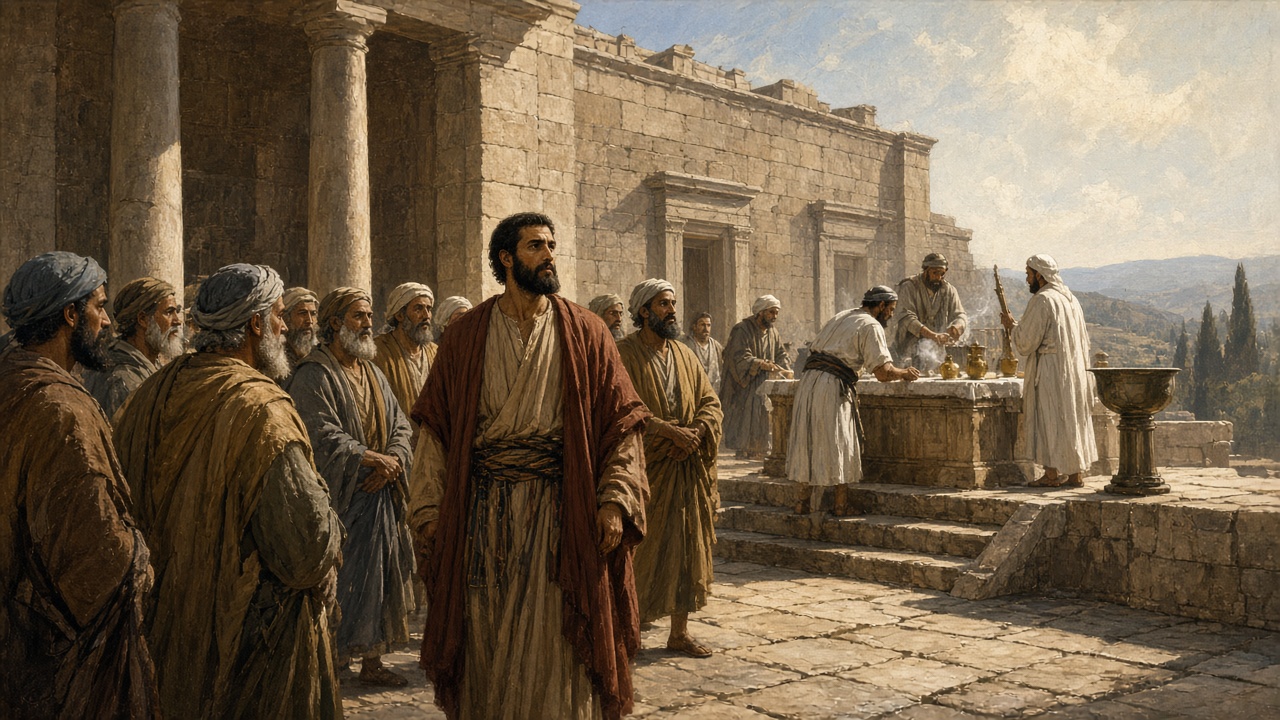
- The priests are rebuked for offering blind, lame, and diseased animals on the altar rather than unblemished livestock. Malachi exposes their disrespect by asking whether a civil governor would accept such inferior gifts.Sources: the Bible text itself
Notes written with AI assistance from open sources (Theographic Bible Metadata, CC BY-SA 4.0; Easton’s Bible Dictionary, public domain) and reviewed before publishing.
Places in this chapter
- Edom · 30.746, 35.604 · verse 4
Only places identified with high confidence are shown (90% or more according to the scholarly sources compiled by OpenBible). Period map: DARE (Digital Atlas of the Roman Empire), CC BY 4.0; modern map: © OpenStreetMap contributors; places: OpenBible.info (CC BY 4.0).
Credits and license for this translation
Nhanderuete ayvu iky'a e'ỹ va'e
New Testament in Guaraní, Mbyá
copyright © 2004 Wycliffe Bible Translators, Inc.
Language: Mbyá Guaraní (Guaraní, Mbyá)
Translation by: Wycliffe Bible Translators, Inc.
Copyright Information
© 2004, Wycliffe Bible Translators, Inc. All rights reserved.
This translation text is made available to you under the
terms of the Creative Commons License: Attribution-Noncommercial-No Derivative Works.
( http://creativecommons.org/licenses/by-nc-nd/3.0/ )
In addition, you have permission to port the text to different file formats, as long as you
do not change any of the text or punctuation of the Bible.
You may share, copy, distribute, transmit, and extract portions
or quotations from this work, provided that you include the above copyright
information:
You must give Attribution to the work.
You do not sell this work for a profit.
You do not make any derivative works that change any of the actual words or punctuation of the Scriptures.
Permissions beyond the scope of this license may be
available if you contact
us with your request.
Printed book ISBN 853110565X
The New Testament
in Guaraní, Mbyá
© 2004, Wycliffe Bible Translators, Inc. All rights reserved.
This translation is made available to you under the terms of the
Creative Commons Attribution-Noncommercial-No Derivatives license 4.0.
You may share and redistribute this Bible translation or extracts from it in any format, provided that:
You include the above copyright and source information.
You do not sell this work for a profit.
You do not change any of the words or punctuation of the Scriptures.
Pictures included with Scriptures and other documents on this site are licensed just for use with those Scriptures and documents.
For other uses, please contact the respective copyright owners.
2014-08-06
Source: http://ebible.org/gun/ · eBible.org