Nahum 2
Tupàn ze'eg · Tap a verse to see its cross-references.
Nin taw heityk awer
1Zauxiapekwer tetea'u uzàmàtyry'ym putar Nin tawhu wà nehe.
Pemupu'àm kar ume'egatu ma'e tàpuzaiha katu ma'e 'aromo wà nehe.
Peme'egatu pe rehe nehe no.
Penoz zauxiapekwer paw wamuwà pe wà nehe.
Pezemuàgà'ym zeàmàtyry'ymawhu heta haw rehe nehe.
2Tupàn Tuweharupi Wiko Ma'e umuzewyr kar putar teko Izaew wakàgaw wapuràg eteahy haw wanupe nehe. Waàmàtyry'ymar weraha teko paw Izaew ywy wi wà, weraha wama'e paw Izaew ywy wi wà no. Ywy nuzawy kwaw ywyra hàkà 'ym ma'e. A'e ywy rehe har ikàg wi putar wà nehe. Wakàg àwàm nuzawy kwaw wakàg awer nehe.
3Zauxiapekwer ur ma'e kwer werur u'yw wi purumimaw ipiràg ma'e wà.
Wakamir ipiràg no.
Uzemuàgà'ym waiko Nin tawhu iàmàtyry'ym pà wà.
Wama'e ywyramawa heny katu tata ài wà.
Kawaru uzàn ko rupi wà. Uzàn kwe rupi wà no.
4Ywyramawa zeàmàtyry'ymawhu rehe har uzàn katu pe rupi tawhu myter romo wà.
Wahaw katu haw tawhu myter rupi wà. Ko rupi wà, kwe rupi wà.
Nuzawy kwaw tatainy imunyk pyrer wà.
Uzàn àmàn iweraw paw ài wà.
5Izaew waàmàtyry'ymar zauxiapekwer wanuwihaw ikàg wera'u ma'e uzapo kar ma'e amogwer zauxiapekwer wanuwihaw wanupe.
Uzàn tuwihaw tawhu ipàrirogawhu pe wà.
Uzàn mehe uzemuàzààzàn wà.
Uzapo amo ma'e uzeàmimaw romo wàmàtyry'ymar wanuwi wà.
6Uwàpytymawok yrykaw ipàrirogaw wà.
Teko tàpuzuhu pe har ukyze wera'u wà kury.
7Zauxiapekwer weraha wazar tupàn ua'u kuzà hagapaw a'e wi wà kury.
Ixaxeto kuzà oho haikweromo uzai'o pà wà.
Ikuhem pykahu ài wà.
Ukwar upuxi'a rehe uzemumikahy haw hexak kar pà wà.
8Teko Nin pe har uzàn a'e wi wà.
Nuzawy kwaw 'y ypaw iapo pyrer wi uhem ma'e kwer wà.
— Pepytu'u, pepytu'u, amo i'iahy purupe.
Ni amo nupytu'u kwaw uzàwehem ire wà.
9Pepyhyk itaxig parat nehe. Peraha itazu or nehe.
Tawhu tynehem temetarer pupe a'e.
Heta tetea'u ma'e hekuzar katu ma'e xe.
10Zauxiapekwer umumaw Nin wà. Teko paw uhem oho izuwi wà. Naheta kwaw teko a'e pe wà kury.
Wapy'a tynehem wakyze haw pupe wà.
Wapenàràg uryryryryz waiko wà.
Wanuwa xigatu wakyze haw wi wà.
Wakàgaw uhem wanuwi upaw rupi.
11Ma'e uzeapo tawhu pe.
Kwehe mehe nuzawy kwaw zàwàruhu iriàw wamono'ogaw.
Zàwàruhu iriàw weraha wemizuka kwer a'e pe wànàm wanupe wà.
Wiko a'e pe wa'yr wanehe we ma'e wi ukyze 'ym pà wà.
Ni amo a'e pe har numukuhem kwaw wà. Ikatu waneko haw.
12Zàwàruhu iriàw awa uzuka amo miar a'e.
Na'e omono ho'o kwer pehegwer zàwàruhu iriàw kuzà pe, imemyr wanupe no.
Waneko haw itakwar tynehem miar umàno ma'e kwer pupe.
13Tupàn Tuweharupi Wiko Ma'e ikàg wera'u ma'e umume'u ko ma'e iko teko Nin pe har wanupe kury.
— Aiko peàmàtyry'ymar romo ihe. Amunyk putar tata pema'e ywyramawa wanehe wanapy paw pà ihe nehe. Zauxiapekwer penehe we har umàno putar zeàmàtyry'ymawhu pe wà nehe. Pemunar teko amo ae ywy rehe har wama'e tetea'u rehe. Araha putar a'e ma'e paw pewi izo'ok pà ihe nehe. Awa peze'eg heraha har noho pixik kwaw amo ae ywy rehe wà nehe.
Did you know?
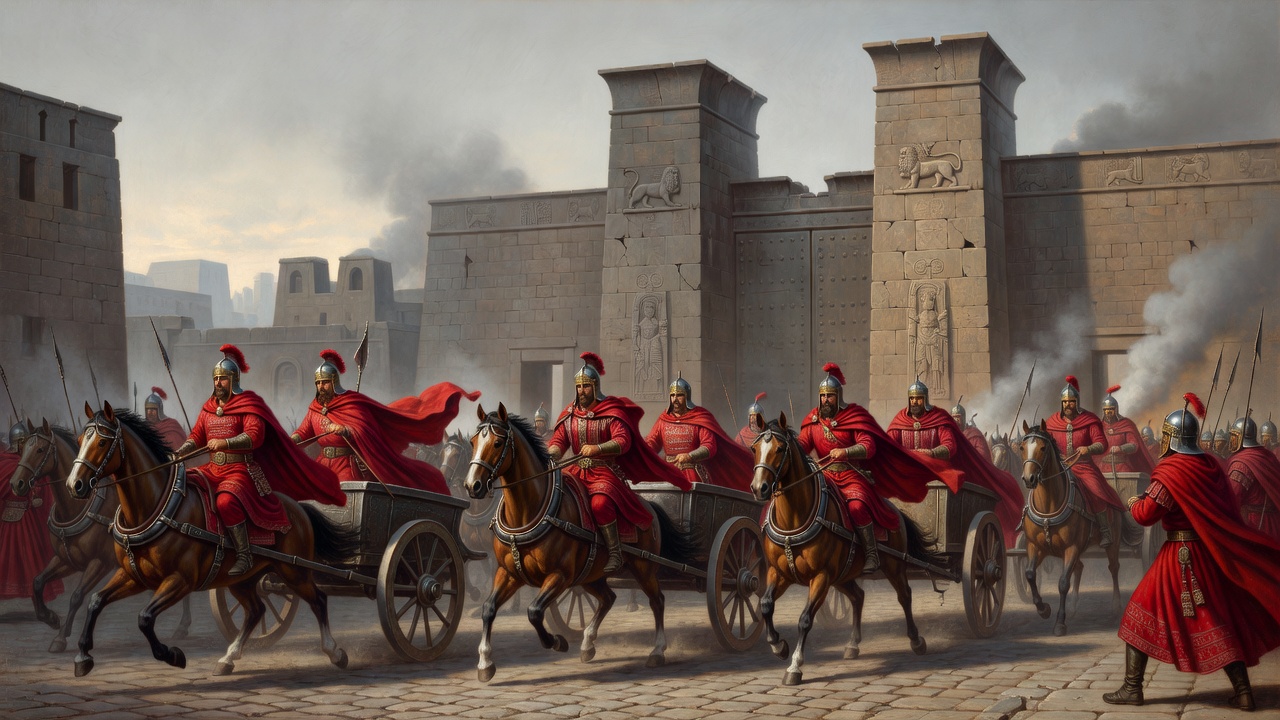
The Fall of Nineveh
- Nineveh was the great and flourishing capital of the Assyrian empire, and the book of Nahum is almost exclusively occupied with prophecies foretelling its ruin and complete desolation.Sources: Nineveh · the Bible text itself
- The prophet depicts the siege with vivid tactical imagery, describing attacking warriors dressed in scarlet with flashing chariots, and the breach of the river gates that causes the palace to collapse.Sources: the Bible text itself
- Nahum taunts the imperial city by comparing it to a den of lions that once preyed upon surrounding nations, announcing that its lairs of plunder will be completely emptied and destroyed.Sources: the Bible text itself
Notes written with AI assistance from open sources (Theographic Bible Metadata, CC BY-SA 4.0; Easton’s Bible Dictionary, public domain) and reviewed before publishing.
Places in this chapter
Only places identified with high confidence are shown (90% or more according to the scholarly sources compiled by OpenBible). Period map: DARE (Digital Atlas of the Roman Empire), CC BY 4.0; modern map: © OpenStreetMap contributors; places: OpenBible.info (CC BY 4.0).
Credits and license for this translation
Tupàn ze'eg
Bible without Deuterocanon in Guajajára (BR:gub:Guajajára)
copyright © 2007 Wycliffe Bible Translators, Inc.
Language: Guajajára
Translation by: Wycliffe Bible Translators, Inc.
Guajajára [gub], Brazil
Copyright Information
© 2007, Wycliffe Bible Translators, Inc. All rights reserved.
This translation text is made available to you under the
terms of the Creative Commons License: Attribution-Noncommercial-No Derivative Works.
( http://creativecommons.org/licenses/by-nc-nd/3.0/ )
In addition, you have permission to port the text to different file formats, as long as you
do not change any of the text or punctuation of the Bible.
You may share, copy, distribute, transmit, and extract portions
or quotations from this work, provided that you include the above copyright
information:
You must give Attribution to the work.
You do not sell this work for a profit.
You do not make any derivative works that change any of the actual words or punctuation of the Scriptures.
Permissions beyond the scope of this license may be
available if you contact
us with your request.
Printed book ISBN 9788531109713
The Bible without Deuterocanon
in Guajajára
© 2007, Wycliffe Bible Translators, Inc. All rights reserved.
This translation is made available to you under the terms of the
Creative Commons Attribution-Noncommercial-No Derivatives license 4.0.
You may share and redistribute this Bible translation or extracts from it in any format, provided that:
You include the above copyright and source information.
You do not sell this work for a profit.
You do not change any of the words or punctuation of the Scriptures.
Pictures included with Scriptures and other documents on this site are licensed just for use with those Scriptures and documents.
For other uses, please contact the respective copyright owners.
2020-03-30
Source: http://ebible.org/gubBl/ · eBible.org