Job 4
Tupàn ze'eg · Tap a verse to see its cross-references.
Izo imyrypar uze'eg izupe wà
Nepuraraw paw 'ar uhem kury
1Na'e imyrypar Eripaz Temà ywy rehe har uze'eg a'e kury.
2Izo, aze aze'eg nehe, aipo erekwahy putar ihewe nehe,
I'i izupe.
— Mo upuner uze'eg 'ymaw rehe a'e.
3Eremu'e teko tetea'u ne wà.
Eremukàg teko uzemumikahy ma'e tetea'u ne wà no.
4Amo i'ar mehe ikene'o mehe ikàg 'ym mehe,
Neze'eg umukàg a'e teko wamupu'àm kar pà wà.
5Ko 'ar rehe neremipuraraw 'ar uhem kwez kury.
Màràzàwe tuwe ma'e hàrogatu haw uhem newi. Màràzàwe tuwe nekàgaw uhem newi.
6Tupàn wi nekyze haw nanemukàg kwaw aipo.
Nereko haw ikatu ma'e nanemynehem kwaw ma'e hàrogatu haw pupe aipo.
7Nema'enukwaw amo teko ikatu 'ym ma'e iapo 'ymar rehe aipo,
Teko iaiw haw rehe u'ar ma'e kwer rehe aipo,
Teko imunar 'ym ma'e imumaw pyrer rehe aipo.
8Ko ma'e aexak ihe: Teko nuzawy kwaw ma'etymar a'e wà.
Aze uzutym ma'eà'yz ikatu 'ym ma'e wà,
Nopo'o kwaw temi'u ikatu ma'e wà.
Nezewegatete ikatu 'ym ma'e iapo har waneko haw iaiw no. 9Tupàn nuzawy kwaw ywytuaiw. Umumaw a'e teko wekwahy haw pupe wà.
10A'e teko okororo zàwàruhu iriàw ipuruzukaiw ma'e ài wà.
Nezewe rehe we Tupàn umupytu'u kar wakororo re a'e wà.
Ukauka wanàz wanuwi no.
11Nezewe mehe wiko zàwàruhu iriàw uzemi'ikar haw rehe upuner 'ym ma'e zàwe wà.
Umàno wà, ta'e nupuner kwaw umai'u haw rehe wà xe.
Wana'yr uhàuhàz wanuwi wà no.
Aipo teko upuner ikatuahy ma'e romo wiko haw rehe Tupàn huwarupi wà
12Amo umume'u ze'eg ihewe mewe katu a'e.
Hewowo ihewe imume'u mehe. Nainu katu kwaw ize'eg mehe ihe.
13Pyhaw teko waker katu mehe, Apuahuaiw ihe.
Akyze izuwi.
14Hekyze haw uzeapo hezar romo.
Heretekwer uzypyrog uryryryryz pà paw rupi no.
15Amo upy heruwa rehe. Hepita'i katu.
16Amo wiko a'e pe wà.
Ame'egatu. Napuner kwaw hetekwer hexakaw rehe.
Nuze'eg kwaw izypy mehe. Na'e ainu amo ize'eg mehe.
17— Aipo amo upuner Tupàn henataromo ikatu ma'e romo weko haw rehe, i'i ihewe.
Aipo amo teko wiko Tupàn henataromo ikatuahy ma'e romo.
18Tupàn nuzeruzar kwaw ni uma'ereko ma'e weko haw pe har wanehe.
Te weko haw pe har wanehe wexak ikatu 'ymaw a'e.
19Aipo erezeruzar putar teko wanehe nehe.
Wiko ywyzuwa iapo pyrer romo wà.
Tupàn umuzuwazuwa ywy iku'i kwer teko romo iapo pà.
Wiko pànàmiràn zàwe wà. Wyzài upuner wakamikamikaw rehe wà.
20Ku'em mehe zapuner zanereko haw rehe.
Karuk mehe zàmàno zanereko wi 'ym pà.
Ni amo nuzekaiw kwaw zanerehe wà.
21Zanereko haw upaw
Tàpuzràn u'ar ma'e kwer ài.
Zàmàno ma'ekwaw katu haw ipyhyk 'ym pà.
Did you know?
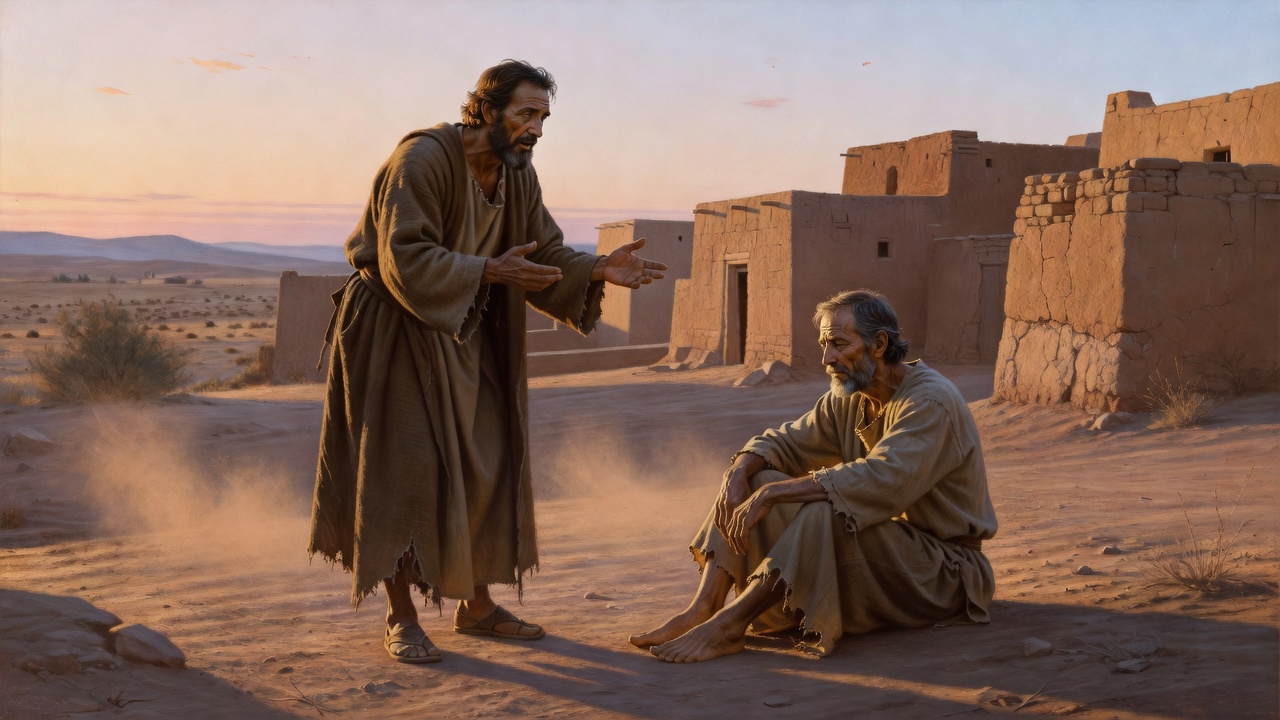
Eliphaz's First Speech
- Eliphaz the Temanite is the first of Job's companions to respond, breaking their week of silence. He acknowledges Job's past reputation for comforting and strengthening the distressed before questioning why Job cannot apply that same endurance to his own suffering.Sources: the Bible text itself · Eliphaz
- Eliphaz introduces the traditional principle of retribution, arguing that the innocent never perish and that individuals reap what they sow in life.Sources: the Bible text itself
- To support his theological claim, Eliphaz describes a chilling night vision where a mysterious spirit stood before him in the dark, declaring that fragile mortals dwelling in houses of clay cannot be more righteous or pure than their Maker.Sources: the Bible text itself
Notes written with AI assistance from open sources (Theographic Bible Metadata, CC BY-SA 4.0; Easton’s Bible Dictionary, public domain) and reviewed before publishing.
Credits and license for this translation
Tupàn ze'eg
Bible without Deuterocanon in Guajajára (BR:gub:Guajajára)
copyright © 2007 Wycliffe Bible Translators, Inc.
Language: Guajajára
Translation by: Wycliffe Bible Translators, Inc.
Guajajára [gub], Brazil
Copyright Information
© 2007, Wycliffe Bible Translators, Inc. All rights reserved.
This translation text is made available to you under the
terms of the Creative Commons License: Attribution-Noncommercial-No Derivative Works.
( http://creativecommons.org/licenses/by-nc-nd/3.0/ )
In addition, you have permission to port the text to different file formats, as long as you
do not change any of the text or punctuation of the Bible.
You may share, copy, distribute, transmit, and extract portions
or quotations from this work, provided that you include the above copyright
information:
You must give Attribution to the work.
You do not sell this work for a profit.
You do not make any derivative works that change any of the actual words or punctuation of the Scriptures.
Permissions beyond the scope of this license may be
available if you contact
us with your request.
Printed book ISBN 9788531109713
The Bible without Deuterocanon
in Guajajára
© 2007, Wycliffe Bible Translators, Inc. All rights reserved.
This translation is made available to you under the terms of the
Creative Commons Attribution-Noncommercial-No Derivatives license 4.0.
You may share and redistribute this Bible translation or extracts from it in any format, provided that:
You include the above copyright and source information.
You do not sell this work for a profit.
You do not change any of the words or punctuation of the Scriptures.
Pictures included with Scriptures and other documents on this site are licensed just for use with those Scriptures and documents.
For other uses, please contact the respective copyright owners.
2020-03-30
Source: http://ebible.org/gubBl/ · eBible.org