Isaiah 57
Tupàn ze'eg · Tap a verse to see its cross-references.
1Teko ikatu ma'e umàno wà.
Ni amo nuzekaiw kwaw wamàno haw rehe wà.
Ikatu ma'e ukàzym wà.
Ni amo nuexak kwaw waho haw wà.
Ikatu 'ymaw nupuner kwaw ikatu 'ym ma'e iapo haw rehe wanupe.
2Nezewe rehe we ikatu ma'e wexak putar zeàmàtyry'ym 'ymaw a'e wà.
Ikatu haw rehe wiko ma'e
upytu'u katu utymaw pupe wà.
Tupàn uzepyk tupàn ua'u imuwete har wanehe
3Tupàn Tuweharupi Wiko Ma'e uze'eg nezewe.
— Paze ma'e imemyr wà, kuzàwyzài puhe uker ma'e wà, kuzàwyzài wà,
pezur xe nehe.
Amume'u putar penemiapo kwer penehe hezepyk pà ihe nehe.
4Mo rehe pepuka peiko.
Mo rehe peze'eg urywahyahy peiko penuwarurywete mua'u pà.
Ikatu 'ym ma'e iapo har romo peiko. Peiko hemu'em ma'e romo.
5Pepyta ywyra i'àgaw iwy pe.
A'e pe pezemono iaiw ma'e iapo haw pe.
Peker kuzàwyzài wapuhe tupàn a'ua'u wamurywete kar pà. — Nezewe mehe umuezuz kar zaneremi'u ràm wà nehe, peze pezeupe. — Nezewe mehe zanemupurumuzàg kar putar wà nehe no, peze pezeupe.
Itakwaruhu yrykaw huwake har pupe
pezuka pena'yr tupàn a'ua'u wamuwete pà pe wà.
6Pepyhyk ita ihym ma'e yrykaw pupe har tupàn a'ua'u penemimuwete romo wamuigo kar pà pe wà no.
A'e re pemono win wanupe.
Pemono arozràn wanupe wamuwete pà no.
— Nezewe haw zaneremiapo ikatu Tupàn Tuweharupi Wiko Ma'e pe a'e, peze peiko ihewe aipo.
7Peho ywytyruhu apyr
iaiw ma'e iapo pà.
Pemono ma'e tupàn a'ua'u wanupe a'e pe no.
8Pemuapyk tupàn a'ua'u penemiapo kwer iro ma'e
penàpuz ukenaw ikupe kutyr pe wà.
Peneharaz ihewi. Pezo'ok pekamir.
Pe'aw peker haw rehe penemimutar wapuhe.
Pemono penemetarer wanupe pepuhe wapyta haw hekuzaromo.
Nezewe mehe pezapo penemimutar iaiw ma'e.
9Pepyhyk uri kawer. Pepyhyk kàpuhàg hyàkwegatu ma'e tetea'u no.
A'e re pemuwete tupàn ua'u Morok her ma'e peho.
Pemono kar peze'eg heraha har ywy nànàn wà, tupàn a'ua'u penemimuwete ràm wanekar kar pà wanupe wà.
A'e ze'eg heraha har oho te umàno ma'e kwer wapyta haw pe wà.
10Pekene'o, ta'e peata tetea'u pe xe.
Nezewe rehe we napepytu'u kwaw.
Tupàn a'ua'u wanagapaw hemuhuhuk kar har omono ukàgaw peme wà.
A'e rupi napepytu'u kwaw.
11Pekyze tuwe a'e tupàn a'ua'u wanuwi.
Mo romo wanekon wà.
Màràzàwe tuwe penemu'em ihewe.
Màràzàwe tuwe peneharaz tuwe ihewi.
Amumaw kwarahy tetea'u heze'eg 'ym pà.
Aipo a'e rupi peneharaz ihewi. Aipo a'e rupi napekyze kwaw ihewi.
12Aexak kar putar penemiapo kwer teko nànàn ihe nehe.
Ikatu penemiapo peme.
Azeharomoete na'ikatu kwaw ihewe ihe.
13Pehapukaz putar pepytywà àwàm henoz pà ihewe nehe.
A'e 'ar mehe tupàn a'ua'u penemimuwete tetea'u napenenu kwaw a'e wà nehe.
Ywytu weraha putar a'e tupàn a'ua'u muite xe wi wà nehe.
Pitài ipy haw umukàzym kar putar wà nehe.
Herehe uzeruzar ma'e wiko putar ywy heremimume'u kwer rehe wà nehe.
Ywytyr ikatuahy ma'e herenaw uzeapo putar waneko haw romo nehe.
Tupàn upurupuhareko haw
14Tupàn Tuweharupi Wiko Ma'e uze'eg nezewe.
— Pemuàgà'ym pe heremiaihu waho àwàm nehe. Pemuhygatu wanape ràm nehe.
Nezewe mehe heremiaihu upuner putar ihewe uzewyr haw rehe wà nehe,
i'i Tupàn.
15Tupàn Ikatuahy Ma'e Ywate Wera'u Ma'e a'e,
Tupàn Tuweharupi Wiko Ma'e a'e, uze'eg a'e.
— Hereko haw upyta ywate a'e. Ikatuahy a'e, ikatu 'ymaw wi imunyryk pyrer romo hekon a'e.
Aiko ikàg 'ym ma'e wainuinuromo ihe no. Aiko ma'erahy ipuraraw par wainuinuromo ihe no.
Nezewe mehe àro kar ikatu ma'e ikàg 'ym ma'e wanupe.
Amono wakàgaw ipyahu ma'e ma'erahy ipuraraw par wanupe no.
16Namume'u wi wi kwaw heremiaihu wanemiapo kwer ikatu 'ym ma'e ihe nehe, wanupe ihe nehe.
Naiko kwaw wikwahy ma'e romo tuweharupi hepytu'u 'ym pà nehe.
Aze mo aikwahy hepytu'u 'ym pà, umàno mo wikuwe ma'e heremiapo kwer upaw rupi wà.
Ihe ae azupy wanehe wamuigo kar pà wikuwe ma'e romo upaw rupi ihe.
17Aikwahy heremiaihu wanupe. Azepyk wanehe no ta'e uzapo ikatu 'ym ma'e wà xe.
Hewyrowyroahy amo wama'e rehe wà no.
Atyryk wanuwi ta'e aikwahy ihe xe.
Nezewe rehe we wiko wi wi uzauzarahy ma'e romo wà.
Oho wi wi wape rupi wà no.
18Aexak wanemiapo kwer.
Nezewe rehe we amukatu putar ihe wà nehe.
Araha putar pe ikatu ma'e rupi ihe wà nehe no.
Amurywete kar putar wazemumikahy re ihe wà nehe.
19Amono putar ze'eg hekatu haw rehe har ihe nehe uzai'o ma'e wazuru pe ihe nehe.
Amume'u waàmàtyry'ym 'ym àwàm teko nànàn ihe, teko muite har wanupe, teko muite 'ymar wanupe no.
Amukatu putar ihe wà nehe.
20Ikatu 'ym ma'e nuzawy kwaw yryhu ykotokuhu hereko har wà:
Nupytu'u kwaw ykotok ire.
Werur to'om ywy rehe. Werur ipihe haw hehe no.
21Naheta kwaw wapyro àwàm a'e ikatu 'ym ma'e wanupe nehe.
I'i Tupàn hezar kwez a'e kury.
Did you know?
Idolatry Denounced and Comfort for the Contrite
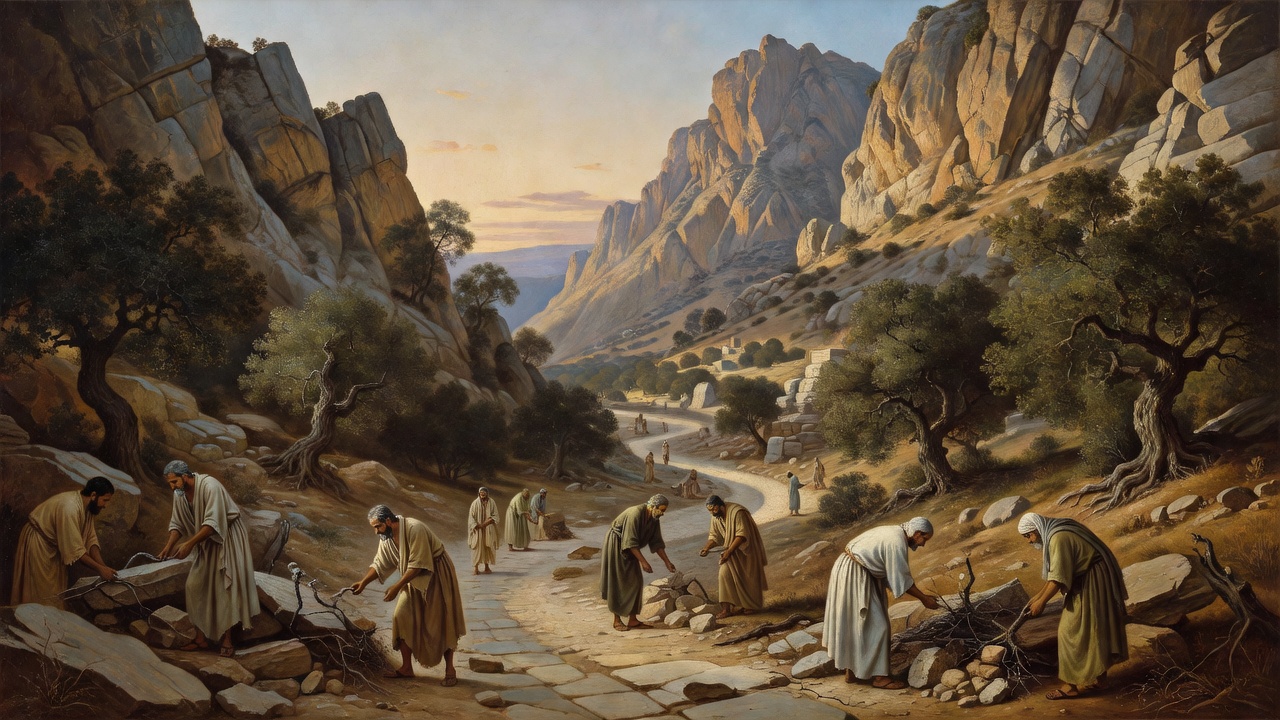
- The chapter sharply rebukes specific idolatrous practices, including pagan rites beneath sacred oaks, ritual drink offerings poured out to smooth stones in valleys, and child sacrifices offered in the clefts of the rocks.Sources: the Bible text itself
- In contrast to distant deities, the text presents the eternal and holy God as choosing to dwell not only in a high and holy place, but also among the lowly, oppressed, and contrite in spirit to restore and heal them.Sources: the Bible text itself
Notes written with AI assistance from open sources (Theographic Bible Metadata, CC BY-SA 4.0; Easton’s Bible Dictionary, public domain) and reviewed before publishing.
Credits and license for this translation
Tupàn ze'eg
Bible without Deuterocanon in Guajajára (BR:gub:Guajajára)
copyright © 2007 Wycliffe Bible Translators, Inc.
Language: Guajajára
Translation by: Wycliffe Bible Translators, Inc.
Guajajára [gub], Brazil
Copyright Information
© 2007, Wycliffe Bible Translators, Inc. All rights reserved.
This translation text is made available to you under the
terms of the Creative Commons License: Attribution-Noncommercial-No Derivative Works.
( http://creativecommons.org/licenses/by-nc-nd/3.0/ )
In addition, you have permission to port the text to different file formats, as long as you
do not change any of the text or punctuation of the Bible.
You may share, copy, distribute, transmit, and extract portions
or quotations from this work, provided that you include the above copyright
information:
You must give Attribution to the work.
You do not sell this work for a profit.
You do not make any derivative works that change any of the actual words or punctuation of the Scriptures.
Permissions beyond the scope of this license may be
available if you contact
us with your request.
Printed book ISBN 9788531109713
The Bible without Deuterocanon
in Guajajára
© 2007, Wycliffe Bible Translators, Inc. All rights reserved.
This translation is made available to you under the terms of the
Creative Commons Attribution-Noncommercial-No Derivatives license 4.0.
You may share and redistribute this Bible translation or extracts from it in any format, provided that:
You include the above copyright and source information.
You do not sell this work for a profit.
You do not change any of the words or punctuation of the Scriptures.
Pictures included with Scriptures and other documents on this site are licensed just for use with those Scriptures and documents.
For other uses, please contact the respective copyright owners.
2020-03-30
Source: http://ebible.org/gubBl/ · eBible.org