Isaiah 56
Tupàn ze'eg · Tap a verse to see its cross-references.
Tupàn umume'u uze'eg amo ae ywy rehe har wanupe
1Tupàn Tuweharupi Wiko Ma'e uze'eg wemiaihu wanupe.
— Peiko katu haw rehe nehe.
Pezapo ikatu ma'e nehe.
Nan kwehe tete apupyro putar nehe, hekàgaw purupyro ma'e hexak kar pà nehe.
2Ze'eg mytu'u haw 'ar rehe har heruzar har hurywete putar wà nehe.
Hurywete putar ikatu 'ym ma'e iapo 'ymar wà no.
3Tuwe amo ywy rehe har Tupàn Tuweharupi Wiko Ma'e imuwete har
nuze'eg kwaw nezewe nehe. — Tupàn hemuhem kar putar wemiaihu wanuwi a'e nehe, tuwe ni'i kwaw nehe.
Tuwe awa wa'yr haw rehe upuner 'ym ma'e nuze'eg kwaw nezewe uzeupe nehe.
— Napuner kwaw hera'yr haw rehe ihe,
a'e rupi naiko kwaw Tupàn hemiaihu romo ihe, tuwe ni'i kwaw nehe.
4Tupàn Tuweharupi Wiko Ma'e uze'eg nezewe a'e awa wanupe a'e.
— Peruzar heze'eg mytu'u haw 'ar rehe har nehe.
Pezapo hemurywete kar haw nehe.
Pezuhaw zo heze'egaw nehe.
5Aze amo agwer awa uzapo nezewe haw nehe,
izupe heremimono ràm ikatu wera'u putar ta'yr wi izupe nehe, tazyr wi izupe nehe no.
Amuapyk kar putar her heràpuzuhu rehe nehe.
Wiko putar heremiaihu wainuromo har romo tuweharupi nehe.
Teko naheharaz pixik kwaw her wi a'e wà nehe.
6Tupàn Tuweharupi Wiko Ma'e uze'eg nezewe amo ywy rehe har Tupàn Tuweharupi Wiko Ma'e imuwete har wanupe,
iamutar katu har wanupe, hemiapo putar haw tuweharupi iapo har wanupe.
— Aze peruzar ze'eg mytu'u haw 'ar rehe har nehe,
aze napezuhaw kwaw heze'egaw nehe,
7Apueraha putar ywytyr herenaw ikatuahy ma'e pe nehe.
Penurywete putar heràpuzuhu pupe nehe, ihewe teko waze'egaw pupe nehe.
Pepuner putar ma'ea'yr hapy haw rehe heruwa rupi nehe.
Pepuner ma'e imur haw rehe ihewe nehe, ma'ea'yr hapy haw rehe penemimono imur haw rehe ihewe nehe.
— Teko ywy nànànar Tupàn pe waze'egaw a'e,
i'i putar teko heràpuzuhu pe wà nehe.
8Arur putar amo teko Izaew ywy rehe ihe wà nehe.
Amono'og putar a'e teko heremiaihu heremimuzewyr karer wainuinuromo ihe wà nehe.
Nezewe uze'eg zanezar Tupàn Tuweharupi Wiko Ma'e.
A'e ae weruzewyr wemiaihu Izaew ywy rehe wà.
Amo ae ywy rehe ipyhyk pyrer romo wanekon a'e wà.
Tupàn uzepyk Izaew wanuwihaw wanehe
9Tupàn Tuweharupi Wiko Ma'e uze'eg nezewe.
— Pezur nehe, miar hehaite ma'e wà.
Pe'u hereimaw pezuwà nehe.
10Heremiaihu wanehe uzekaiw ma'e nahehàpyhà kwaw wà.
Nuexak kwaw ma'e wà.
Paw rupi nuzawy kwaw zawar uze'eg 'ym ma'e wà. Wiko zawar heihemaw rehe upuner 'ym ma'e ài wà.
Tuweharupi u'ar uker pà wà.
A'e uzekaiw ma'e iranahy wà. Uker tuweharupi wà. Upuahu tetea'u wà no.
11'Aw zawar zàwenugar umai'u tetea'u ma'e romo wanekon wà.
Tuweharupi uputar amo wemi'u ràm wà.
Hereimaw wamono'ogar nukwaw kwaw ma'e wà.
Pitàitàigatu oho wape rupi wà.
Xo uma'e rehe zo ima'enukwaw wà.
12Uze'eg nezewe uzeupeupe wà.
— Xikar win nehe. Xikar kàwiahy nehe no.
Zaka'u tuwe nehe.
Pyhewe xiapo wi wi nezewe haw nehe no.
Tuwe pyhewe zaneka'u àwàm uhua'u wera'u kutàri zaneka'u awer wi a'e nehe: i'i wà,
i'i Tupàn.
Did you know?
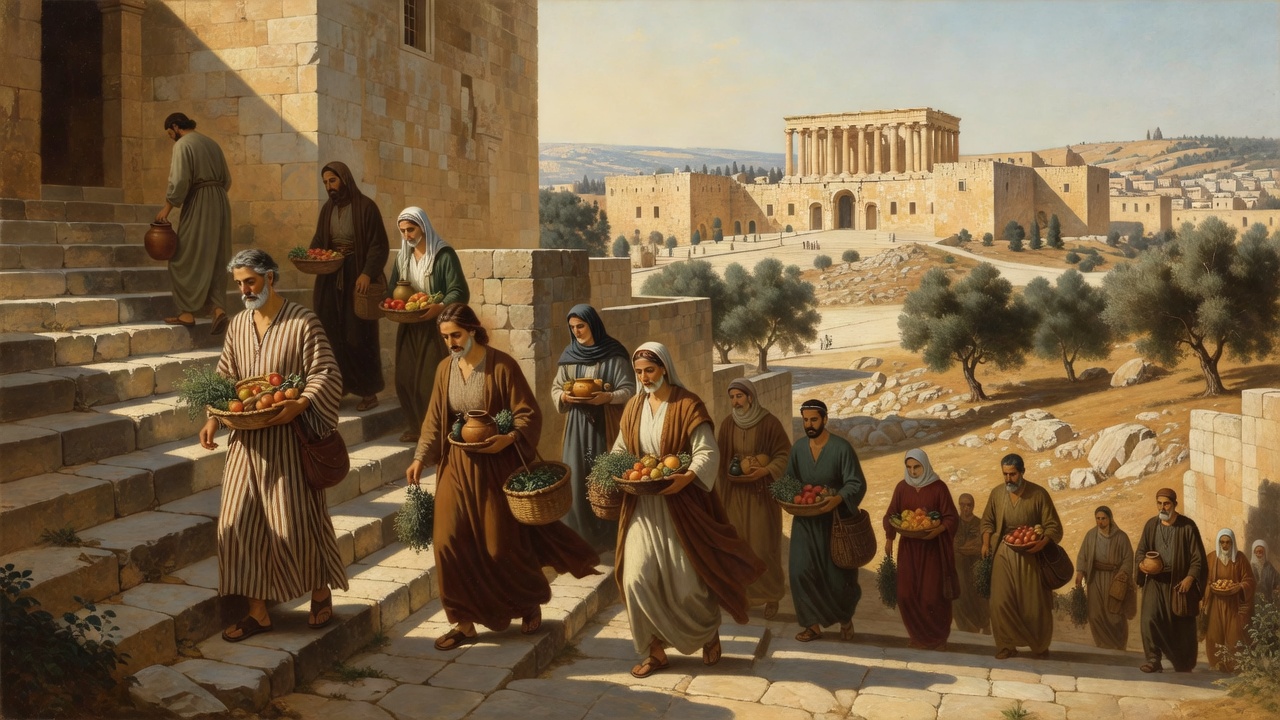
A House of Prayer for All Nations
- Isaiah 56 explicitly welcomes foreigners and eunuchs who honor the Sabbath and keep God's covenant, promising them an everlasting name and declaring that God's house will be called a house of prayer for all nations.Sources: the Bible text itself
- In sharp contrast to the faithful foreigners who join the Lord, the passage reproaches Israel's leaders and watchmen, describing them as blind, mute dogs and self-indulgent shepherds pursuing their own gain and drink.Sources: the Bible text itself
- Historical records of biblical chronology date the start of Isaiah's prophetic activity to around 758 BC, spanning a duration of approximately 62 years.Sources: Prophecies of Isaiah
Notes written with AI assistance from open sources (Theographic Bible Metadata, CC BY-SA 4.0; Easton’s Bible Dictionary, public domain) and reviewed before publishing.
Places in this chapter
- Jerusalem · 31.777, 35.234 · verse 7
Only places identified with high confidence are shown (90% or more according to the scholarly sources compiled by OpenBible). Period map: DARE (Digital Atlas of the Roman Empire), CC BY 4.0; modern map: © OpenStreetMap contributors; places: OpenBible.info (CC BY 4.0).
Credits and license for this translation
Tupàn ze'eg
Bible without Deuterocanon in Guajajára (BR:gub:Guajajára)
copyright © 2007 Wycliffe Bible Translators, Inc.
Language: Guajajára
Translation by: Wycliffe Bible Translators, Inc.
Guajajára [gub], Brazil
Copyright Information
© 2007, Wycliffe Bible Translators, Inc. All rights reserved.
This translation text is made available to you under the
terms of the Creative Commons License: Attribution-Noncommercial-No Derivative Works.
( http://creativecommons.org/licenses/by-nc-nd/3.0/ )
In addition, you have permission to port the text to different file formats, as long as you
do not change any of the text or punctuation of the Bible.
You may share, copy, distribute, transmit, and extract portions
or quotations from this work, provided that you include the above copyright
information:
You must give Attribution to the work.
You do not sell this work for a profit.
You do not make any derivative works that change any of the actual words or punctuation of the Scriptures.
Permissions beyond the scope of this license may be
available if you contact
us with your request.
Printed book ISBN 9788531109713
The Bible without Deuterocanon
in Guajajára
© 2007, Wycliffe Bible Translators, Inc. All rights reserved.
This translation is made available to you under the terms of the
Creative Commons Attribution-Noncommercial-No Derivatives license 4.0.
You may share and redistribute this Bible translation or extracts from it in any format, provided that:
You include the above copyright and source information.
You do not sell this work for a profit.
You do not change any of the words or punctuation of the Scriptures.
Pictures included with Scriptures and other documents on this site are licensed just for use with those Scriptures and documents.
For other uses, please contact the respective copyright owners.
2020-03-30
Source: http://ebible.org/gubBl/ · eBible.org