Ecclesiastes 3
Tupàn ze'eg · Tap a verse to see its cross-references.
Heta 'ar ma'e uzeapo ma'e paw wanupe
1Ma'e ko ywy rehe har paw uzeapo u'ar mehe wà.
Pitàitàigatu heta wa'ar wanupe.
2Zazexak kar zanezexak kar haw 'ar mehe. Zamàno zanemàno haw 'ar mehe no.
Xiutym ma'eà'yz itymaw 'ar mehe. Xio'ok hezuz ma'e i'okaw 'ar mehe no.
3Puruzuka ma'e uzuka teko puruzuka haw 'ar mehe wà. Ximukatu teko wamukatu haw 'ar mehe zane wà no.
Xityk tàpuz heitykaw 'ar mehe. Xiapo tàpuz iapo haw 'ar mehe.
4Zazemumikahy zanezemumikahy haw 'ar mehe. Zanerurywete zanerurywete haw 'ar mehe no.
Zazai'o zanezai'o haw 'ar mehe. Zapynyk zanepynykaw 'ar mehe no.
5Ximuhàz ita wamuhàz haw 'ar mehe. Ximono'og ita wamono'ogaw 'ar mehe no.
Xiàzuwàn teko waàzuwànaw 'ar mehe. Zatyryk teko wanuwi zanetyrykaw 'ar mehe no.
6Xikar ma'e hekar haw 'ar mehe. Xityk ma'e heitykaw 'ar mehe no.
Ximono'og temetarer imono'ogaw 'ar mehe. Ximuhàmuhàz temetarer imuhàmuhàz haw 'ar mehe no.
7Ximu'i pàn imu'i haw 'ar mehe. Ximuwywyk pàn imuwywykaw 'ar mehe no.
Zapytu'u zaneze'eg ire zanepytu'u haw 'ar mehe. Zaze'eg zaneze'egaw 'ar mehe no.
8Xiamutar katu teko wamutar katu haw 'ar mehe zane wà. Nazaneakatuwawahy kwaw teko wanehe zaneakatuwawahy 'ymaw 'ar mehe no.
Zaha zeàmàtyry'ymawhu pe i'ar mehe. Zapytu'u amo wàmàtyry'ym ire zanepytu'u haw 'ar mehe no.
9Teko uma'ereko tetea'u tuweharupi wà, ma'e imono'og iputar wà nehe. Ma'e upyhyk wà. 10Tupàn omono ma'ereko haw teko wanupe a'e. A'e rupi heta ma'e wanupe wanemiapo ràm romo. Aexak agwer ma'e paw ihe. 11Tupàn umume'u ma'e i'ar pitàitàigatu ikatu ma'e a'e, pitàitàigatu a'e. Zanepurukwaw wer uzeapo ma'e kwer rehe zane, ta'e Tupàn ipurukwaw kar wer hehe zanewe a'e xe. Zanepurukwaw wer uzeapo ma'e ràm rehe no. Nezewe rehe we Tupàn nukwaw katu kar kwaw wemiapo upaw rupi zanewe a'e. 12A'e rupi akwaw ko ma'e ihe. Xo pitài ma'e iapo katu haw rehe zo ikatu teko wanupe wà. Xikar zanerurywete haw nehe. Zazeagaw zanereko katu wera'u haw rehe nehe no.
13Zane paw rupi zane nehe, zamai'u nehe, xi'u ma'ywa tykwer nehe, zanerurywete zaneremetarer zaneremimono'ogwer rehe nehe. Tupàn umur e agwer ma'e zanewe. 14Akwaw Tupàn hemiapo kwer ipaw pixik 'ym àwàm ihe. Nazapuner kwaw ma'e Tupàn hemiapo kwer rehe imono we haw rehe. Nazapuner kwaw ma'e i'okaw rehe izuwi no. Na'aw amo Tupàn hemiapo xe: Umukyze kar teko uzewi a'e wà. 15Aze amo ma'e upuner uzeapo haw rehe, uzeapo ko 'ar 'ym mehe we a'e. Tupàn umuzeapo wi kar uzeapo ma'e kwer a'e.
Ikatu 'ym ma'e teko ywy rehe har paw uzapo waiko wà
16Ko ywy rehe aexak ko ma'e ihe no: Aze hepurexak wer pureruze'egatu haw rehe amo me, aexak ikatu 'ymaw a'e pe ihe. 17A'e rupi aze'eg nezewe hezeupe. — Tupàn umume'u putar ikatu ma'e iapo har wanehe nehe. Uzepyk putar ikatu 'ym ma'e wanehe nehe no. Ta'e ma'e ko ywy rehe har paw upaw putar wà nehe xe. Zaneremiapo paw uzeapo a'e wà, uzeapo haw 'ar mehe a'e wà. 18A'e rupi akwaw ko ma'e no. Tupàn wagaw teko wanereko a'e wà. Nezewe mehe teko uze'eg nezewe uzeupe wà. — Nazanekatu wera'u kwaw ma'ea'yr wanuwi zane, i'i uzeupe wà. 19Iahykaw rehe teko wanupe uzeapo ma'e nuzawy kwaw ma'ea'yr wanupe uzeapo ma'e. Teko umàno wà. Ma'ea'yr umàno wà no. Teko waneko haw na'ikatu wera'u kwaw ma'ea'yr waneko haw wi. Aze teko na'ipytuhem kwaw wà, umàno wà. Aze ma'ea'yr na'ipytuhem kwaw wà, umàno wà no. Paw rupi uzeapo na'arewahy ukàzym ma'e ràm. Ta'e a'e ma'e paw nuzawy kwaw ywytu ipyhykaw rehe zaneze'egaw. 20Teko wiko putar ywy romo wà. Ma'ea'yr wiko putar ywy romo wà no. Zuawygatu waneko àwàm. Teko ur ywy wi wà. Uzewyr putar a'e pe wà nehe no. Ma'ea'yr ur ywy wi wà no. Uzewyr putar a'e pe wà nehe no. 21— Teko hekwe uzeupir imàno re. Ma'ea'yr wezyw imàno re, i'i teko wà. Aipo upuner a'e ma'e ikwaw katu haw rehe wà. 22A'e rupi akwaw ko ma'e. Naheta kwaw ikatu wera'u ma'e ma'ereko haw purumurywete kar haw wi. Zanema'ereko haw uzeapo zanerurywete haw hekuzaromo. Ma'e xiapo putar zanemàno re nehe, uzeapo ma'e ràm ikwaw pà nehe.
Did you know?
A Time for Every Season
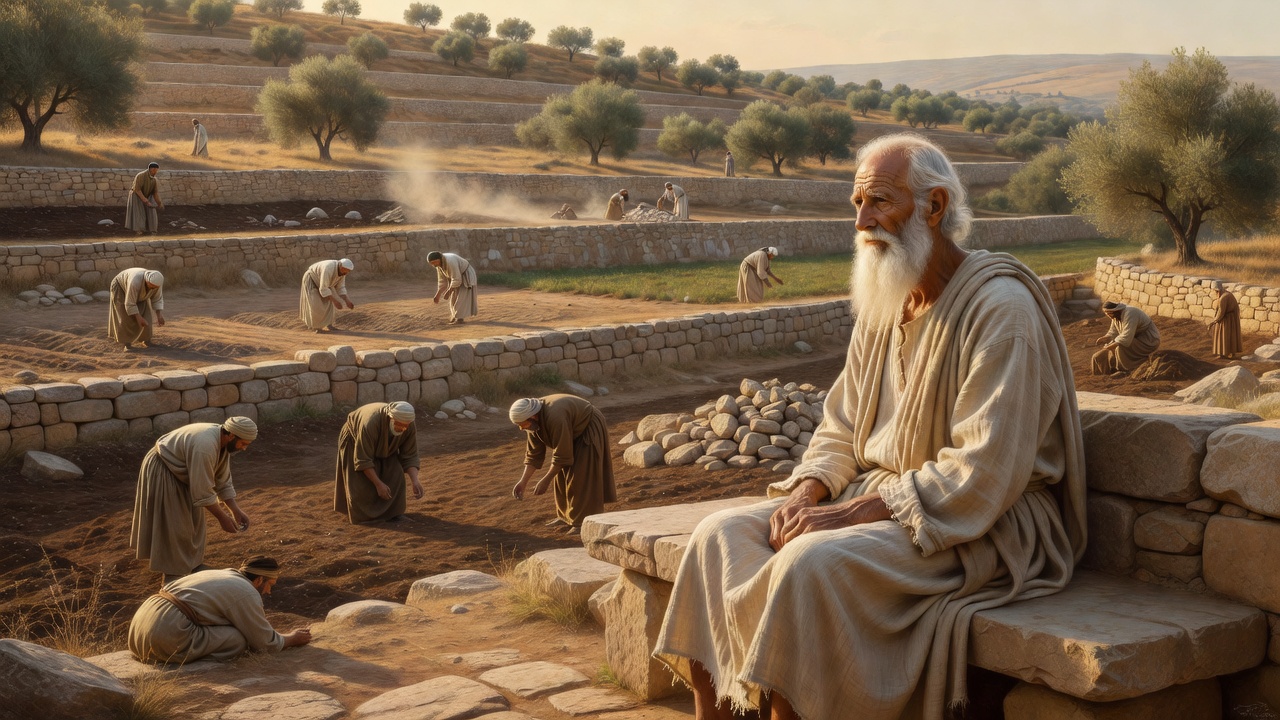
- The chapter opens with a famous poem of fourteen pairs of contrasting opposites, spanning birth and death, planting and uprooting, mourning and dancing, and war and peace. This literary structure illustrates the complete spectrum of human experience appointed under heaven.Sources: the Bible text itself
- The author observes that God has placed eternity in the human heart, yet mortals remain unable to fully comprehend what God does from beginning to end.Sources: the Bible text itself
- Reflecting on mortality, the text notes that both humans and beasts return to the dust. In light of this shared physical fate, the Teacher concludes that enjoying one's daily labor, food, and drink is a gift from God.Sources: the Bible text itself
Notes written with AI assistance from open sources (Theographic Bible Metadata, CC BY-SA 4.0; Easton’s Bible Dictionary, public domain) and reviewed before publishing.
Credits and license for this translation
Tupàn ze'eg
Bible without Deuterocanon in Guajajára (BR:gub:Guajajára)
copyright © 2007 Wycliffe Bible Translators, Inc.
Language: Guajajára
Translation by: Wycliffe Bible Translators, Inc.
Guajajára [gub], Brazil
Copyright Information
© 2007, Wycliffe Bible Translators, Inc. All rights reserved.
This translation text is made available to you under the
terms of the Creative Commons License: Attribution-Noncommercial-No Derivative Works.
( http://creativecommons.org/licenses/by-nc-nd/3.0/ )
In addition, you have permission to port the text to different file formats, as long as you
do not change any of the text or punctuation of the Bible.
You may share, copy, distribute, transmit, and extract portions
or quotations from this work, provided that you include the above copyright
information:
You must give Attribution to the work.
You do not sell this work for a profit.
You do not make any derivative works that change any of the actual words or punctuation of the Scriptures.
Permissions beyond the scope of this license may be
available if you contact
us with your request.
Printed book ISBN 9788531109713
The Bible without Deuterocanon
in Guajajára
© 2007, Wycliffe Bible Translators, Inc. All rights reserved.
This translation is made available to you under the terms of the
Creative Commons Attribution-Noncommercial-No Derivatives license 4.0.
You may share and redistribute this Bible translation or extracts from it in any format, provided that:
You include the above copyright and source information.
You do not sell this work for a profit.
You do not change any of the words or punctuation of the Scriptures.
Pictures included with Scriptures and other documents on this site are licensed just for use with those Scriptures and documents.
For other uses, please contact the respective copyright owners.
2020-03-30
Source: http://ebible.org/gubBl/ · eBible.org