Deuteronomy 23
Tupàn ze'eg · Tap a verse to see its cross-references.
Teko Tupàn hemiaihu romo wiko haw rehe upuner 'ym ma'e wà
1Uze'eg Moizez teko wanupe. — Aze amo o'ok amo awa hapi'a izuwi nehe, aze ru'u uzaikaw ima'e izuwi nehe, a'e awa nupuner kwaw Tupàn Tuweharupi Wiko Ma'e hemiaihu romo weko haw rehe nehe.
2Ni amo ta'yragaw nupuner kwaw Tupàn Tuweharupi Wiko Ma'e hemiaihu romo weko haw rehe nehe. Izuapyapyr nupuner kwaw Tupàn Tuweharupi Wiko Ma'e hemiaihu romo weko haw rehe wà nehe no. Xo 10 haw teko wazuapyapyr pawire zo upuner putar wà nehe.
3Ni amo Amon izuapyapyr wà, ni amo Moaw izuapyapyr wà, te 10 haw teko wazuapyr nupuner kwaw Tupàn Tuweharupi Wiko Ma'e hemiaihu romo weko haw rehe nehe. Wiko putar hemiaihu 'ym romo wà nehe. 4Ta'e Ezit wi pehem mehe numur kwaw temi'u peme wà xe. Numur kwaw 'y peme wà no. Omono temetarer Màrààw Meor ta'yr Petor Mezopotàm ywy rehe har pe wà. — Emono ze'egaiw Izaew wanehe nehe, i'i izupe wà. 5Tupàn Tuweharupi Wiko Ma'e Zanezar nuzekaiw kwaw Màrààw heminozgwer rehe a'e. Tupàn uzapo ze'egaiw ze'egatu romo a'e, ta'e peamutar katu a'e xe. 6Pezapo pixik zo ikatu ma'e a'e teko wanupe nehe. Pepytywà pixik zo pe wà nehe.
7— Ikàg 'ym ma'e, peze zo Enom ywy rehe har wanupe nehe. Ta'e wiko peànàm romo a'e wà xe. — Ikàg 'ym ma'e, peze zo Ezit ywy rehe har wanupe nehe. Ta'e peiko amo ywy rehe arer romo wainuinuromo pe xe. 8Enom wanemimino peinuinuromo wiko ma'e wà nehe, Ezit wanemimino peinuinuromo wiko ma'e wà nehe no, upuner Tupàn Tuweharupi Wiko Ma'e hemiaihu romo weko haw rehe wà nehe no.
Waneko haw imukatu haw
9Zeàmàtyry'ymawhu pe peho mehe pemuapyk penàpuzràn peker haw romo. A'e 'ar mehe petyryk ikatu 'ym ma'e wi nehe. 10Aze pyhaw amo awa wiko ikatu 'ym ma'e romo Tupàn henataromo wa'yrer imuhem e awer rehe nehe, ku'em mehe uhem putar zauxiapekwer waker haw wi nehe. 11Karuk mehe uzahak putar nehe. Karuketea'i mehe uzewyr putar uker haw pe nehe.
12Pekar ywypehegwer katu pe peker haw wi nehe, ka'apaw romo karukaw romo nehe. 13Petakihe rehe we peywyrapar rehe we peraha kuzehu ywy imomor haw nehe. Pezapo ywykwar nehe. A'e re pezupyk penepuxi kwer nehe.
14Tupàn Tuweharupi Wiko Ma'e Zanezar wiko peker haw pe penehe uzekaiw pà a'e. Weityk kar putar peàmàtyry'ymar peme wà nehe. A'e rupi pemukatu peker haw nehe. Nezewe mehe Tupàn nuexak kwaw iro ma'e a'e pe nehe. Nezewe mehe nuhem kwaw pewi peneityk pà nehe.
Amo Tupàn hemiapo kar no
15Aze amo pe uma'ereko e ma'e uzàn uzar wi nehe, — Hepyro pe nehe, aze i'i newe nehe, emono zo izar pe nehe. 16Tuwe wiko wyzài tawhu Izaew waneko haw pupe nehe, aze ikatu a'e tawhu pe har wanupe nehe. Ni amo nupuner kwaw ma'erahy ipuraraw kar pà izupe wà nehe.
17Kuzà Izaew nuiko pixik kwaw kuzà wyzài romo tupàn a'ua'u wanàpuzuhu pe wà nehe. Awa Izaew nuiko pixik kwaw awa wyzài romo tupàn a'ua'u wanàpuzuhu pe wà nehe. 18Aze amo omono'og temetarer agwer ma'e iapo pà nehe, nupuner kwaw heraha haw rehe Tupàn Tuweharupi Wiko Ma'e hàpuzuhu pe nehe. Nupuner kwaw wemimono ràm wemimume'u kwer imekuzar haw rehe nezewe nehe. A'e temetarer iroahy Tupàn pe. Na'iakatuwawahy kwaw hehe a'e.
19Aze eremono ma'e amo Izaew pe nehe: temetarer, temi'u wyzài ma'e, — Emuzewyr ihewe amo 'ar mehe nehe, aze ere izupe nehe, — Emur imemyr ihewe a'e 'ar mehe nehe, ere zo izupe nehe. 20Pepuner temetarer imemyr henoz taw rehe amo ywy rehe har pe nehe. Penoz zo wyzài Izaew pe nehe. Nezewe mehe Tupàn Tuweharupi Wiko Ma'e Zanezar omono putar uze'egatu neremiapo nànàn nehe, ywy penemipyhyk ràm rehe peneko mehe nehe.
21Aze eremume'u neremiapo ràm Tupàn Tuweharupi Wiko Ma'e Zanezar pe nehe, tuwe na'iàrew kwaw iapo àwàm nehe. Tupàn uputar iapo àwàm a'e. Uzapo kar imume'u arer pe. Aze nerezapo kwaw neremimume'u kwer nehe, ikatu 'ym ma'e iapo har romo ereiko Tupàn henataromo nehe. 22Aze neremume'u kwaw neremiapo ràm Tupàn henataromo nehe, nereiko kwaw ikatu 'ym ma'e iapo har romo. 23Aze eremume'u nehe, aze amo numume'u kar kwaw newe nehe, a'e mehe ezapo tuwe a'e ma'e nehe.
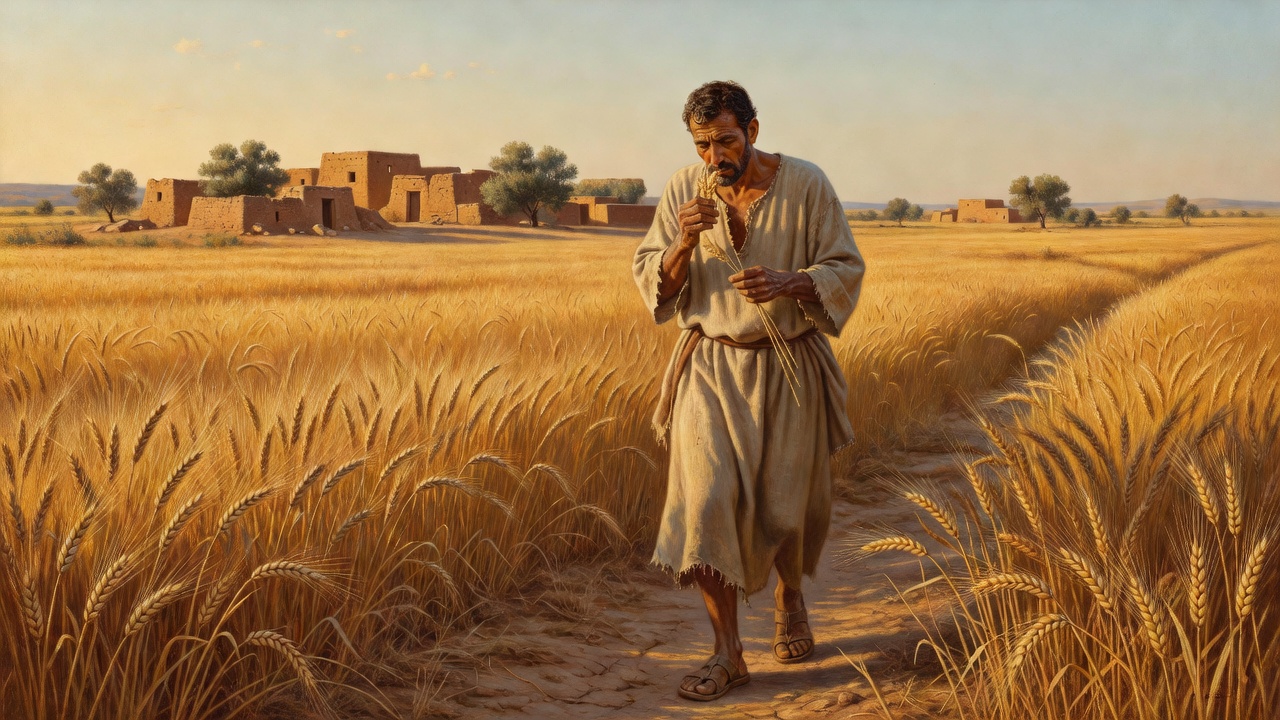
24Aze ereata amo pe rupi nehe, aze a'e pe ereahaw amo ma'ywa uwà tyw nehe, aze amo Izaew wiko izar romo a'e nehe, erepuner uwà i'u haw rehe neremimutar rupi nehe. Eraha zo amo a'e wi kok pupe nehe. 25Aze ereahaw ko arozràn tupaw nehe, aze ru'u arozràn xewar her ma'e tupaw nehe, aze amo Izaew wiko izar romo nehe, erepuner haryw i'u haw rehe neremimutar rupi nepo pupe nehe. Emonohok zo takiheapar pupe nehe.
Did you know?
Community Purity and Social Laws
- Ammonites and Moabites were excluded from the assembly because they withheld food and water and hired Balaam son of Beor against Israel. Balaam came from Pethor in Aram-naharaim (Mesopotamia), a region between the Tigris and Euphrates rivers where Pethor is identified with the ancient site of Pitru.Sources: the Bible text itself · Balaam · Pethor · Mesopotamia
- In contrast to the exclusion of Ammon and Moab, Israelites were instructed not to despise Edomites, whom they regarded as kin, or Egyptians, among whom they had lived as foreigners. Descendants of the third generation from both groups were permitted to enter the assembly of the Lord.Sources: the Bible text itself · Egypt
- The chapter outlines distinct social and military protections, including granting refuge to runaway foreign slaves rather than returning them to their masters. It also permitted hungry travelers to eat grapes or pluck grain by hand in a neighbor's field, provided they did not gather surplus into containers or use a sickle.Sources: the Bible text itself
Notes written with AI assistance from open sources (Theographic Bible Metadata, CC BY-SA 4.0; Easton’s Bible Dictionary, public domain) and reviewed before publishing.
Places in this chapter
- Egypt · 30.129, 31.308 · verse 4
- Mesopotamia · Today: Aram-naharaim · 36.864, 39.033 · verse 4
- Pethor · Today: Til Barsip · 36.701, 38.087 · verse 4
Only places identified with high confidence are shown (90% or more according to the scholarly sources compiled by OpenBible). Period map: DARE (Digital Atlas of the Roman Empire), CC BY 4.0; modern map: © OpenStreetMap contributors; places: OpenBible.info (CC BY 4.0).
Credits and license for this translation
Tupàn ze'eg
Bible without Deuterocanon in Guajajára (BR:gub:Guajajára)
copyright © 2007 Wycliffe Bible Translators, Inc.
Language: Guajajára
Translation by: Wycliffe Bible Translators, Inc.
Guajajára [gub], Brazil
Copyright Information
© 2007, Wycliffe Bible Translators, Inc. All rights reserved.
This translation text is made available to you under the
terms of the Creative Commons License: Attribution-Noncommercial-No Derivative Works.
( http://creativecommons.org/licenses/by-nc-nd/3.0/ )
In addition, you have permission to port the text to different file formats, as long as you
do not change any of the text or punctuation of the Bible.
You may share, copy, distribute, transmit, and extract portions
or quotations from this work, provided that you include the above copyright
information:
You must give Attribution to the work.
You do not sell this work for a profit.
You do not make any derivative works that change any of the actual words or punctuation of the Scriptures.
Permissions beyond the scope of this license may be
available if you contact
us with your request.
Printed book ISBN 9788531109713
The Bible without Deuterocanon
in Guajajára
© 2007, Wycliffe Bible Translators, Inc. All rights reserved.
This translation is made available to you under the terms of the
Creative Commons Attribution-Noncommercial-No Derivatives license 4.0.
You may share and redistribute this Bible translation or extracts from it in any format, provided that:
You include the above copyright and source information.
You do not sell this work for a profit.
You do not change any of the words or punctuation of the Scriptures.
Pictures included with Scriptures and other documents on this site are licensed just for use with those Scriptures and documents.
For other uses, please contact the respective copyright owners.
2020-03-30
Source: http://ebible.org/gubBl/ · eBible.org