Romans 16
Η Καινή Διαθήκη · Tap a verse to see its cross-references.
Personal Greetings
1Συνίστημι δὲ ὑμῖν Φοίβην τὴν ἀδελφὴν ἡμῶν, οὖσαν διάκονον τῆς ἐκκλησίας τῆς ἐν Κεγχρεαῖς, 2ἵνα αὐτὴν προσδέξησθε ἐν Κυρίῳ ἀξίως τῶν ἁγίων καὶ παραστῆτε αὐτῇ ἐν ᾧ ἂν ὑμῶν χρῄζῃ πράγματι, καὶ γὰρ αὐτὴ προστάτις πολλῶν ἐγενήθη καὶ αὐτοῦ ἐμοῦ.
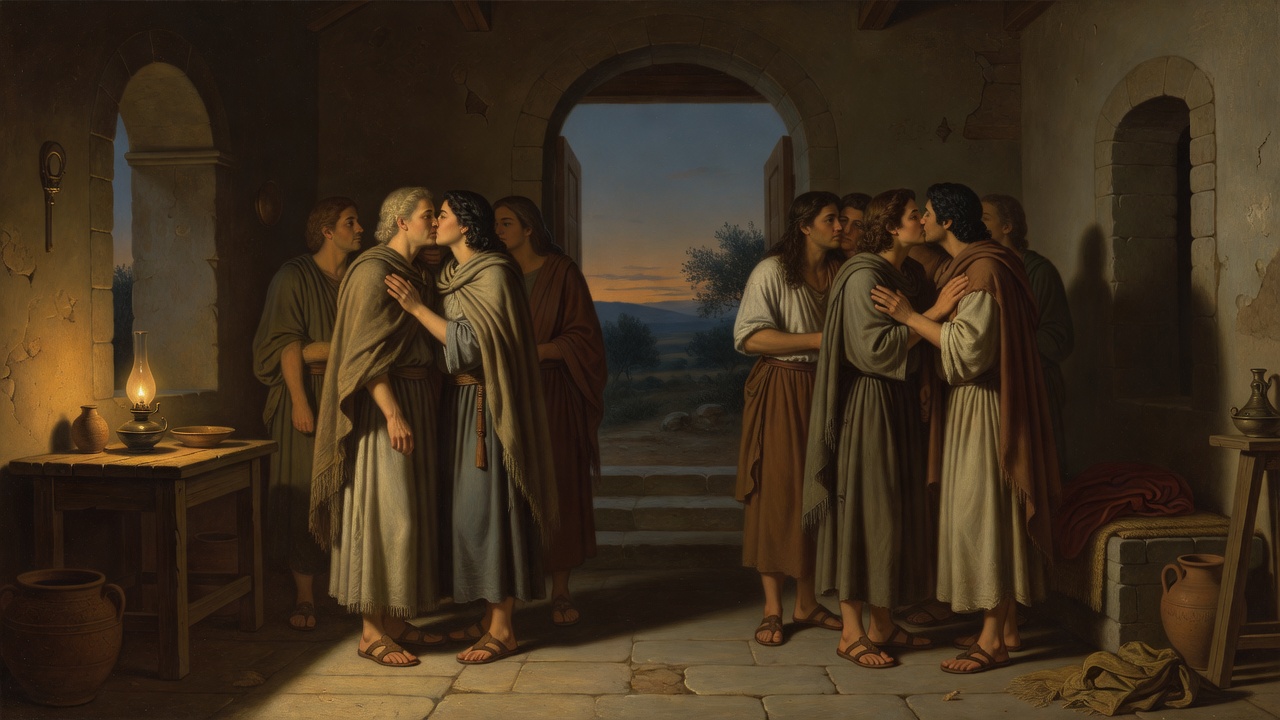
3Ἀσπάσασθε Πρίσκαν καὶ Ἀκύλαν τοὺς συνεργούς μου ἐν Χριστῷ Ἰησοῦ, 4οἵτινες ὑπὲρ τῆς ψυχῆς μου τὸν ἑαυτῶν τράχηλον ὑπέθηκαν, οἷς οὐκ ἐγὼ μόνος εὐχαριστῶ ἀλλὰ καὶ πᾶσαι αἱ ἐκκλησίαι τῶν ἐθνῶν, 5καὶ τὴν κατ᾽ οἶκον αὐτῶν ἐκκλησίαν. ἀσπάσασθε Ἐπαίνετον τὸν ἀγαπητόν μου, ὅς ἐστιν ἀπαρχὴ τῆς Ἀχαΐας εἰς Χριστόν. 6ἀσπάσασθε Μαριάμ, ἥτις πολλὰ ἐκοπίασεν εἰς ἡμᾶς. 7ἀσπάσασθε Ἀνδρόνικον καὶ Ἰουνίαν τοὺς συγγενεῖς μου καὶ συναιχμαλώτους μου, οἵτινές εἰσιν ἐπίσημοι ἐν τοῖς ἀποστόλοις, οἳ καὶ πρὸ ἐμοῦ γεγόνασιν ἐν Χριστῷ. 8ἀσπάσασθε Ἀμπλίαν τὸν ἀγαπητόν μου ἐν Κυρίῳ. 9ἀσπάσασθε Οὐρβανὸν τὸν συνεργὸν ἡμῶν ἐν Χριστῷ καὶ Στάχυν τὸν ἀγαπητόν μου. 10ἀσπάσασθε Ἀπελλῆν τὸν δόκιμον ἐν Χριστῷ. ἀσπάσασθε τοὺς ἐκ τῶν Ἀριστοβούλου. 11ἀσπάσασθε Ἡρῳδίωνα τὸν συγγενῆ μου. ἀσπάσασθε τοὺς ἐκ τῶν Ναρκίσσου τοὺς ὄντας ἐν Κυρίῳ. 12ἀσπάσασθε Τρύφαιναν καὶ Τρυφῶσαν τὰς κοπιώσας ἐν Κυρίῳ. ἀσπάσασθε Περσίδα τὴν ἀγαπητήν, ἥτις πολλὰ ἐκοπίασεν ἐν Κυρίῳ. 13ἀσπάσασθε Ῥοῦφον τὸν ἐκλεκτὸν ἐν Κυρίῳ καὶ τὴν μητέρα αὐτοῦ καὶ ἐμοῦ. 14ἀσπάσασθε Ἀσύγκριτον, Φλέγοντα, Ἑρμᾶν, Πατρόβαν, Ἑρμῆν καὶ τοὺς σὺν αὐτοῖς ἀδελφούς. 15ἀσπάσασθε Φιλόλογον καὶ Ἰουλίαν, Νηρέα καὶ τὴν ἀδελφὴν αὐτοῦ, καὶ Ὀλυμπᾶν καὶ τοὺς σὺν αὐτοῖς πάντας ἁγίους. 16ἀσπάσασθε ἀλλήλους ἐν φιλήματι ἁγίῳ. ἀσπάζονται ὑμᾶς αἱ ἐκκλησίαι τοῦ Χριστοῦ.
17Παρακαλῶ δὲ ὑμᾶς, ἀδελφοί, σκοπεῖν τοὺς τὰς διχοστασίας καὶ τὰ σκάνδαλα παρὰ τὴν διδαχὴν ἣν ὑμεῖς ἐμάθετε ποιοῦντας, καὶ ἐκκλίνατε ἀπ᾽ αὐτῶν. 18οἱ γὰρ τοιοῦτοι τῷ Κυρίῳ ἡμῶν Ἰησοῦ Χριστῷ οὐ δουλεύουσιν ἀλλὰ τῇ ἑαυτῶν κοιλίᾳ, καὶ διὰ τῆς χρηστολογίας καὶ εὐλογίας ἐξαπατῶσι τὰς καρδίας τῶν ἀκάκων. 19ἡ γὰρ ὑμῶν ὑπακοὴ εἰς πάντας ἀφίκετο· χαίρω οὖν τὸ ἐφ᾽ ὑμῖν, θέλω δὲ ὑμᾶς σοφοὺς μὲν εἶναι εἰς τὸ ἀγαθόν, ἀκεραίους δὲ εἰς τὸ κακόν. 20ὁ δὲ Θεὸς τῆς εἰρήνης συντρίψει τὸν Σατανᾶν ὑπὸ τοὺς πόδας ὑμῶν ἐν τάχει. ἡ χάρις τοῦ Κυρίου ἡμῶν Ἰησοῦ Χριστοῦ μεθ᾽ ὑμῶν.
21Ἀσπάζονται ὑμᾶς Τιμόθεος ὁ συνεργός μου καὶ Λούκιος καὶ Ἰάσων καὶ Σωσίπατρος οἱ συγγενεῖς μου.
22Ἀσπάζομαι ὑμᾶς ἐγὼ Τέρτιος, ὁ γράψας τὴν ἐπιστολήν, ἐν Κυρίῳ.
23Ἀσπάζεται ὑμᾶς Γάϊος ὁ ξένος μου καὶ τῆς ἐκκλησίας ὅλης. ἀσπάζεται ὑμᾶς Ἔραστος ὁ οἰκονόμος τῆς πόλεως καὶ Κούαρτος ὁ ἀδελφός.
24Ἡ χάρις τοῦ Κυρίου ἡμῶν Ἰησοῦ Χριστοῦ μετὰ πάντων ὑμῶν.
Ἀμήν.
Did you know?
Greetings to the church in Rome
- Paul commends Phoebe, a servant of the church in Cenchrea, and asks the recipients in Rome to welcome her and help her with whatever she needs, because she has been a great help to many people, including him. Cenchrea was the eastern harbor of Corinth, about nine miles east of the city and the outlet for its trade with the Asiatic shores of the Mediterranean; Easton's Bible Dictionary (1897) says she was probably the bearer of this letter.Sources: the Bible text itself · Phebe · Cenchreae
- Paul greets Prisca and Aquila, his fellow workers in Christ Jesus, who risked their lives for him, and also the church that meets in their house; he says that not only he but all the churches of the Gentiles are grateful to them. Easton's Bible Dictionary (1897) calls her Priscilla and describes Aquila as a tent-maker from Pontus who, with his wife, left Rome because of a decree of Claudius in A.D. 50 commanding all Jews to leave the city; her name sometimes comes before his, as it does here.Sources: the Bible text itself · Priscilla · Aquila
- Near the close, Tertius, who wrote the letter down, adds his own greeting. Gaius, who has hosted Paul and all the church, also sends greetings, as do Erastus, the city treasurer, and Quartus.Sources: the Bible text itself
Notes written with AI assistance from open sources (Theographic Bible Metadata, CC BY-SA 4.0; Easton’s Bible Dictionary, public domain) and reviewed before publishing.
Places in this chapter
Only places identified with high confidence are shown (90% or more according to the scholarly sources compiled by OpenBible). Period map: DARE (Digital Atlas of the Roman Empire), CC BY 4.0; modern map: © OpenStreetMap contributors; places: OpenBible.info (CC BY 4.0).
Credits and license for this translation
Η Καινή Διαθήκη
The New Testament in Ancient Greek with critical text notes
Public Domain
Language: Ελληνικά (Greek, Ancient)
Translation by: Maurice A. Robinson
Contributor: Robert Adam Boyd
The Text-Critical Greek New Testament is based upon The New Testament in the Original Greek: Byzantine Textform 2018, compiled and arranged by Maurice A. Robinson and William G. Pierpont.
The following disclaimer is printed in the The New Testament in the Original Greek: Byzantine Textform 2018:
Anyone is permitted to copy and distribute this text or any portion of this text. It may be incorporated in a larger work, and/or quoted from, stored in a database retrieval system, photocopied, reprinted, or otherwise duplicated by anyone without prior notification, permission, compensation to the holder, or any other restrictions. All rights to this text are released to everyone and no one can reduce these rights at any time. Copyright is not claimed nor asserted for either the preface, notes, or the new and revised form of the Greek NT text of this edition, nor for the original form of such as initially released into the public domain by the editors, first as printed textual notes in 1979, continuous-text electronic form 1986–present, and in published editions from 1991, 2005, and 2010.
The permitted use or reproduction of the Greek text or other material contained within this volume (whether by print, electronic media, or other form) does not imply doctrinal or theological agreement by the present editors and publisher with whatever views may be maintained or promulgated by other publishers. For the purpose of assigning responsibility, it is requested that the present editors’ names and the title associated with this text as well as this disclaimer be retained in any subsequent reproduction of this material.
2026-10-02
Source: http://ebible.org/grctcgnt/ · eBible.org