Colossians 3
Nuevo Testamento Guaraní Pe · Tap a verse to see its cross-references.
1Tumpa umee ma peve tecove opa mbae vae Cristo ndive. Jáeramo jecuaeño pepɨa pe piyemɨngueta mbaembae ara pe ñugüɨnoi vae re. Echa'ã joco pe Cristo uguapɨ oĩ Tumpa iyɨpɨ pe iyacata cotɨ. 2Jecuaeño pepɨa pe piyemɨngueta mbaembae ara pe ñugüɨnoi vae re. Agüɨye jecuaeño pepɨa pe piyemɨngueta mbaembae ɨvɨ pe ñugüɨnoi vae reño. 3Echa'ã pemano ma ɨvɨ pegua güi, jare perecove añetete vae ime ma oĩ Cristo ndive Tumpa oĩ vae pe. Mbaetɨ quía ipuere uecha. 4Cristo co jae perecove añetete vae. Cristo uyecuaa ye yave, pe reta vi piyecuaata jare piyeroviata jae ndive.
Teco mai indechi vae jare teco mai ipɨau vae
5Jáeramo agüɨye pemaeño icove vaerã jocua teco mai ɨvɨ pegua icavi mbae vae perete pe oĩ vae. Agüɨye piyapo aguasa. Agüɨye pepɨa pe piyemɨngueta icavi mbae vae re. Agüɨye peporopotaiño. Agüɨye pipota icavi mbae vae. Agüɨye pipota ĩru vae reta imbaembae - echa'ã pipota yave, pipota ete ĩru vae reta imbaembae Tumpa güi. 6Cua icavi mbae vae jeco pegua Tumpa uiporaracata co jae jei vae uyapo'ã vae reta pe. 7Tenonde yave pe reta vi piyapose cua icavi mbae vae reta. Echa'ã picose jucuarãi piyapo vaerã. 8Ẽrei añave pemombo piyugüi opaete cua ĩru icavi mbae vae reta. Agüɨye pepochɨ. Agüɨye pearasɨ. Agüɨye piyapo icavi mbae vae piyupe. Agüɨye pere icavi mbae vae piyupe. Agüɨye pemoẽ ñee pɨchɨ̃i vae. 9Agüɨye peapu piyupe. Echa'ã pemombo ma piyugüi pereco mai indechicue pɨchɨ̃i vae jare icavi mbae vae reta piyapose vae. 10Jare pipɨsɨ ma teco mai ipɨau vae. Echa'ã cua teco mai ipɨau vae umbɨpɨauta pepɨa pe piyemɨngueta vae, picuaa cavi vaerã Tumpa regua, jare pico vaerã jae jei vae re. Echa'ã Tumpa umee peve cua teco mai ipɨau vae. 11Jare cua teco mai ipɨau vae güɨnoi vae reta ipɨte pe mbaetɨ ma uyuavɨ uyugüi judío mbae vae jare judío, uñemɨcircuncidaca vae jare uñemɨcircuncidaca mbae vae, ñanaɨgua reta, uyeyocui vae jare uyeyocui mbae vae. Echa'ã jaeño Cristo ico opaete vae ipɨa pe.
12Tumpa perau, jare peparavo peñono tee vaerã iyupeguarã. Jáeramo pico cavi. Piyeparareco. Pepɨacavi piyupe. Piñemɨmichi piyupe. Pepɨaguasu piyupe. 13Pemɨaguanta piyupe, jare piyembɨasa, ime yave quía ĩru vae mbae re umbɨjeco vae. Echa'ã yandeYa pembɨasa ma. Jae ramiño vi pe reta piyembɨasa. 14Jare piyerau. Echa'ã mburuau icavi ete opaete ĩru güi. Echa'ã piyerau yave, pico cavi eteta uyupii penti ramiño. 15Jare Tumpa ipɨacatu pepɨa pe oĩ vae tuicuaaca peve mbae icavi piyapo vaerã vae. Echa'ã cuarã Tumpa peparavo, pico vaerã penti ramiño. Jare jecuaeño pemee yasurupai Tumpa pe.
16Ñee Cristo regua jecuaeño tuico pepɨa pe. Piyemboe jare piyembɨaracuaa pearacuaa catu reve. Piyerovia reve pecanta yandeYa pe canta reta yambɨadora pɨpe vae. 17Jare mbae re piyemɨngueta yave jare mbae piyapo yave, piyemɨngueta jese jare piyapo opaete yandeYa Jesús jee re. Jare jecuaeño pemee yasurupai yandeRu Tumpa pe yandeYa Jesús rupi.
Yayeyocui yandiyupe
18Cuña reta tuyeyocui ime pe. Echa'ã icavi co jucuarãi uyapo vaerã. Echa'ã güɨrovia ma yandeYa re.
19Cuimbae reta tuau jembireco, jare agüɨye tipochɨiño chupe.
20Cunumi reta jare cuñatai reta tuyapo opaete tu jare ichɨ jei vae. Echa'ã cua icavi co yandeYa pe.
21Tu reta agüɨye tumbɨarasɨiño isambiaɨ reta, agüɨye vaerã isambiaɨ reta umbɨaquɨ.
22Uyeyocui vae reta tuyapo opaete ipatrón jei vae. Agüɨye tuyeyocui cavi ipatrón pe jae umae oĩ jese yaveño, umbɨyerovia vaerãño. Ipɨaquɨrẽɨ reve tuyeyocui chupe uipɨu reve yandeYa güi. 23Jare opaete uyapo vae, tuyapo ipɨaquɨrẽɨ reve. Tuyeyocui ipatrón pe, yandeYa pe uyeyocui rami. Echa'ã cuimbae peño'ã uyeyocui oĩ. 24Jare tuicuaa yandeYa umbɨjecoviata co chupe jocua umeeta chupe vae pe. Echa'ã uyeyocui co oĩ yandeYa Cristo pe. 25Ẽrei icavi mbae vae uyapo vae pe Tumpa umbɨjecoviata vi icavi mbae vae uyapo vae re. Echa'ã Tumpa uau'ã penti vaeño ĩru vae güi.
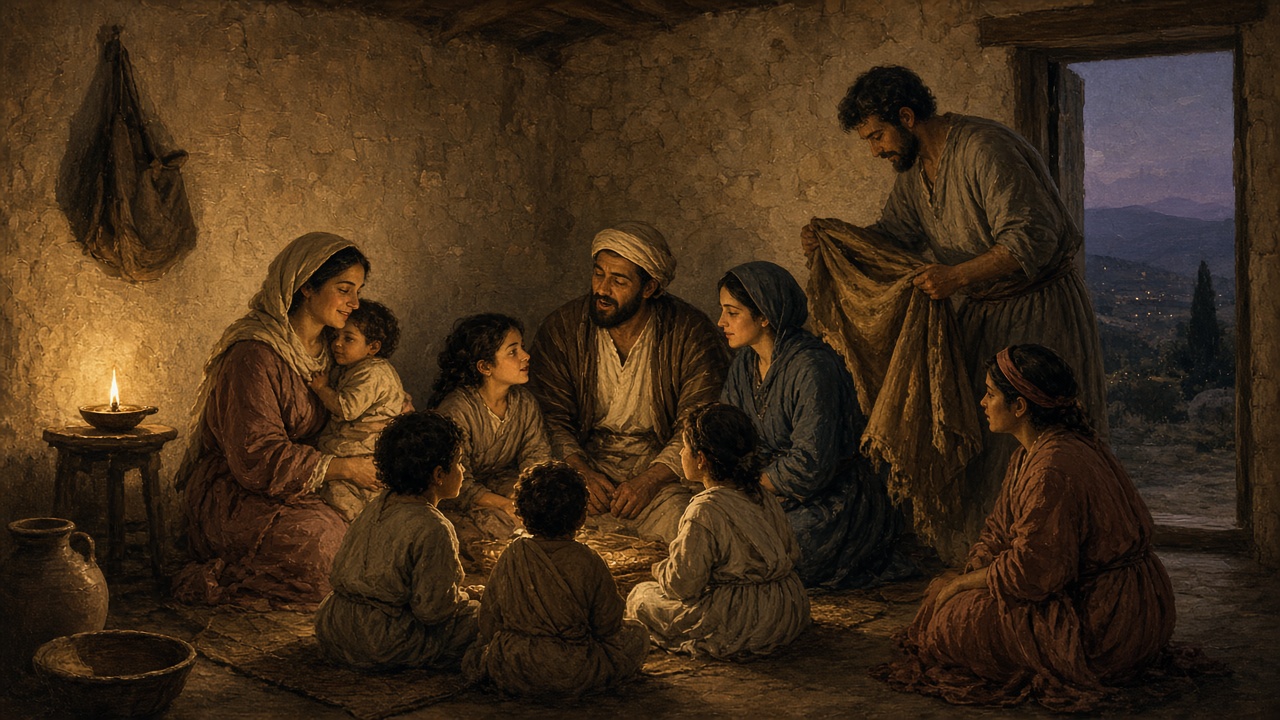
Did you know?
New life in one body and at home
- This chapter pictures a changed life as a change of clothing. Readers are said to have taken off the old self with its practices and put on the new self, which is being renewed in knowledge in the image of its Creator. They are then told to clothe themselves with hearts of compassion, kindness, humility, gentleness, and patience, and to put on love over all these virtues as the bond of perfect unity.Sources: the Bible text itself
- The chapter lists Greek and Jew, circumcised and uncircumcised, barbarian, Scythian, slave and free, and declares that here none of these distinctions remains, because Christ is all and is in all.Sources: the Bible text itself
- The chapter then gives instructions for household relationships: wives and husbands, children and parents, and slaves and their earthly masters. Fathers are warned not to provoke their children, so that the children will not become discouraged. Slaves are told to obey with sincerity of heart, not only while they are being watched, and to work with their whole being for the Lord rather than for men, with the promise of an inheritance from the Lord as a reward; whoever does wrong will be repaid, and there is no favoritism.Sources: the Bible text itself
Notes written with AI assistance from open sources (Theographic Bible Metadata, CC BY-SA 4.0; Easton’s Bible Dictionary, public domain) and reviewed before publishing.
Credits and license for this translation
Nuevo Testamento Guaraní Pe
New Testament in Guaraní, Western Bolivian (BL:gnw:Guaraní, Western Bolivian)
copyright © 2012 Wycliffe Bible Translators, Inc.
Language: Guaraní, Western Bolivian
Translation by: Wycliffe Bible Translators, Inc.
Guaraní, Western Bolivian [gnw], Bolivia
Copyright Information
© 2012, Wycliffe Bible Translators, Inc. All rights reserved.
This translation text is made available to you under the
terms of the Creative Commons License: Attribution-Noncommercial-No Derivative Works.
( http://creativecommons.org/licenses/by-nc-nd/3.0/ )
In addition, you have permission to port the text to different file formats, as long as you
do not change any of the text or punctuation of the Bible.
You may share, copy, distribute, transmit, and extract portions
or quotations from this work, provided that you include the above copyright
information:
You must give Attribution to the work.
You do not sell this work for a profit.
You do not make any derivative works that change any of the actual words or punctuation of the Scriptures.
Permissions beyond the scope of this license may be
available if you contact
us with your request.
The New Testament
in Guaraní, Western Bolivian
© 2012, Wycliffe Bible Translators, Inc. All rights reserved.
This translation is made available to you under the terms of the
Creative Commons Attribution-Noncommercial-No Derivatives license 4.0.
You may share and redistribute this Bible translation or extracts from it in any format, provided that:
You include the above copyright and source information.
You do not sell this work for a profit.
You do not change any of the words or punctuation of the Scriptures.
Pictures included with Scriptures and other documents on this site are licensed just for use with those Scriptures and documents.
For other uses, please contact the respective copyright owners.
2014-04-25
Source: http://ebible.org/gnwNT/ · eBible.org