Colossians 2
Nuevo Testamento Guaraní Pe · Tap a verse to see its cross-references.
1Ẽrei aipota picuaa vaerã quirãi tanta aparavɨquɨ aiporara reve peré, jare Laodicea pegua reta re, jare opaete cherecha mbae vae reta re. 2Aipota ete pepɨacatu vaerã, jare piyerau vaerã, penti ramiño pico vaerã. Aipota piñemɨmɨrãta vaerã opaete picuaa vae rupi, jare picuaa vaerã jocua tenonde yave uyecuaa mbae vae Cristo regua yandeRu Tumpa uicuaaca yandeve vae. 3Pipota yave pearacuaa catu, Cristo re uñevãe opaete aracuaa. Jare pipota yave picuaa cavi mbae regua, Cristo uicuaa cavi opaete mbae regua. 4Jare cua che jae peve, agüɨye vaerã quía pembɨtavɨ ñee icavi echa vae pe. 5Echa'ã yepe tẽi che aĩ'ã pepɨ, ẽrei jecuaeño chepɨa pe ayemɨngueta peré. Aicuaa quirãi pico cavi co uyupii, jare quirãi piñemɨmɨrãta pepurugüɨrovia Cristo regua re. Jare cua re ayerovia.
6Pembɨresive ma yandeYa Jesucristo mburugüɨrovia rupi. Jae ramiño vi jecuaeño pico perovia reve jese. 7Piñemɨmɨrãta Cristo imbaepuere rupi, pecuacuaa cavi vaerã jese. Piñemɨatangãtu pepurugüɨrovia re. Echa'ã jucuarãi co piyemboe. Jecuaeño pemee yasurupai Tumpa pe pepurugüɨrovia re.
Cristo umee ma yandeve tecove ipɨau vae
8Piñemoa, agüɨye vaerã quía pembɨtavɨ aracuaa tavɨ pegua pe. Echa'ã cua nunga aracuaa moromboe ɨvɨ pegua retaño co. Oporomboe'ã Cristo re, jaeño mbaembae ɨvɨ pegua re.
9Echa'ã Cristo co jae Tumpa etei cuimbaerã uyeyapo vae. 10Jáeramo opaete mbaembae penoi, Cristo penoi ramo. Echa'ã jae co opaete mburuvicha reta ara pegua jare ɨvɨ pegua iYa. 11Jare piñemɨcircuncidaca ma vi pepɨa pe, Cristo re perovia ramo. Echa'ã Cristo uyapo peve pepɨa pe vae penti cuimbae uñemɨcircuncidaca vae jete pe uyeyapo vae rami co. Echa'ã Cristo perepɨ opaete mbaeyoa imbaepuere güi. 12Piyembɨbautizaca yave, piñeñotɨ co Cristo ndive, jare Tumpa umee peve tecove opa mbae vae Cristo ndive. Cua uyeyapo Tumpa imbaepuere rupi, pepurugüɨrovia ramo. Echa'ã Tumpa umbɨjecove ye Cristo güeru umanocue vae reta ipɨte güi. 13Tenonde yave pe reta penoi'ã tecove opa mbae vae pembaeyoa reta jeco pegua, jare piñemɨcircuncidaca'ã pembaeyoa reta güi ramo. Ẽrei Tumpa umee ma peve tecove opa mbae vae Cristo ndive jare pembɨasa ma opaete pembaeyoa reta güi. 14Tumpa umbai ma mboroyocui uyecuatía oĩ vae. Echa'ã jocua uyecuatía oĩ vae oyovaichose ore ndive, jare jecuaeño orembɨjecose. Ẽrei Tumpa güɨraa co oregüi, Cristo uyecutuca curusu re yave. 15Jáeramo Tumpa yanderepɨ ma opaete mbaepuere yanderé güɨnoise vae reta güi, jare umɨmaraca reta opaete vae jovaque. Echa'ã Tumpa umɨamɨri reta, Cristo umano yave curusu re.
16Jáeramo agüɨye quía tapembɨjeco mbae peu vae re, jare fiesta reta iara reta re, jare yasɨpɨau re, jare mbutuu ara reta re. 17Echa'ã opaete cua reta jaanga retaño co. Tenonde yave Tumpa umɨjaanga reta uyeyapota vae re. Echa'ã cua reta uyemɨjaangaño Cristo re. 18Agüɨye quía tapeopia Tumpa umeeta peve vae güi. Echa'ã amocue vae uñemɨmichi-raanga, jare umbɨadora ángel reta. Cua nunga ipɨa pe uyemɨngueta tẽi uicuaa co uecha mbae vae regua, jare uyembɨcate ipɨayemɨngueta rupiño uicuaa vae re, yepe tẽi mbae uicuaa cavi'ã. 19Cua nunga uyeco'ã Cristo re. Echa'ã Cristo co jae upurugüɨrovia vae reta iñãca. Echa'ã opaete yandeyuapɨapɨa jare yanderayɨ uyapo yanderete penti ramiño. Ẽrei yanderete uyeco ñaneãca re, ucuacuaa cavi vaerã. Jucuarãiño vi Cristo jete ucuacuaa Tumpa jei vae re.
20Pe reta pemano co Cristo ndive moromboe ɨvɨ pegua reta güi. Jáeramo ¿maera pa jecuaeño pico ɨvɨ pegua reta yugüɨreco rami? jare ¿maera pa piyapo iporoyocui reta? 21Echa'ã jae reta peocui cuarãi: “Agüɨye pipɨsɨ. Agüɨye peu. Agüɨye piyavɨquɨ.” Jucuarãi jei reta. 22Ẽrei opaete jocua mbaembae uyembaita co, uyeporu yave. Jare opaete cua mboroyocui reta moromboe ɨvɨ pegua retaño co. 23Añete co, cua nunga mboroyocui aracuaa pegua echa co. Echa'ã cua nunga mboroyocui iyapoa reta umbɨadora-raanga Tumpa pe ipɨa pe uyemɨngueta vae reño, jare uñemɨmichi-raanga, jare uiporaraca jete pe. Ẽrei cua mbaembae rupi ipuere'ã etei oyopia jete uipota vae reta.
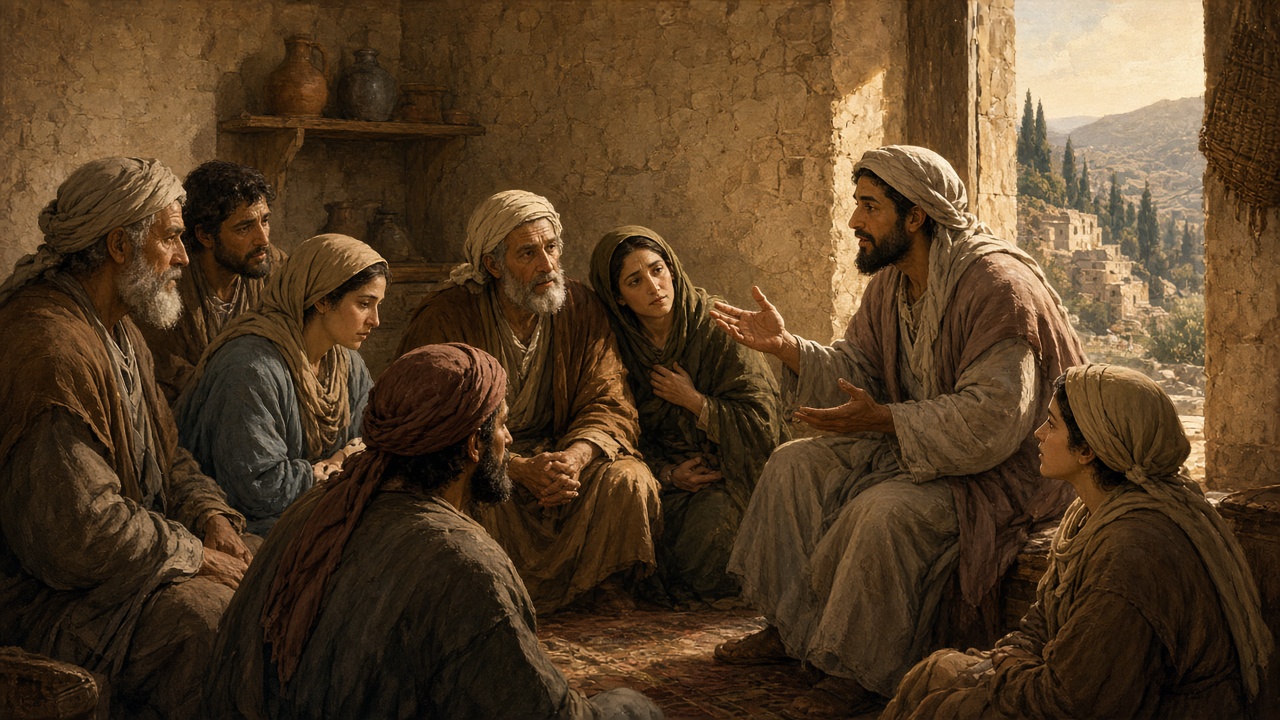
Did you know?
Fullness in Christ, Not Empty Teaching
- The writer says he is struggling for the readers, for those at Laodicea, and for all who have not met him face to face. Laodicea lay on the border of Phrygia and Lydia, on the banks of the Lycus, about forty miles east of Ephesus, and was one of the most important and flourishing cities of Asia Minor.Sources: the Bible text itself · Laodicea
- He warns them not to be taken captive by philosophy and empty deception based on human tradition and the spiritual forces of the world, and not to be deceived by smooth rhetoric.Sources: the Bible text itself
- The chapter also says they should not let anyone judge them by what they eat or drink, or by a feast, a New Moon, or a Sabbath—these are called a shadow of things to come—and should resist false humility, the worship of angels, and rules against handling, tasting, and touching that rest on human commands.Sources: the Bible text itself
Notes written with AI assistance from open sources (Theographic Bible Metadata, CC BY-SA 4.0; Easton’s Bible Dictionary, public domain) and reviewed before publishing.
Places in this chapter
- Laodicea · Today: Laodicea on the Lycus · 37.836, 29.108 · verse 1
Only places identified with high confidence are shown (90% or more according to the scholarly sources compiled by OpenBible). Period map: DARE (Digital Atlas of the Roman Empire), CC BY 4.0; modern map: © OpenStreetMap contributors; places: OpenBible.info (CC BY 4.0).
Credits and license for this translation
Nuevo Testamento Guaraní Pe
New Testament in Guaraní, Western Bolivian (BL:gnw:Guaraní, Western Bolivian)
copyright © 2012 Wycliffe Bible Translators, Inc.
Language: Guaraní, Western Bolivian
Translation by: Wycliffe Bible Translators, Inc.
Guaraní, Western Bolivian [gnw], Bolivia
Copyright Information
© 2012, Wycliffe Bible Translators, Inc. All rights reserved.
This translation text is made available to you under the
terms of the Creative Commons License: Attribution-Noncommercial-No Derivative Works.
( http://creativecommons.org/licenses/by-nc-nd/3.0/ )
In addition, you have permission to port the text to different file formats, as long as you
do not change any of the text or punctuation of the Bible.
You may share, copy, distribute, transmit, and extract portions
or quotations from this work, provided that you include the above copyright
information:
You must give Attribution to the work.
You do not sell this work for a profit.
You do not make any derivative works that change any of the actual words or punctuation of the Scriptures.
Permissions beyond the scope of this license may be
available if you contact
us with your request.
The New Testament
in Guaraní, Western Bolivian
© 2012, Wycliffe Bible Translators, Inc. All rights reserved.
This translation is made available to you under the terms of the
Creative Commons Attribution-Noncommercial-No Derivatives license 4.0.
You may share and redistribute this Bible translation or extracts from it in any format, provided that:
You include the above copyright and source information.
You do not sell this work for a profit.
You do not change any of the words or punctuation of the Scriptures.
Pictures included with Scriptures and other documents on this site are licensed just for use with those Scriptures and documents.
For other uses, please contact the respective copyright owners.
2014-04-25
Source: http://ebible.org/gnwNT/ · eBible.org